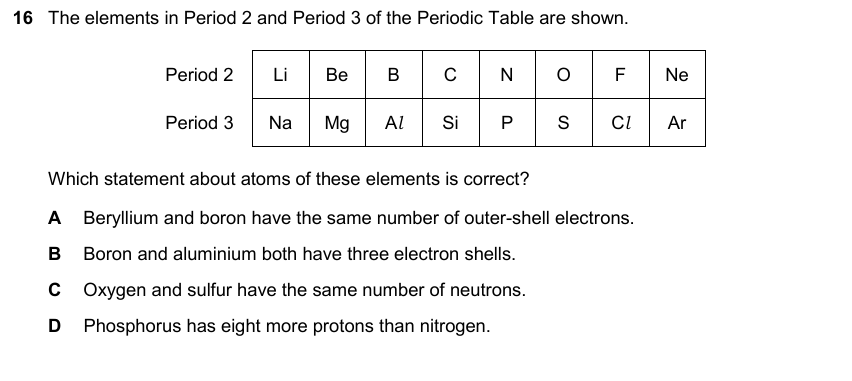
Periods: rows — number of electron shells increases across a period. Group: columns — same number of outer electrons.
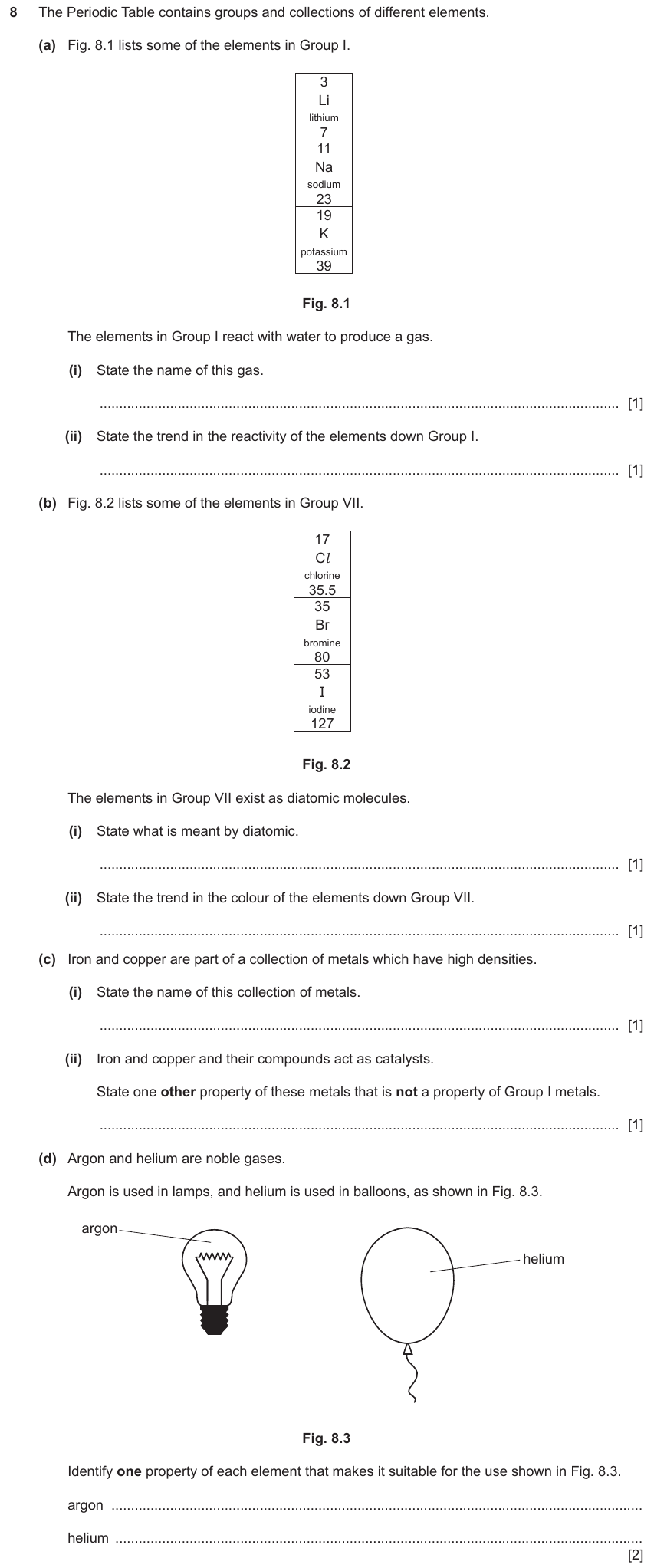
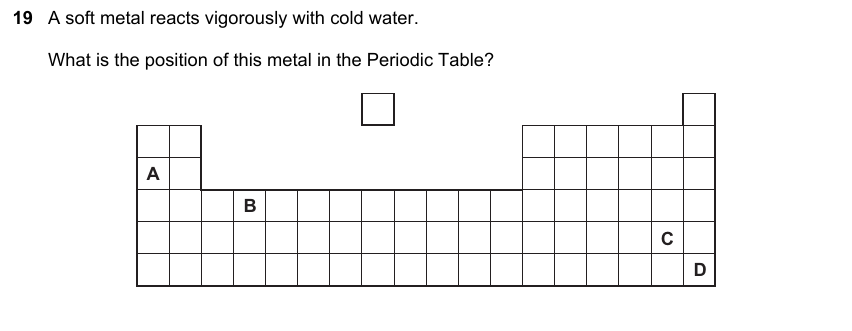
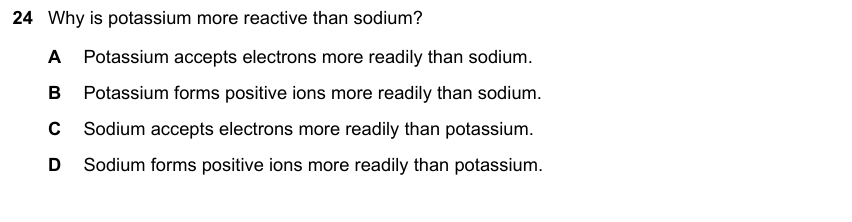
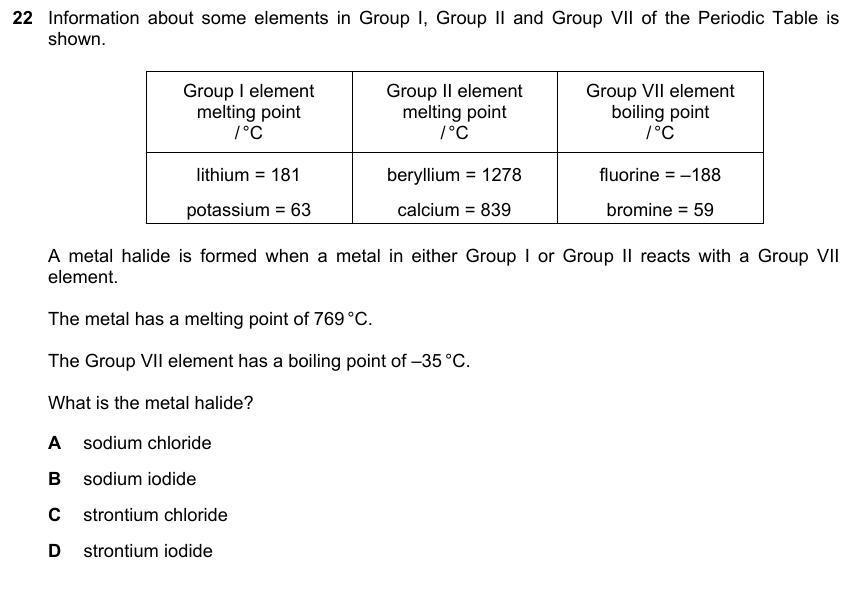
Group 1 (alkali metals): react with water → metal hydroxide + hydrogen. Reactivity increases DOWN the group.
Group 7 (halogens): diatomic molecules (F₂, Cl₂, Br₂, I₂). Reactivity DECREASES down group. More reactive halogen displaces less reactive one.
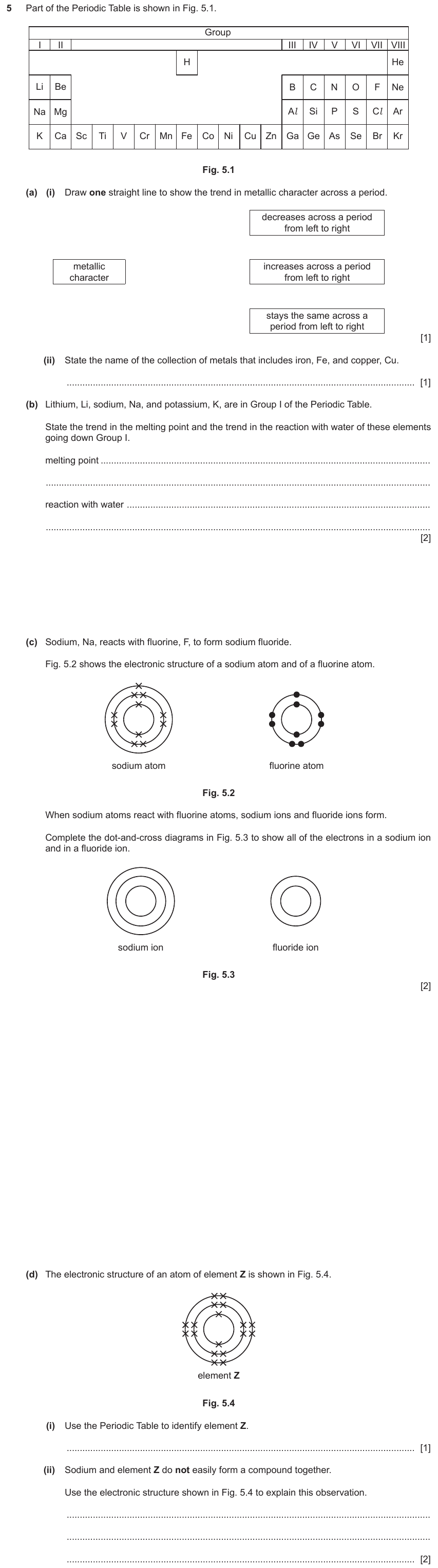
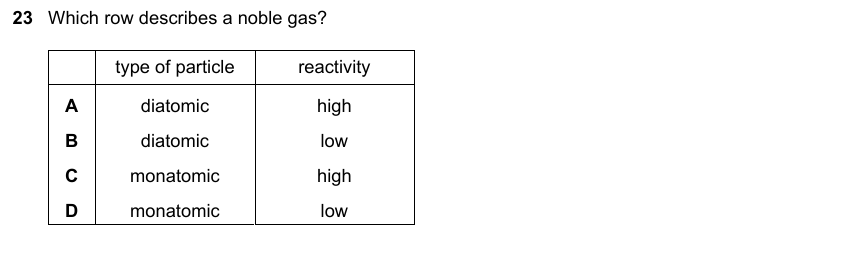
Group 0 (noble gases): full outer shell → very unreactive, exist as single atoms.
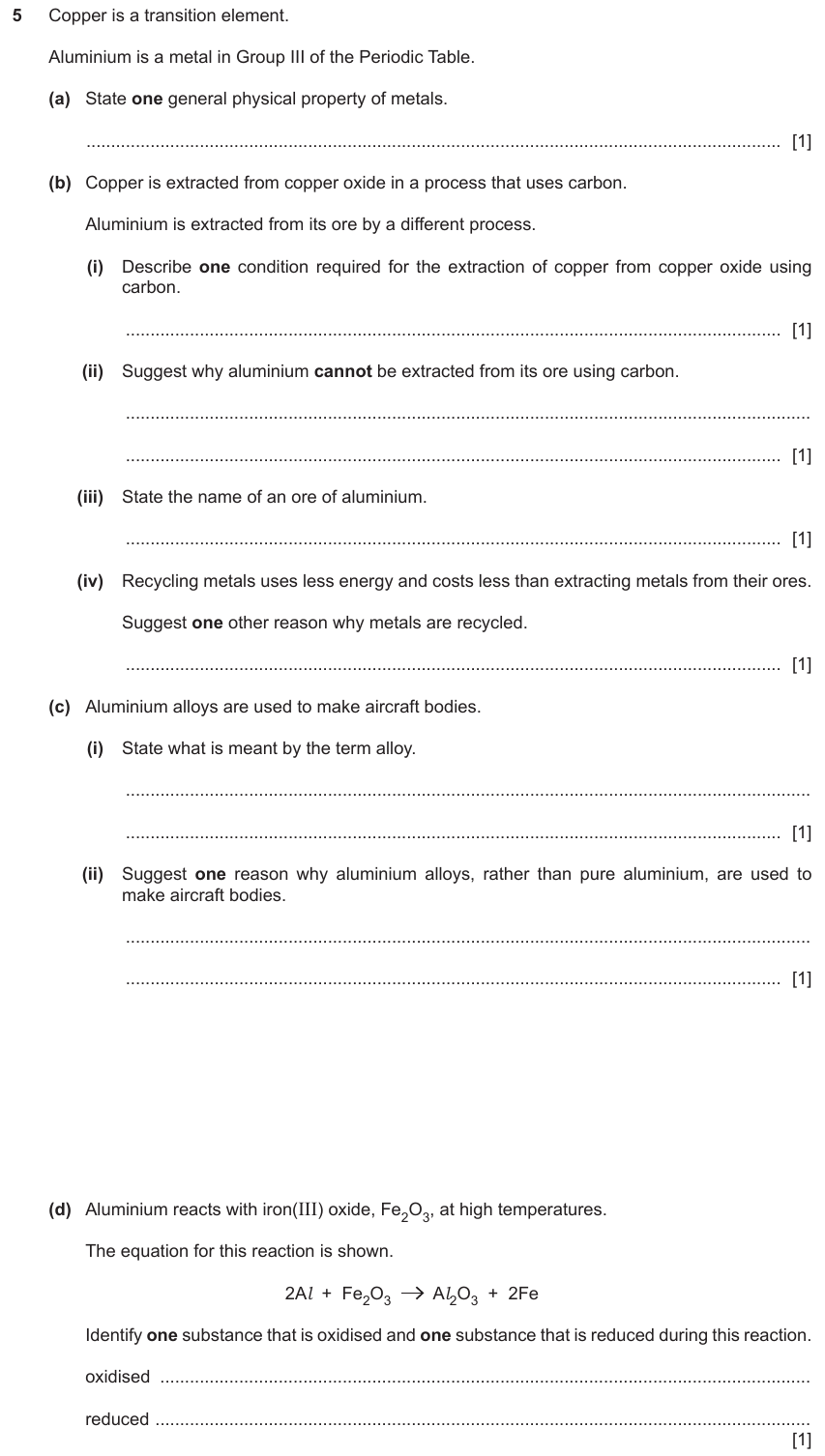
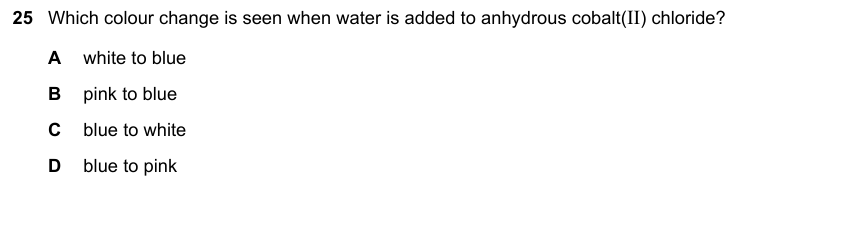
Transition metals: in the middle block. Variable oxidation states, form coloured compounds, good catalysts.
Metallic character increases down a group and decreases across a period (left to right).
Across period 3: Na, Mg, Al are metals; Si is metalloid; P, S, Cl, Ar are non-metals.
IGCSE Chemistry — The Periodic Table
17 Cambridge IGCSE 0653 Combined Sciences past paper questions on the periodic table, across Theory, Multiple Choice and Alternative to Practical.
About The Periodic Table on IGCSE 0653
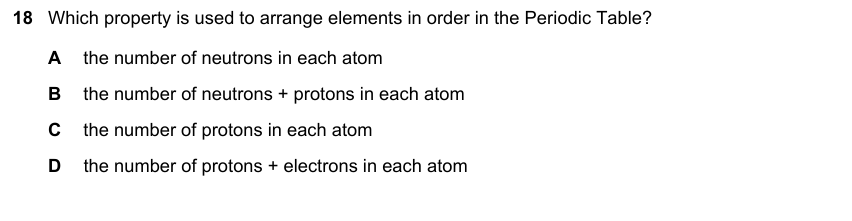
The periodic table arranges elements in order of atomic number. Elements in the same group have similar chemical properties because they have the same number of outer electrons. Key groups include the alkali metals, halogens and noble gases.
What's covered:
Groups and periods
Group 1: alkali metals — reactivity trend
Group 7: halogens — reactivity trend, displacement reactions