Ionic compounds: high melting point, conduct electricity when dissolved or molten, form crystals.
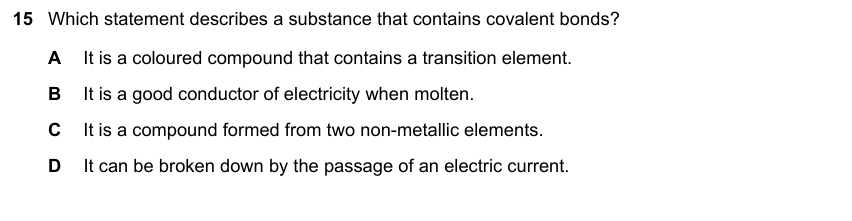
Covalent bonding: non-metals share pairs of electrons.
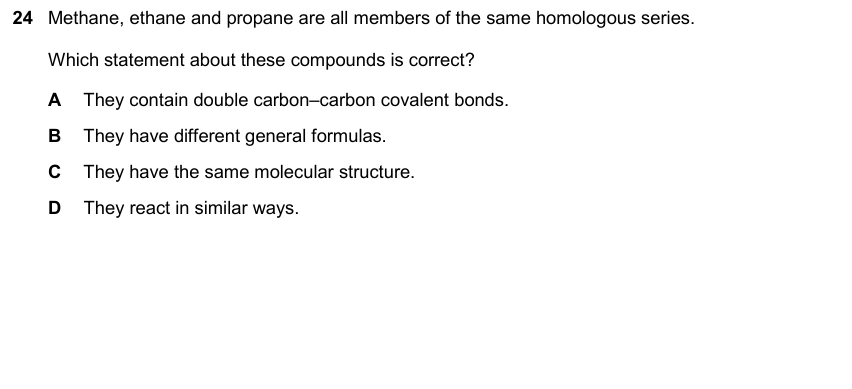
Simple molecular: low melting/boiling point, do NOT conduct electricity (e.g. H₂O, CO₂, CH₄).
Giant covalent: very high melting point, hard, do NOT conduct electricity (except graphite). E.g. diamond, SiO₂.
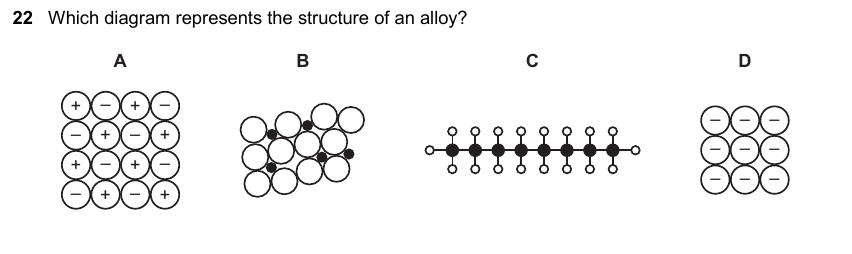
Metallic bonding: lattice of positive ions surrounded by a 'sea' of delocalised electrons.
Metals: conduct electricity/heat, malleable, ductile — because of delocalised electrons.
Hydrogen bonds: strong intermolecular forces in water and between N−H/O−H groups.
Van der Waals forces: weak, temporary dipole attractions — exist between ALL molecules.
IGCSE Chemistry — Chemical Bonding
10 Cambridge IGCSE 0653 Combined Sciences past paper questions on chemical bonding, across Theory, Multiple Choice and Alternative to Practical.
About Chemical Bonding on IGCSE 0653
Ionic bonding involves electron transfer between metals and non-metals; covalent bonding involves electron sharing between non-metals; metallic bonding holds metal atoms together. The type of bonding determines the structure and properties of the substance.
What's covered:
Ionic bonding and giant ionic structures
Covalent bonding: simple molecules and giant covalent structures
Dot-and-cross diagrams
Metallic bonding
Physical properties linked to structure
Intermolecular forces: van der Waals, hydrogen bonds
Theory
Papers 3 & 4 · 2 questions · Structured written questions with mark scheme answers.
Chemical Bonding — Extended2 · Paper 4
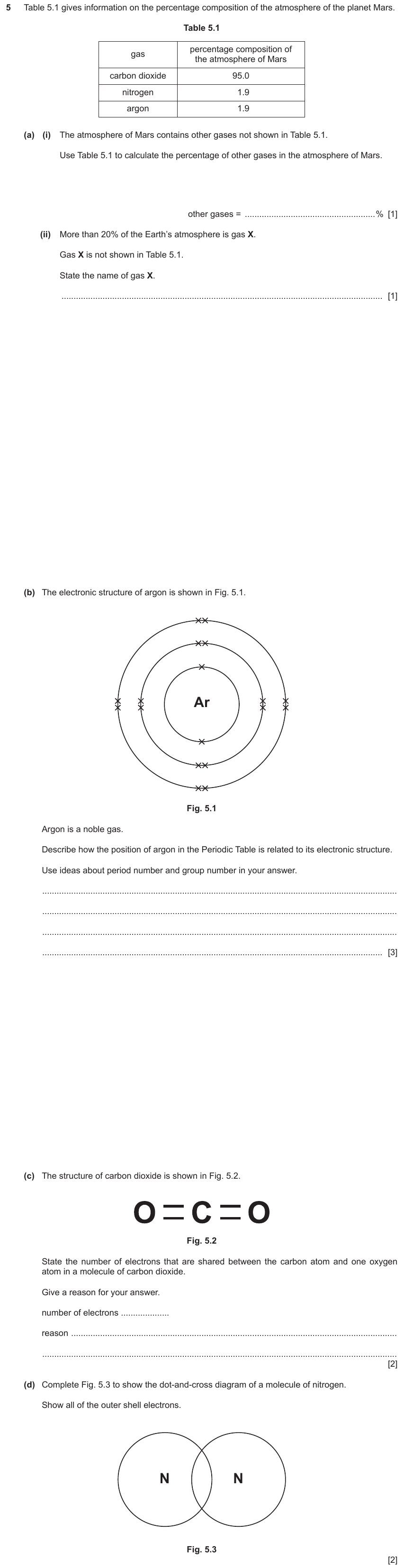
Exercise 1 — IGCSE 0653 Oct/Nov 2023 Paper 43 Q5
Cambridge past paperExtended9 marksPaper 43Oct/Nov 2023
Show mark scheme
1.2 (%)
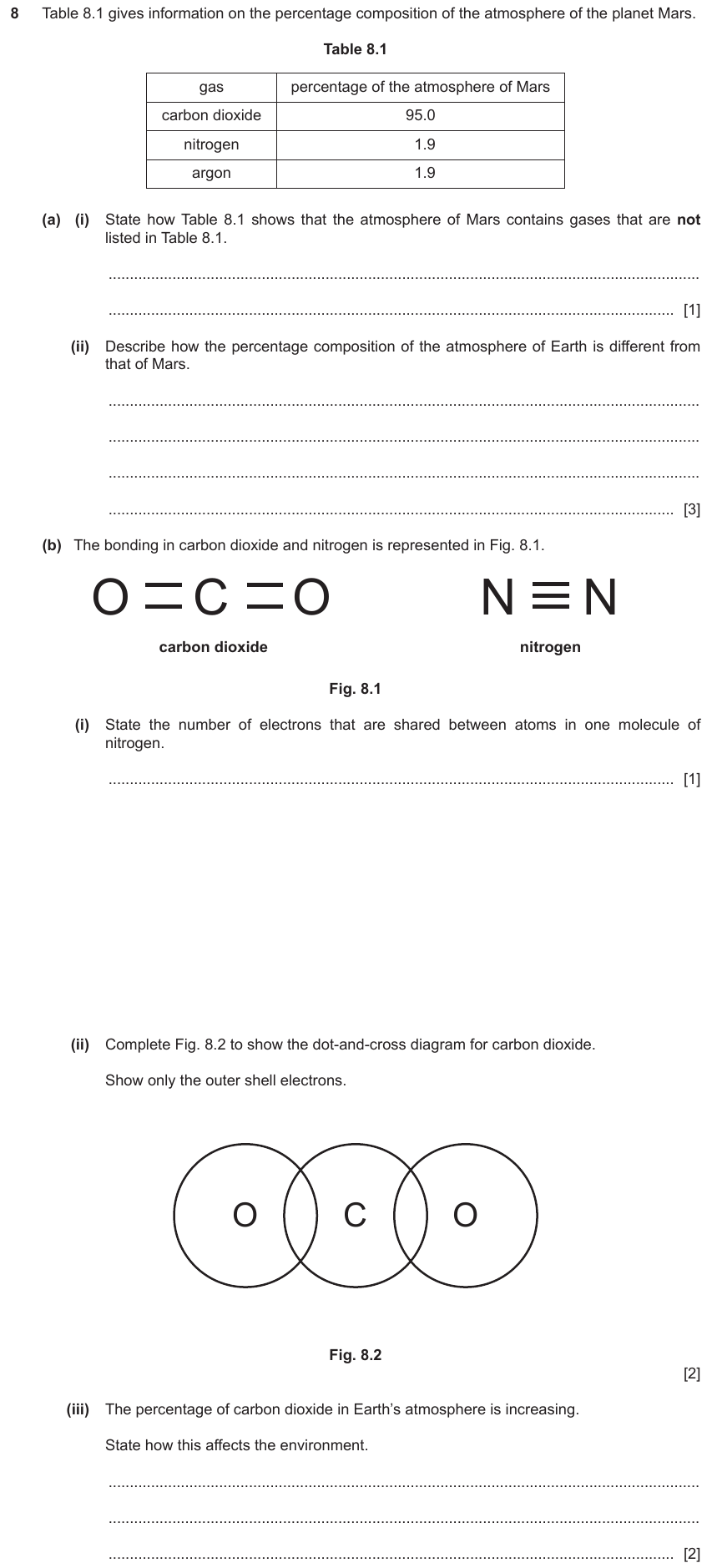
Exercise 2 — IGCSE 0653 Oct/Nov 2023 Paper 41 Q8
Cambridge past paperExtended9 marksPaper 41Oct/Nov 2023
Show mark scheme
the values, only add to 98.8% / do not add up to 100%