Alpha (α): 2 protons + 2 neutrons (helium nucleus). Charge: +2. Stopped by paper or a few cm of air. Highly ionising.
Beta (β): fast electron emitted from nucleus when neutron → proton + electron. Charge: −1. Stopped by a few mm of aluminium.
Gamma (γ): high-frequency EM radiation. No charge, no mass. Stopped by thick lead or concrete.
Half-life: time for activity (or number of undecayed nuclei) to halve.
Background radiation: from rocks (radon), cosmic rays, food, medical sources.
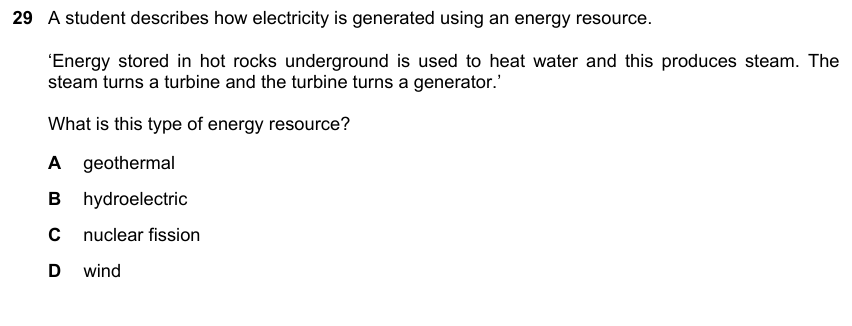
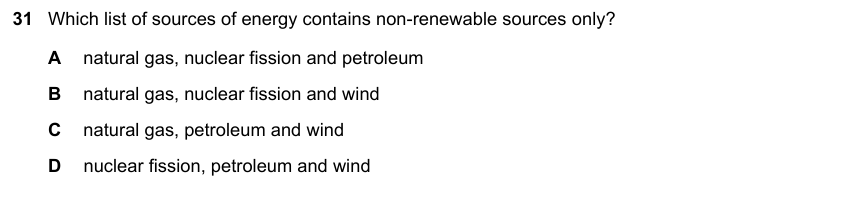
Nuclear fission: heavy nucleus splits into two smaller nuclei + neutrons + energy (used in power stations — uranium-235).
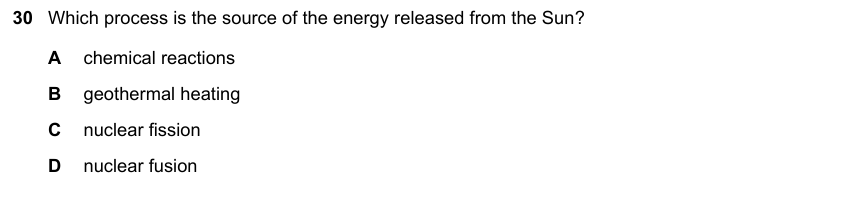
Nuclear fusion: two light nuclei combine → heavier nucleus + energy. Requires extremely high temperatures (occurs in the Sun).
Chain reaction: neutrons from fission trigger further fissions — controlled in reactors, uncontrolled in bombs.
Notation: ᴬZX — A = mass number, Z = proton number (atomic number).
IGCSE Physics — Nuclear Physics
19 Cambridge IGCSE 0653 Combined Sciences past paper questions on nuclear physics, across Theory, Multiple Choice and Alternative to Practical.
About Nuclear Physics on IGCSE 0653
Radioactive decay is the spontaneous emission of alpha, beta or gamma radiation from unstable nuclei. The half-life is the time for half the nuclei to decay. Nuclear fission and fusion release enormous amounts of energy.
What's covered:
Alpha, beta and gamma radiation: nature and penetration
Ionising effects and safety
Half-life calculations
Background radiation
Nuclear fission: chain reactions and power stations
Nuclear fusion: the sun's energy source
Nuclear equations and notation
Theory
Papers 3 & 4 · 1 questions · Structured written questions with mark scheme answers.
Nuclear Physics — Extended1 · Paper 4
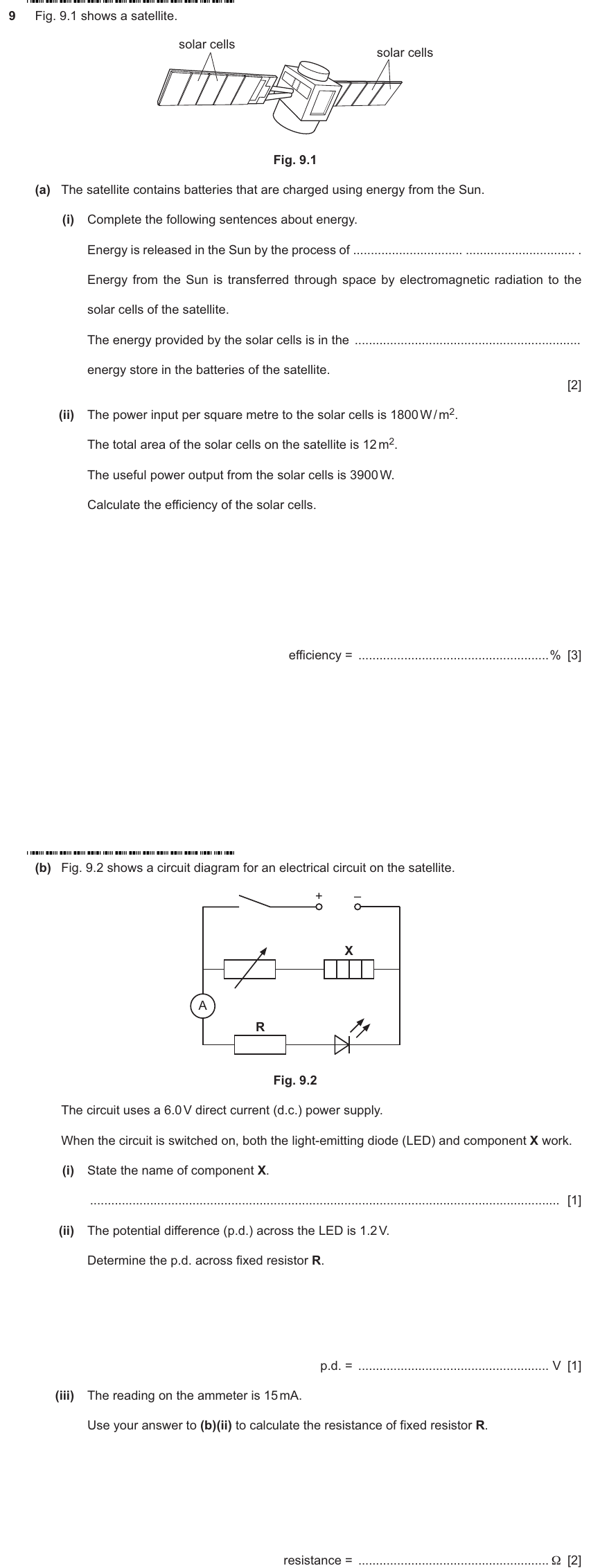
Exercise 1 — IGCSE 0653 Mar 2025 Paper 42 Q9
Cambridge past paperExtended9 marksPaper 42Mar 2025