Edexcel IGCSE·Mathematics 4MA1
Simultaneous Equations
Key knowledge — Algebra
Formulas & equations
Quadratic formula: x = (−b ± √(b²−4ac)) ÷ 2aDifference of two squares: a² − b² = (a+b)(a−b)Completing the square: ax² + bx + c = a(x + b/2a)² + (c − b²/4a)Sum of arithmetic sequence: Sₙ = n/2 × (first + last) = n/2 × (2a + (n−1)d)nth term of AP: aₙ = a + (n−1)dnth term of GP: aₙ = arⁿ⁻¹
Key facts & rules
- To solve a quadratic: factorise, complete the square, or use the formula.
- To solve simultaneous equations: elimination (add/subtract to remove one variable) or substitution.
- Inequalities: flip the sign when multiplying or dividing by a negative number.
- Algebraic fractions: find common denominator, then add/subtract numerators.
- Direct proportion: y = kx. Inverse proportion: y = k/x.
Laws & theorems
- Factor theorem: if (x − a) is a factor of f(x), then f(a) = 0.
Simultaneous equations
14 Edexcel IGCSE 4MA1 past paper questions on simultaneous equations — Foundation and Higher, with mark schemes.
Question 1 of 14
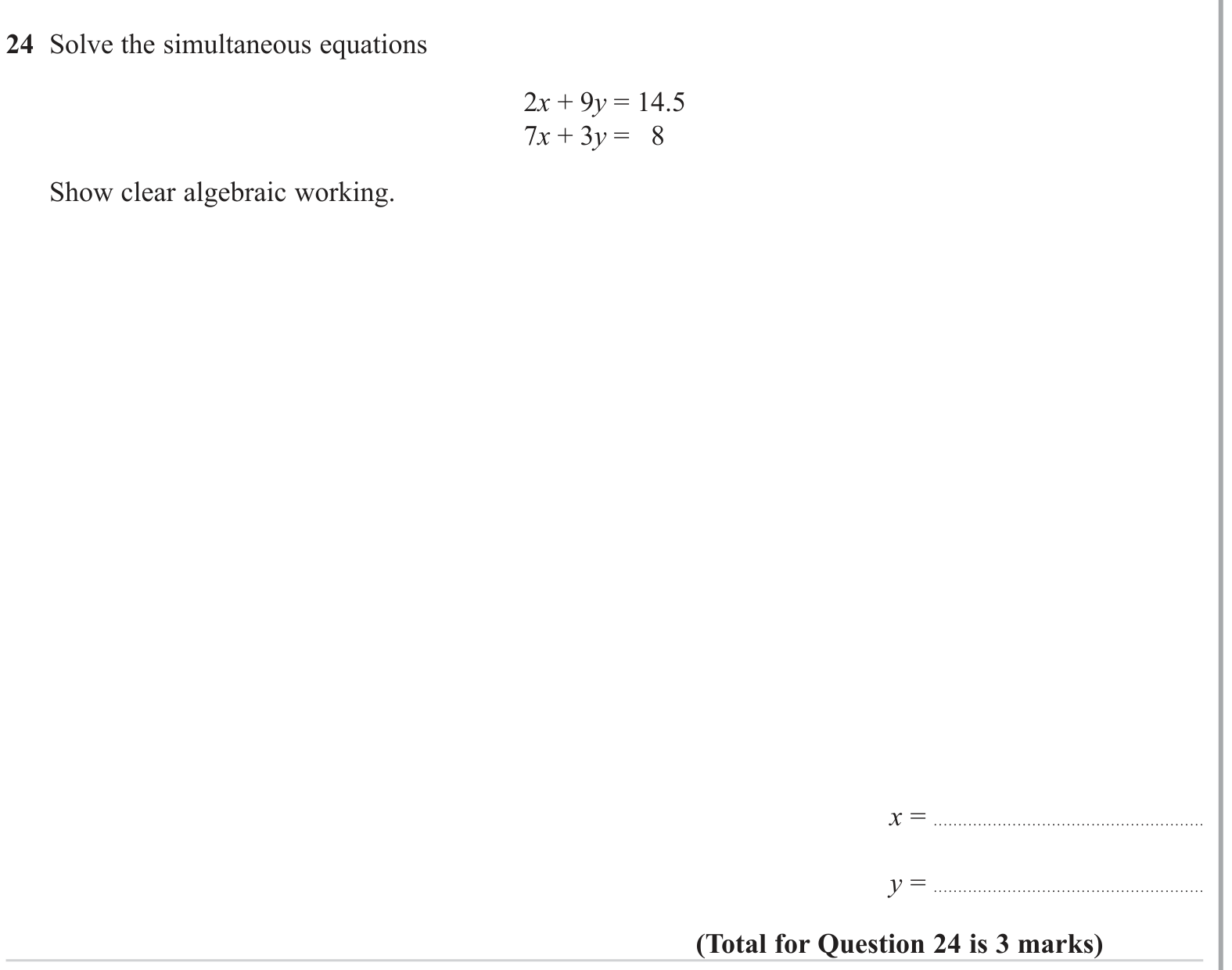
Show mark scheme

Question 2 of 14
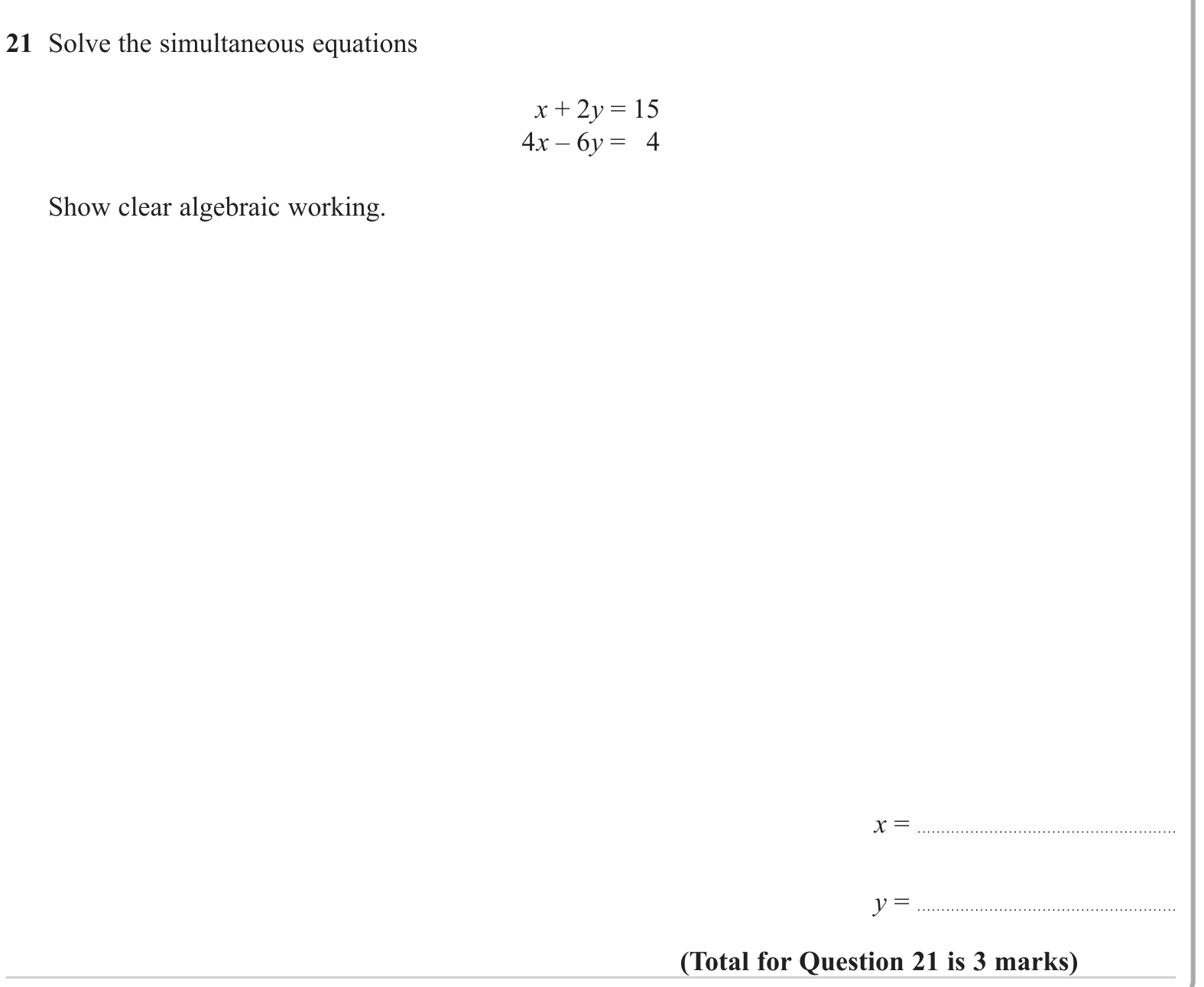
Show mark scheme

Question 3 of 14
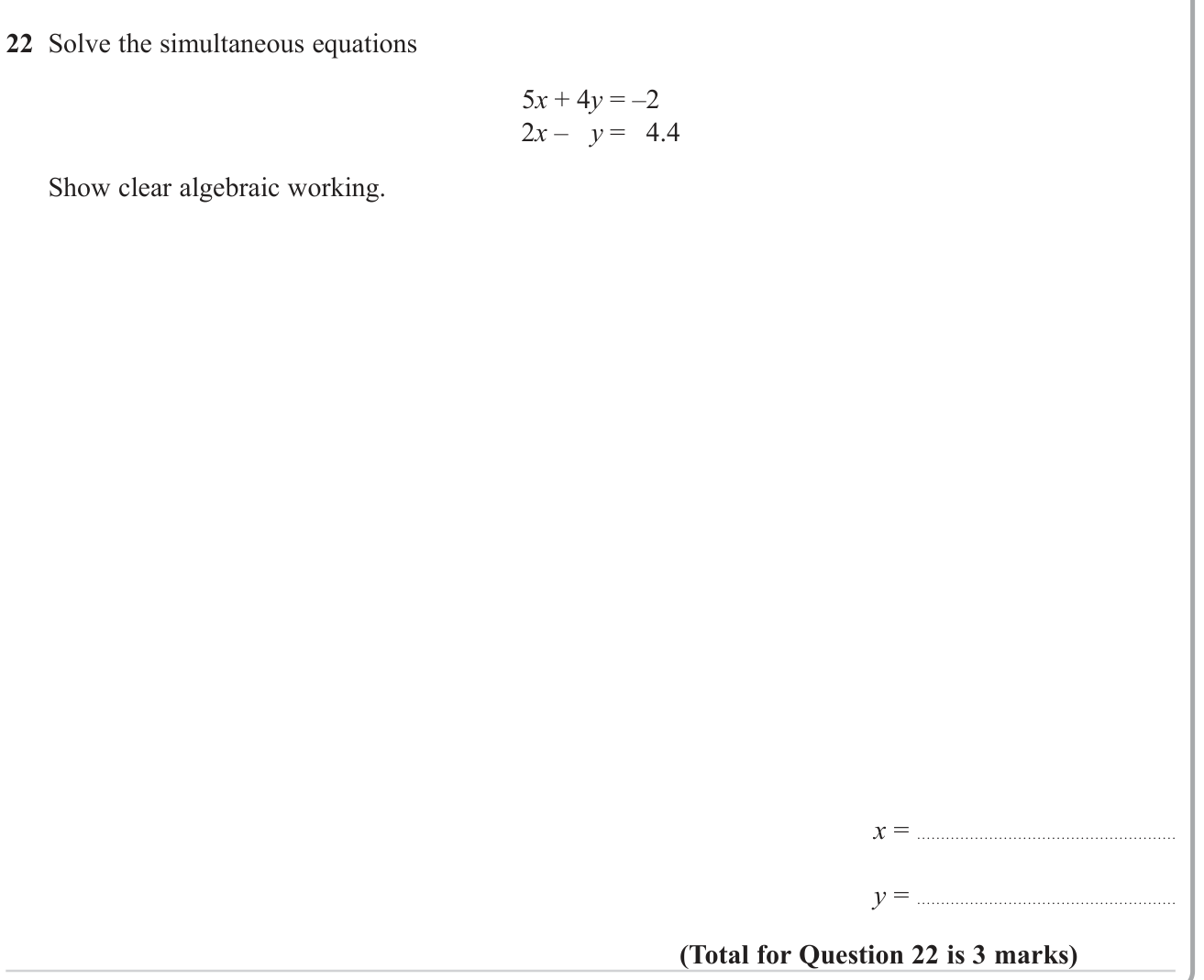
Show mark scheme

Question 4 of 14
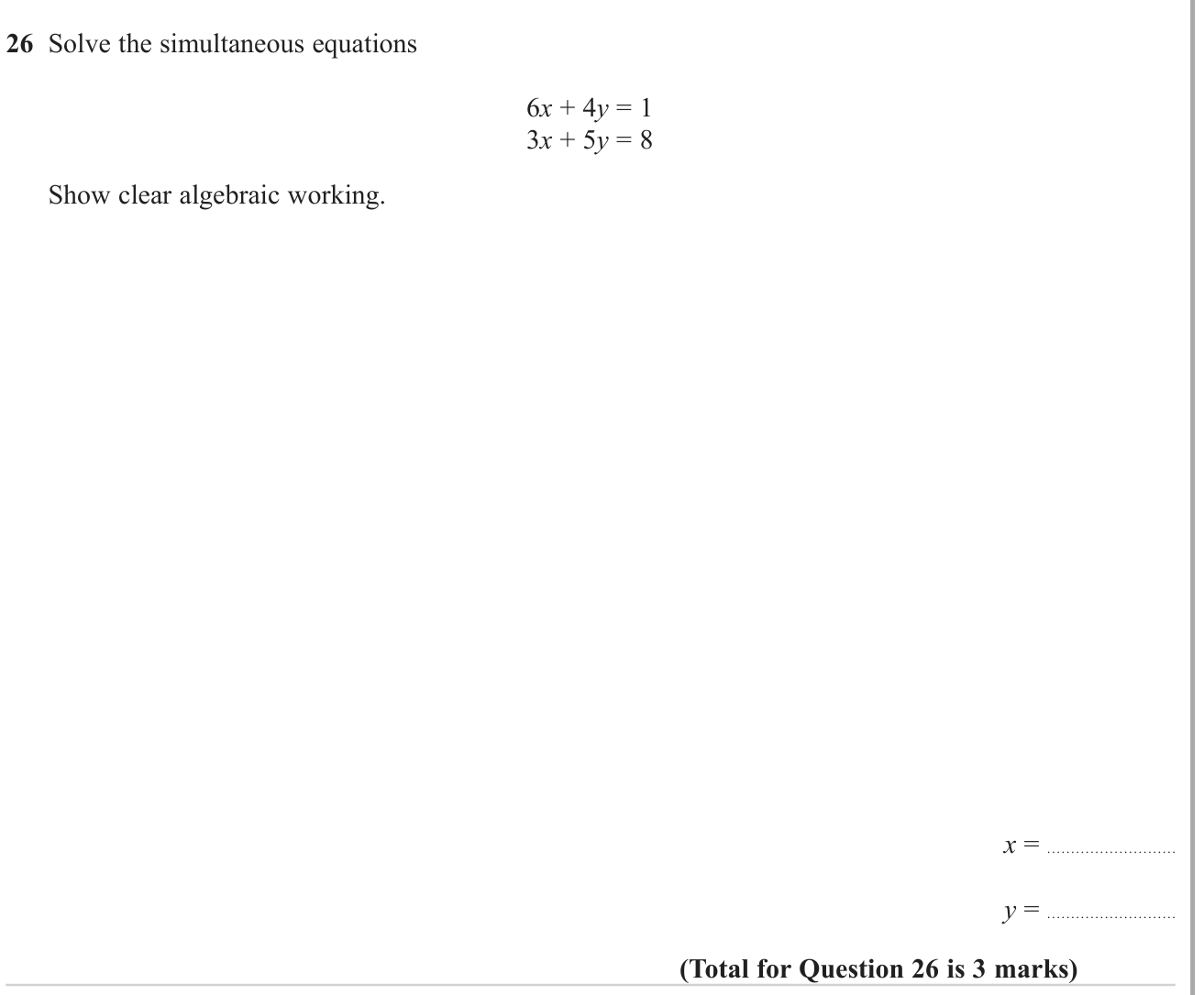
Show mark scheme

Question 5 of 14
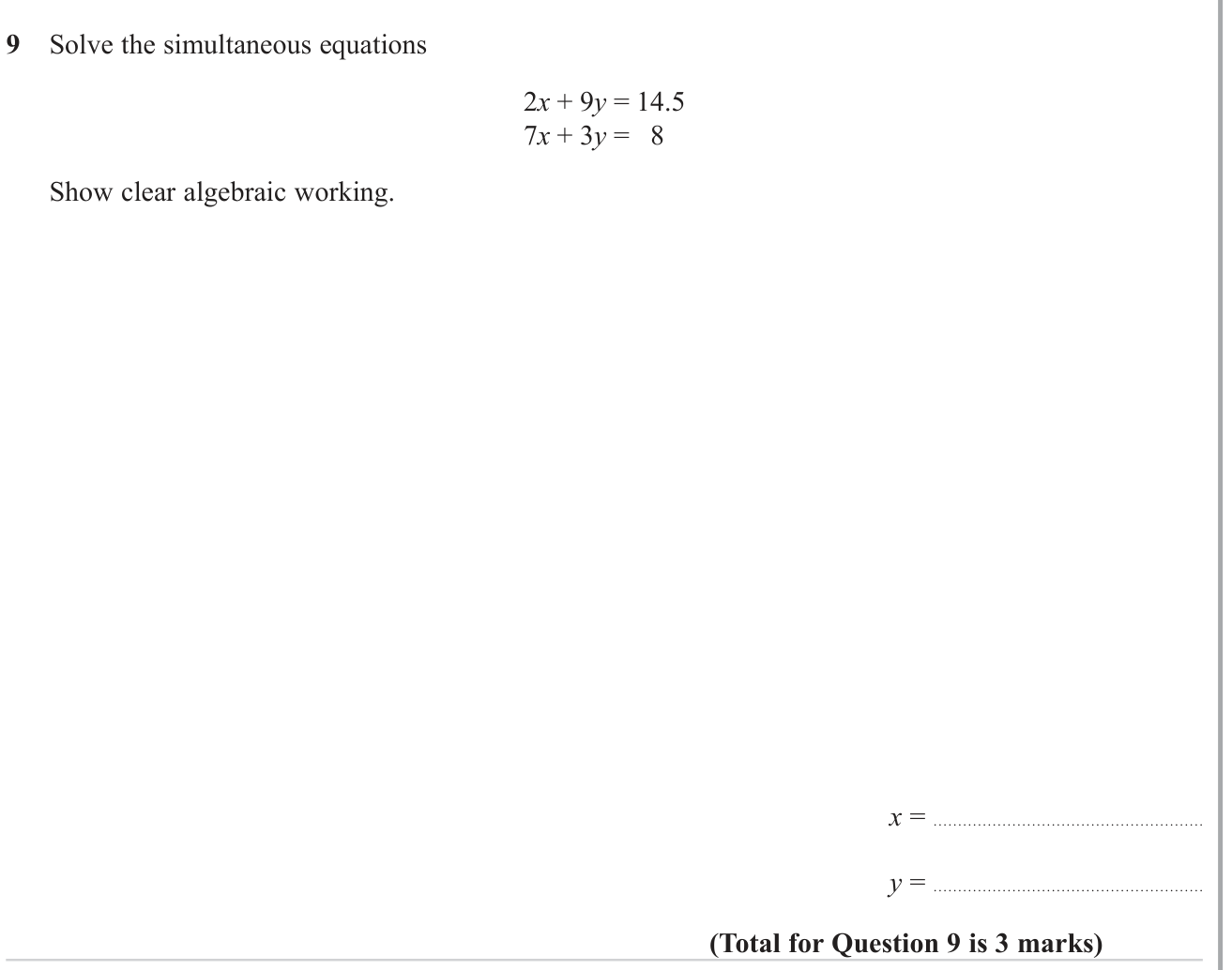
Show mark scheme

Question 6 of 14
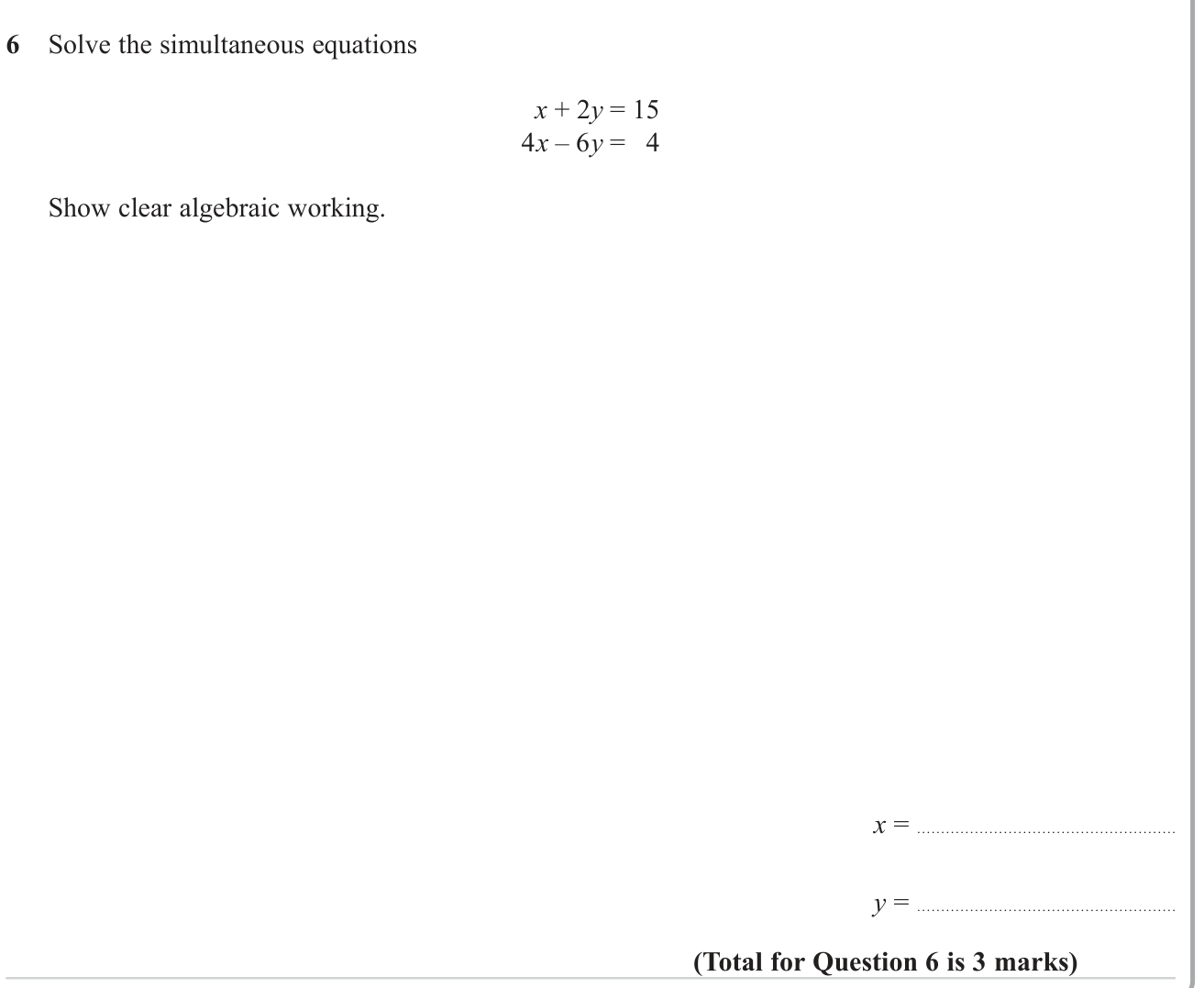
Show mark scheme

Question 7 of 14
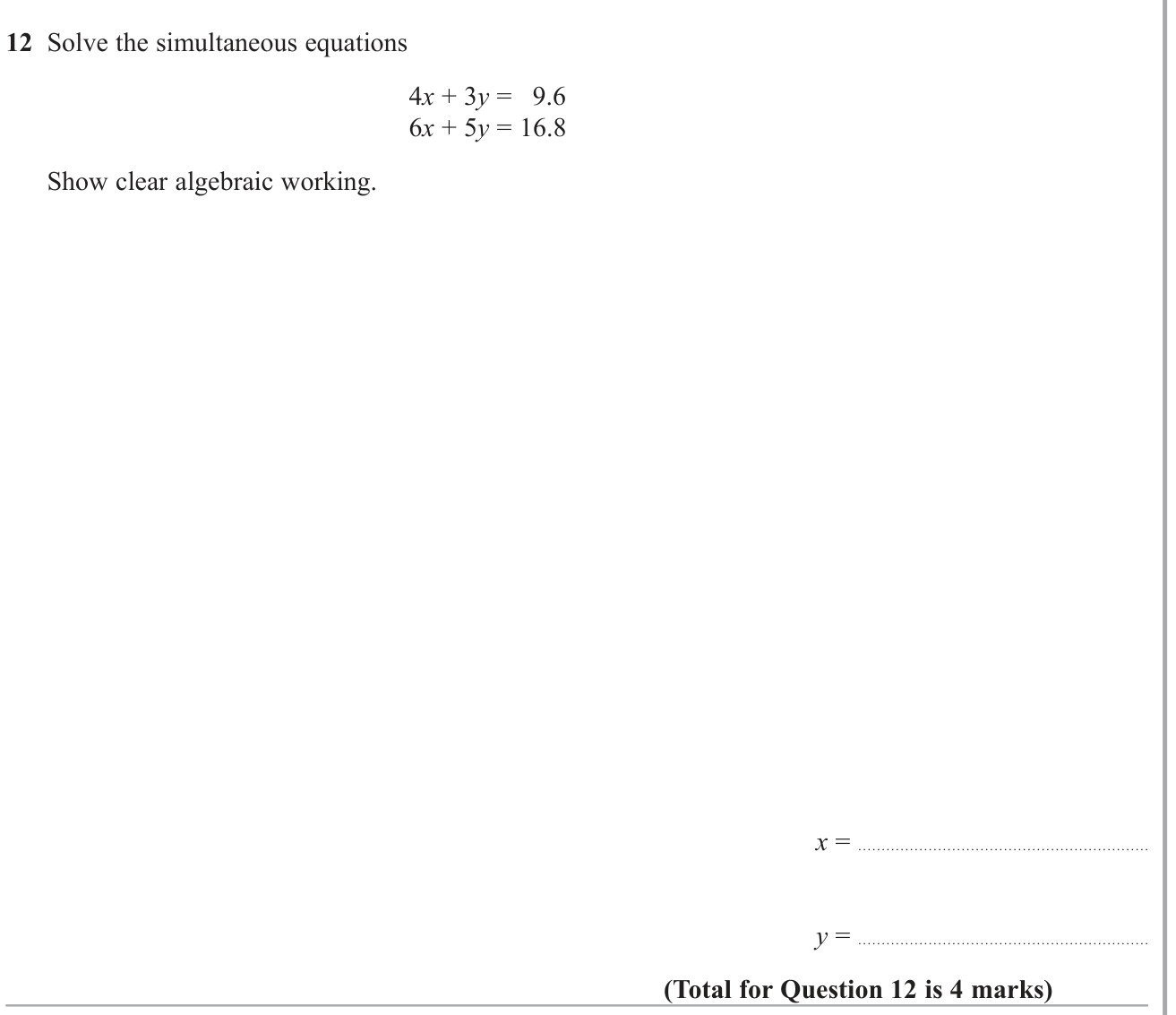
Show mark scheme

Question 8 of 14
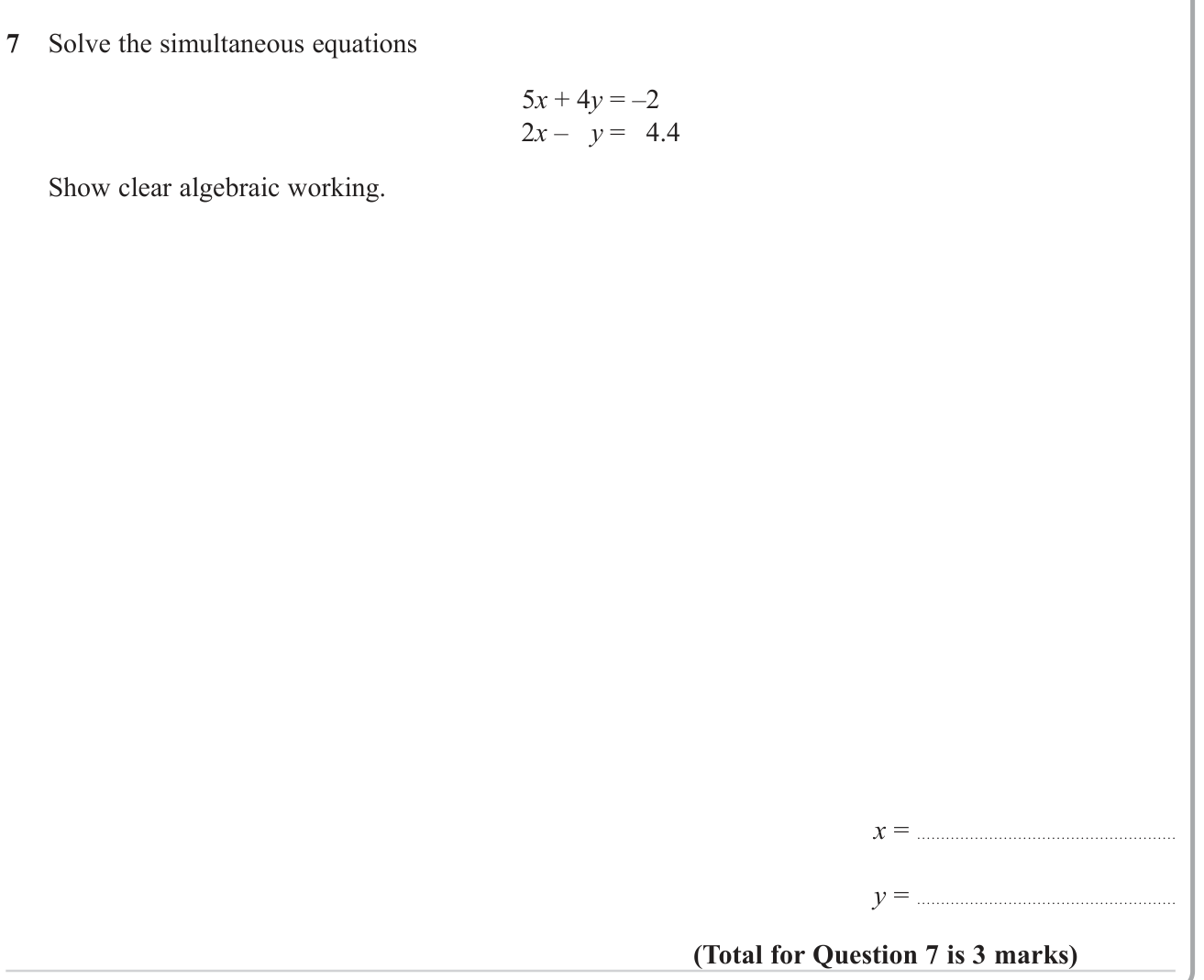
Show mark scheme

Question 9 of 14
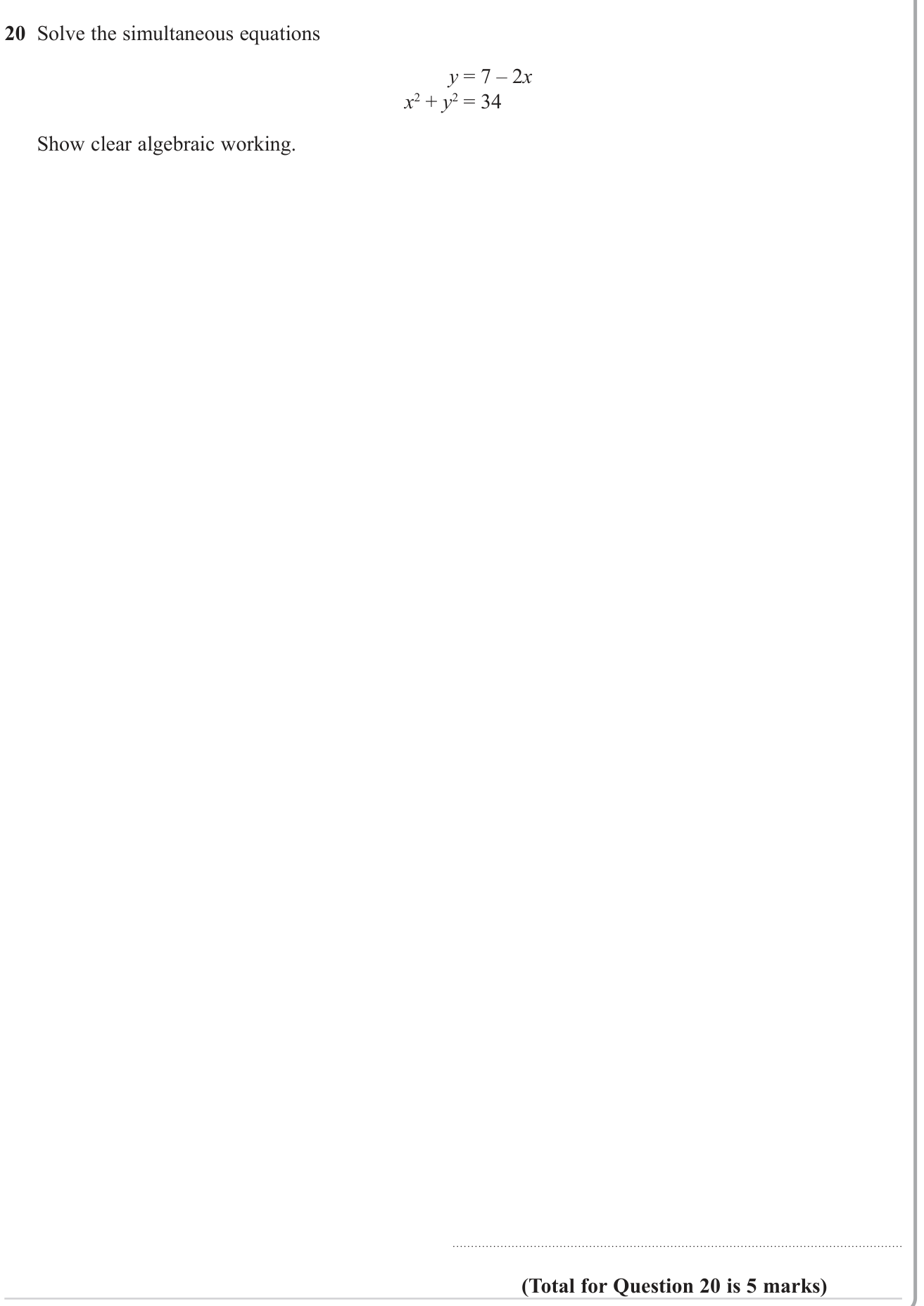
Show mark scheme

Question 10 of 14
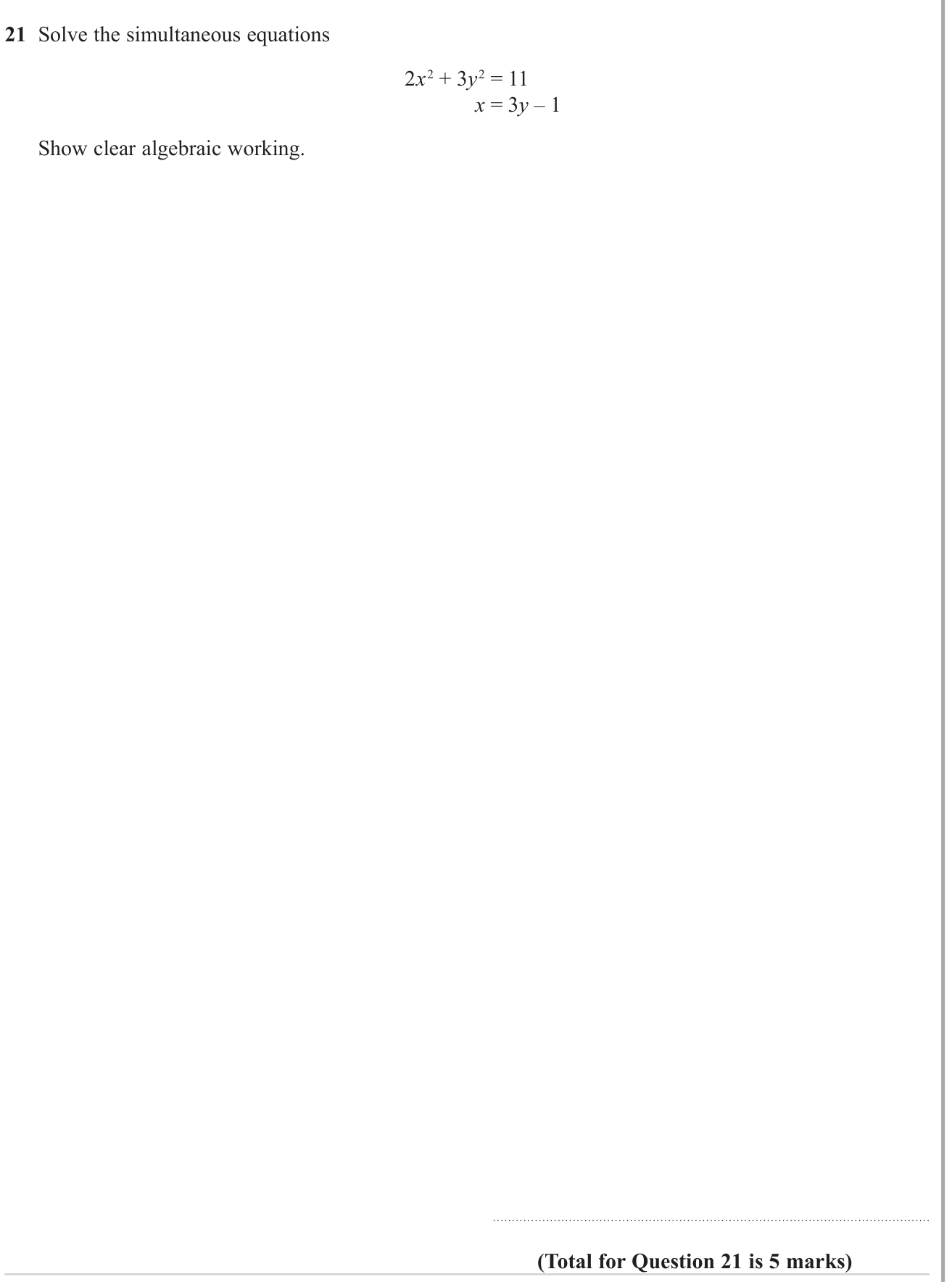
Show mark scheme

Question 11 of 14
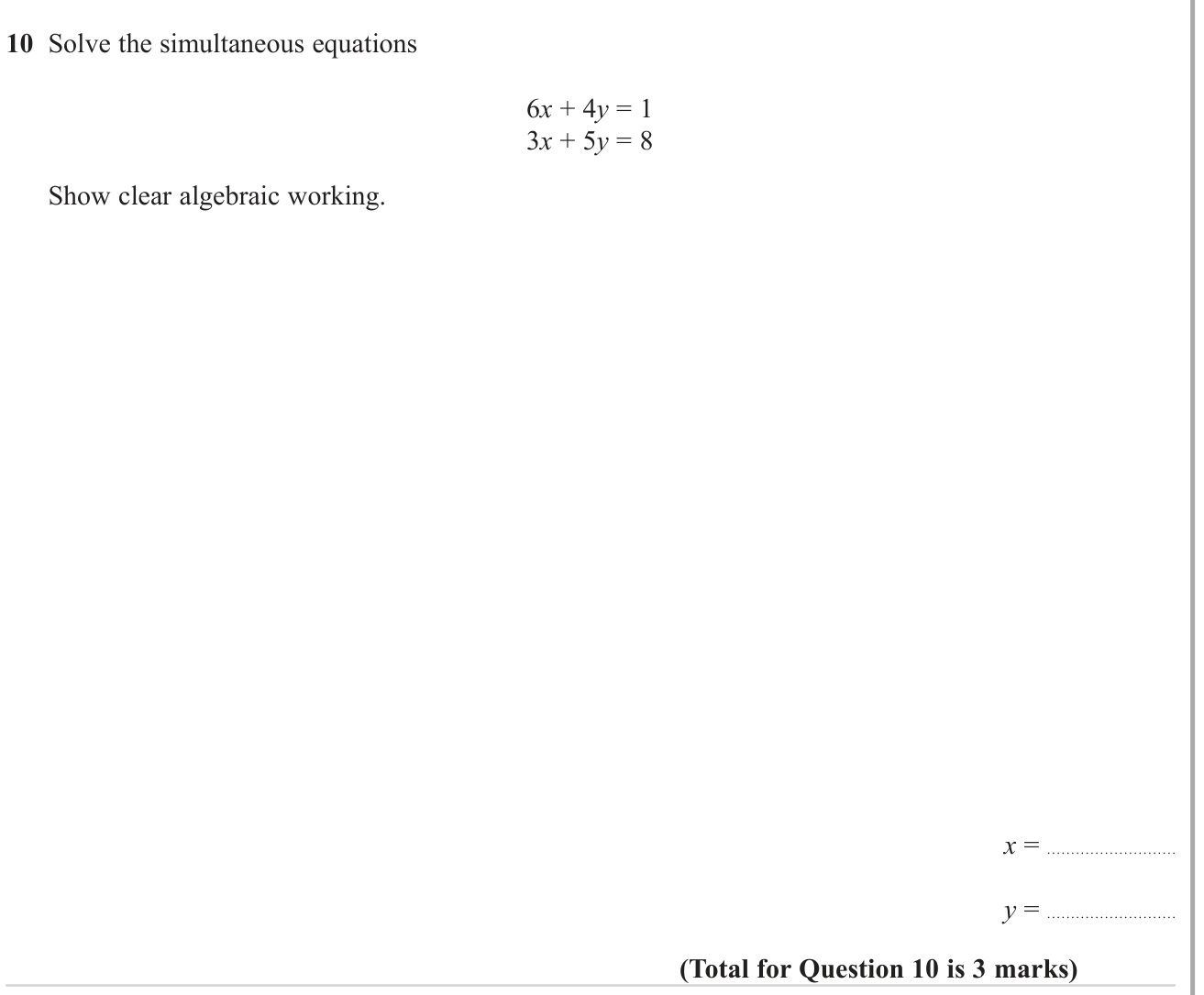
Show mark scheme

Question 12 of 14
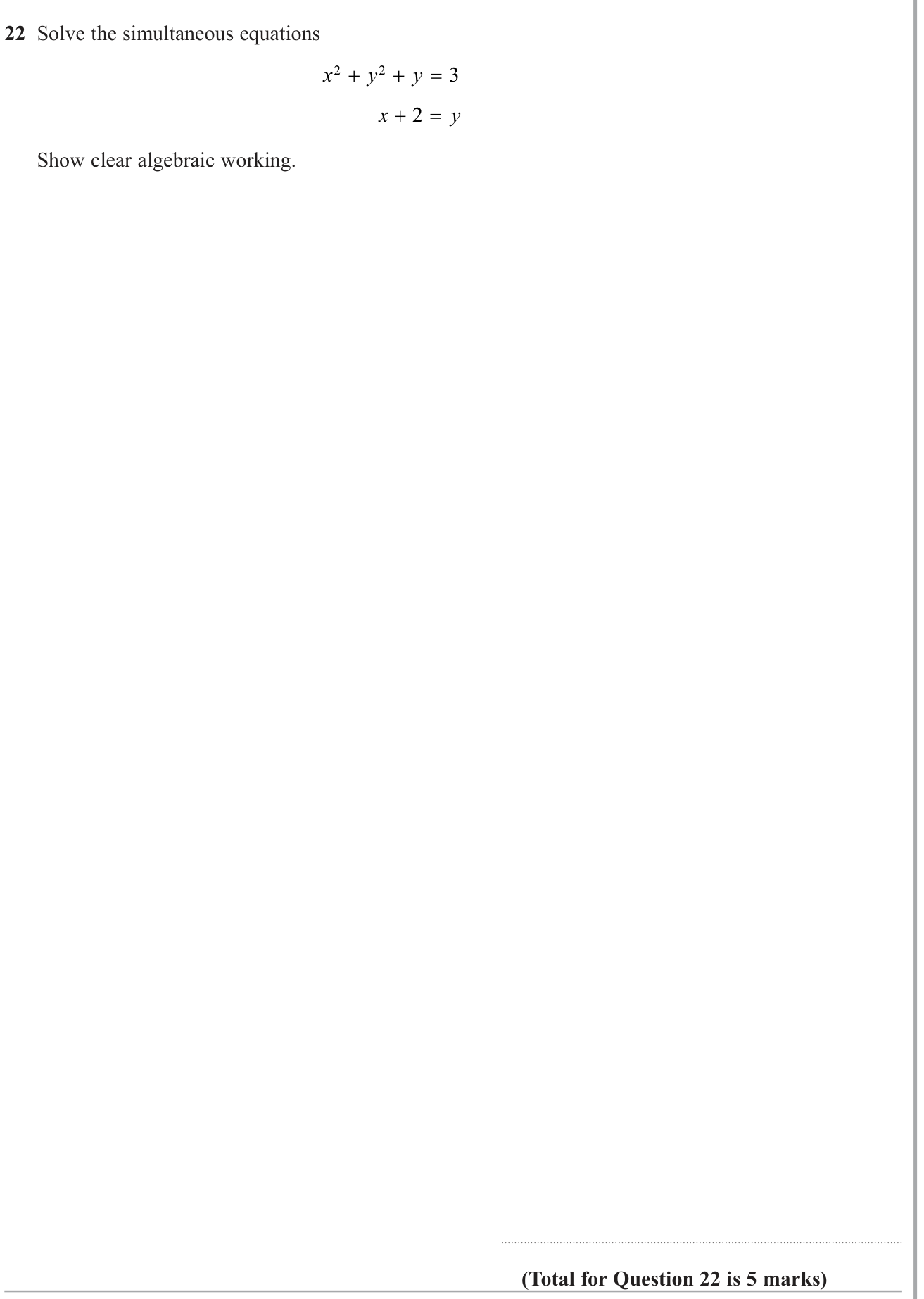
Show mark scheme

Question 13 of 14
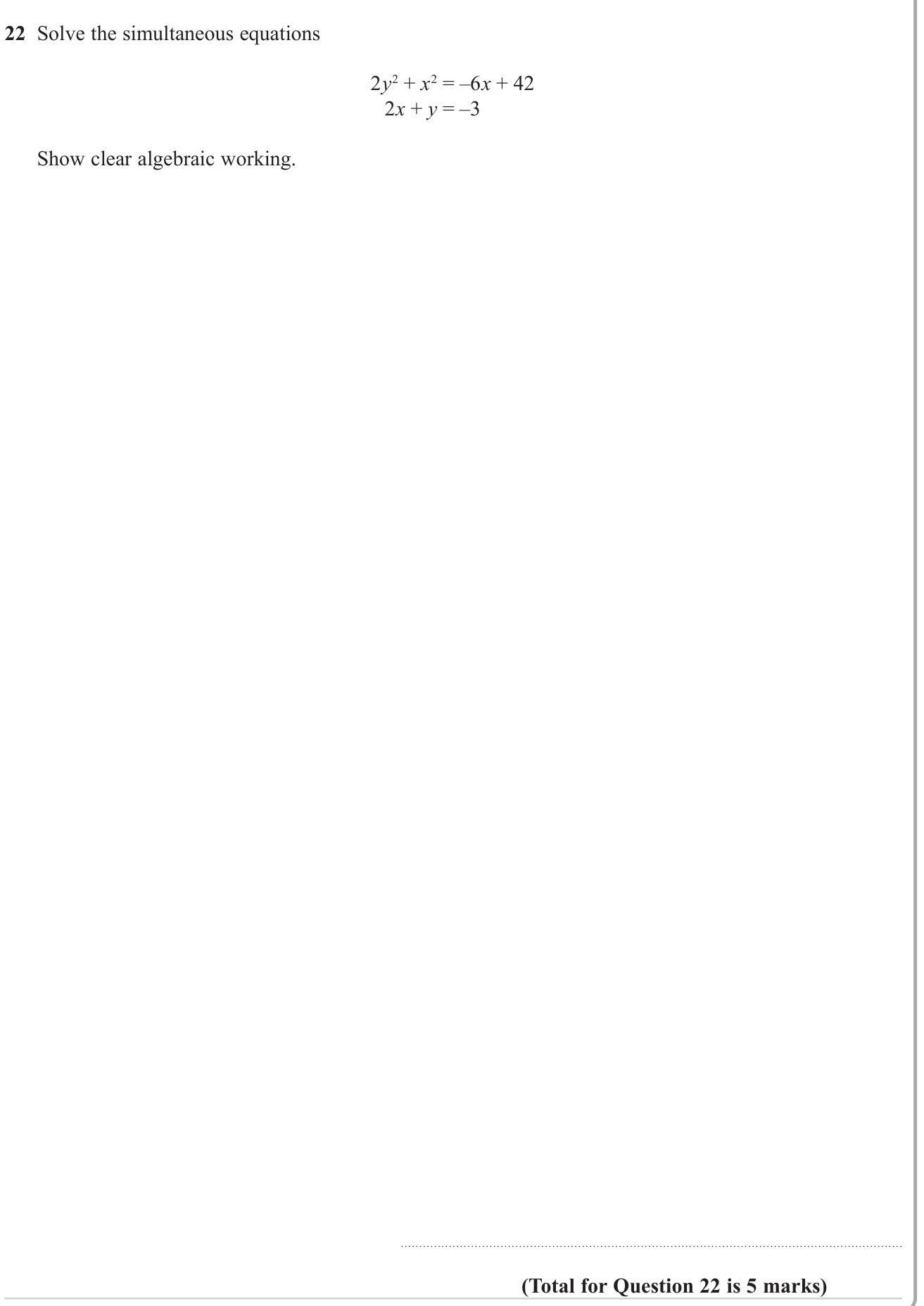
Show mark scheme

Question 14 of 14
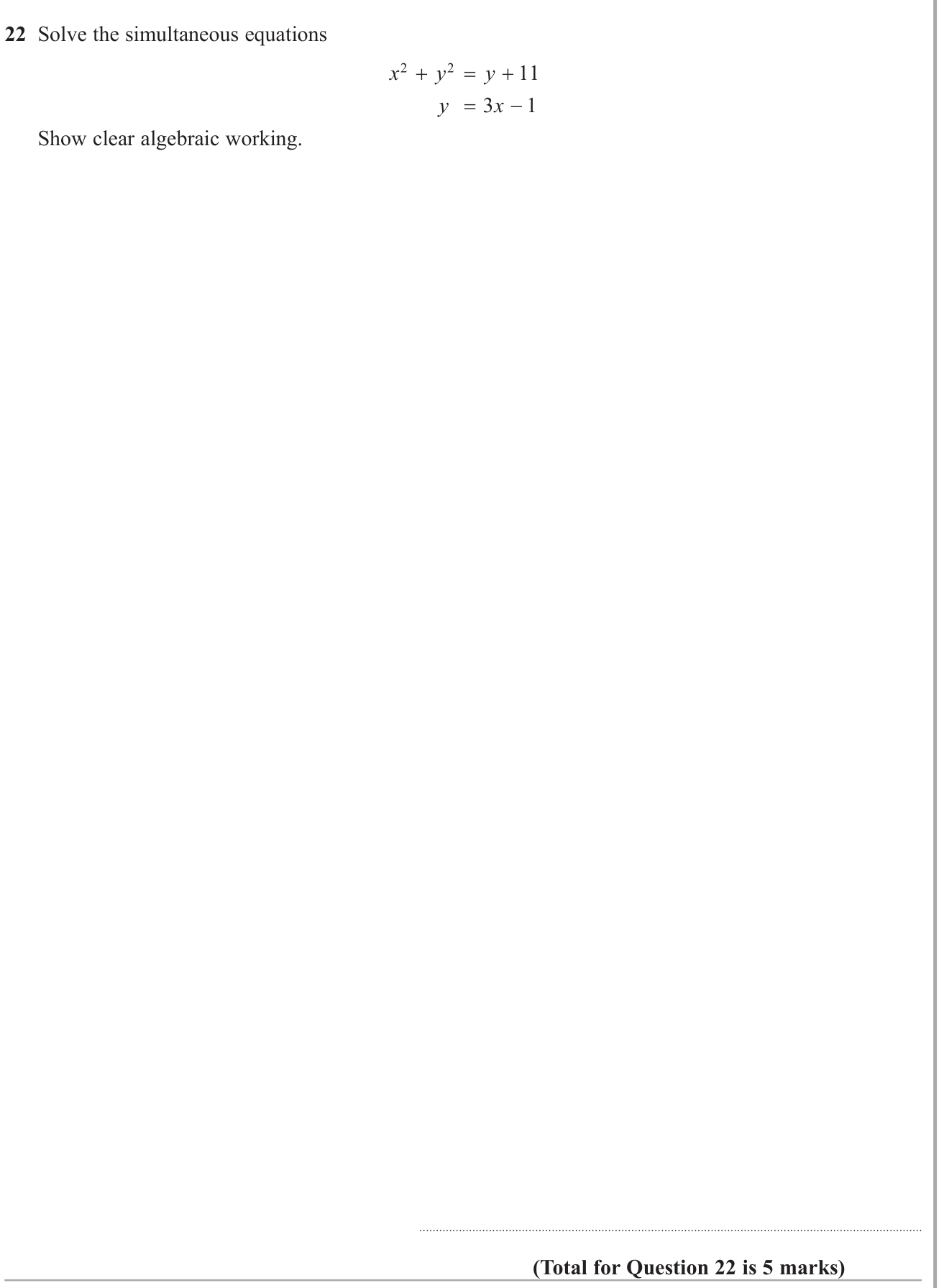
Show mark scheme
