Edexcel IGCSE·Mathematics 4MA1
Experimental Probability
Key knowledge — Probability
Formulas & equations
P(event) = number of favourable outcomes ÷ total outcomesP(A or B) = P(A) + P(B) − P(A and B)P(A and B) = P(A) × P(B) [independent events only]P(A|B) = P(A and B) ÷ P(B) [conditional probability]P(A') = 1 − P(A) [complement]
Key facts & rules
- All probabilities are between 0 and 1 inclusive.
- Mutually exclusive events: P(A and B) = 0; P(A or B) = P(A) + P(B).
- Independent events: P(A and B) = P(A) × P(B).
- Tree diagrams: multiply along branches, add between branches.
- Conditional probability with tree diagrams: second set of branches changes after the first event.
- Venn diagrams: ∩ means AND (intersection); ∪ means OR (union); A' means NOT A.
Experimental probability
9 Edexcel IGCSE 4MA1 past paper questions on experimental probability — Foundation and Higher, with mark schemes.
Question 1 of 9
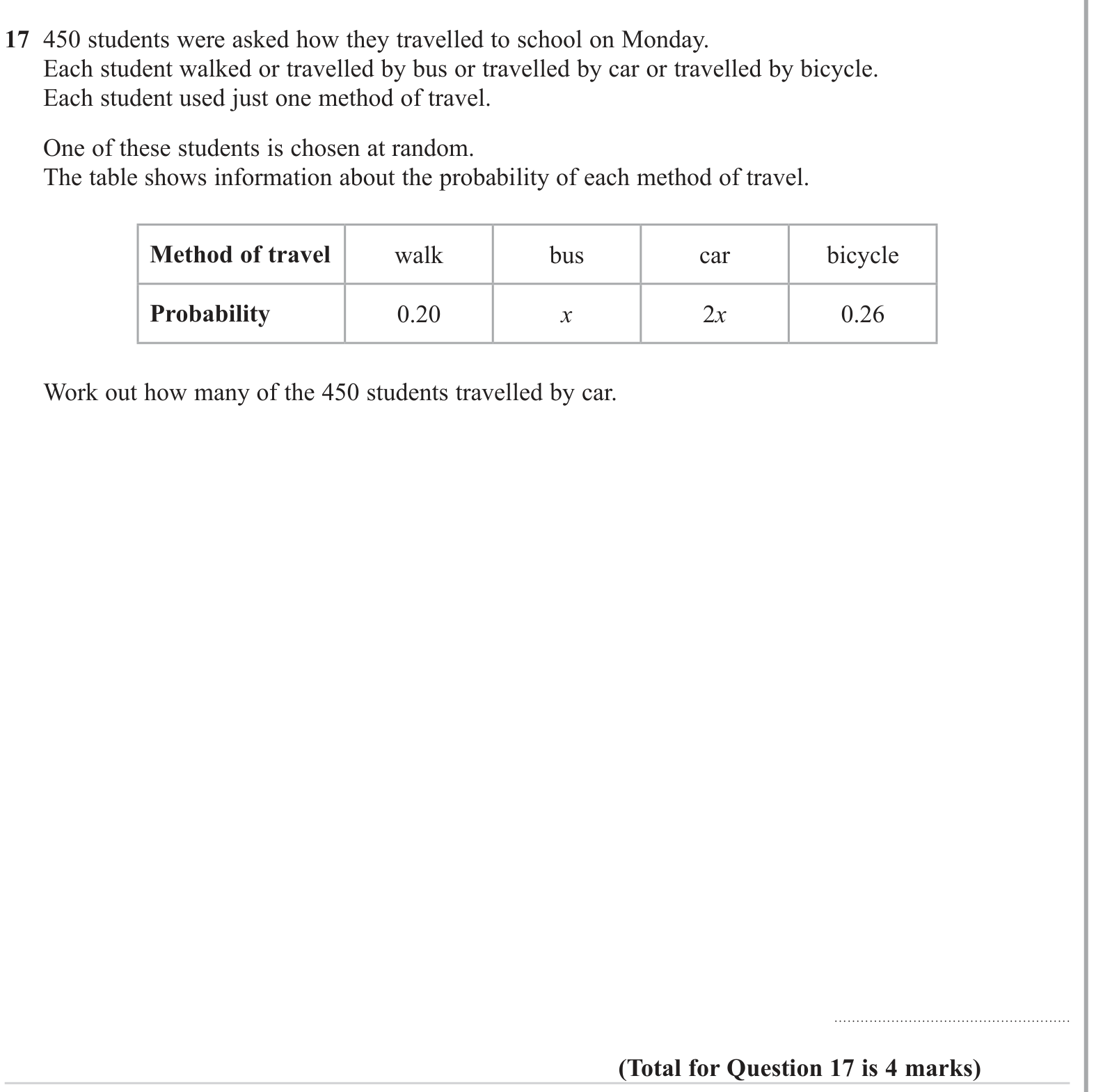
Show mark scheme

Question 2 of 9
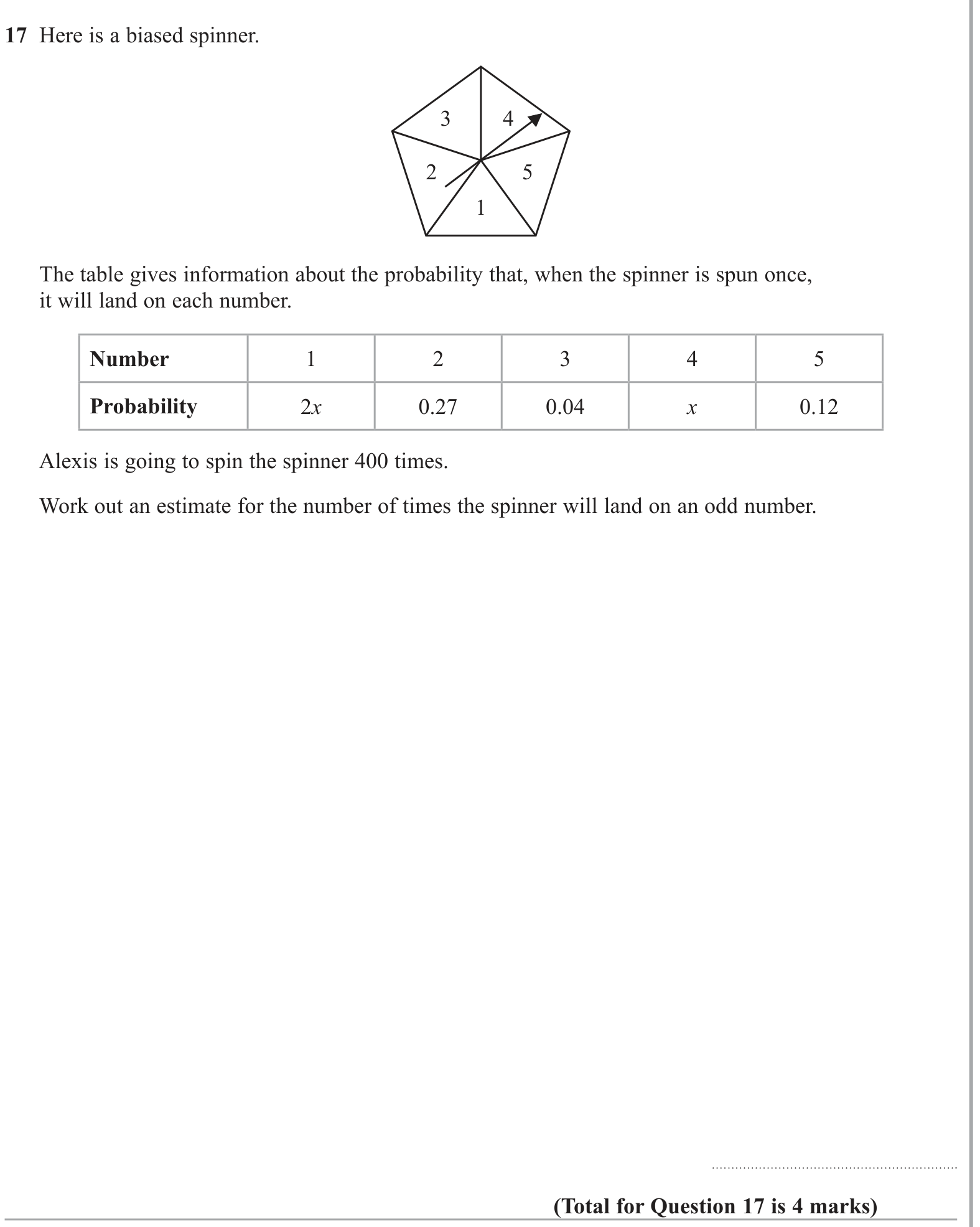
Show mark scheme

Question 3 of 9
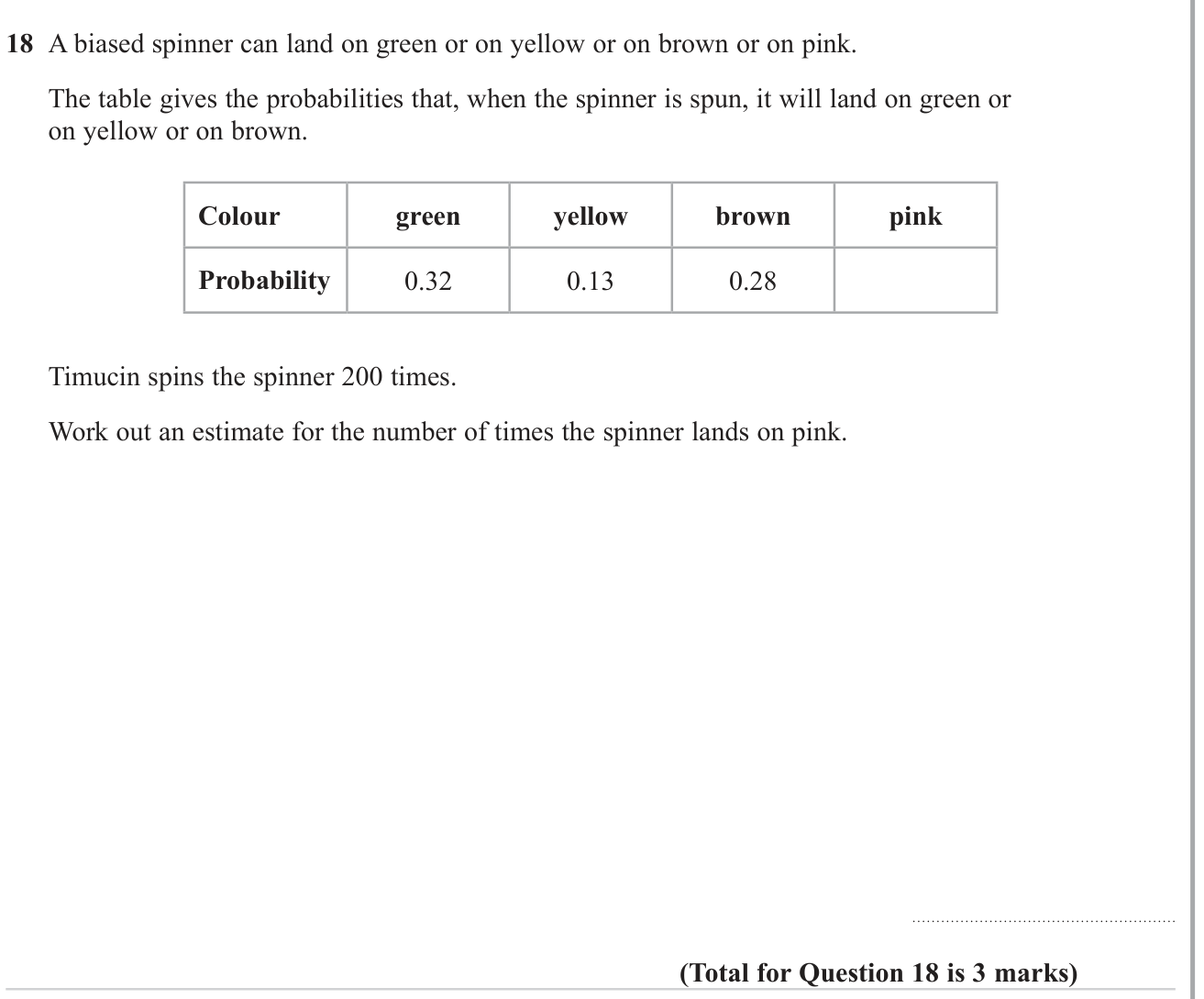
Show mark scheme

Question 4 of 9
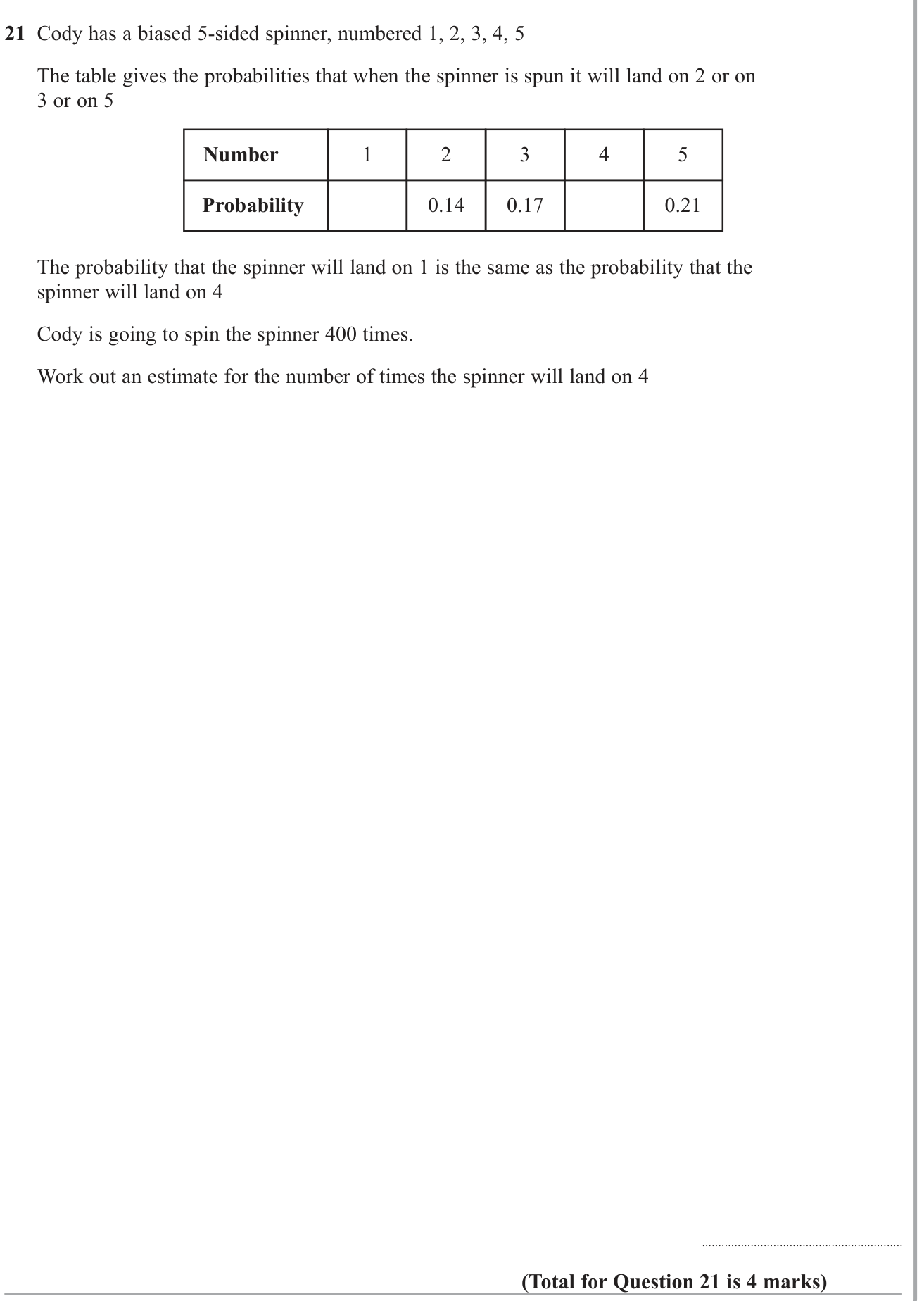
Show mark scheme

Question 5 of 9
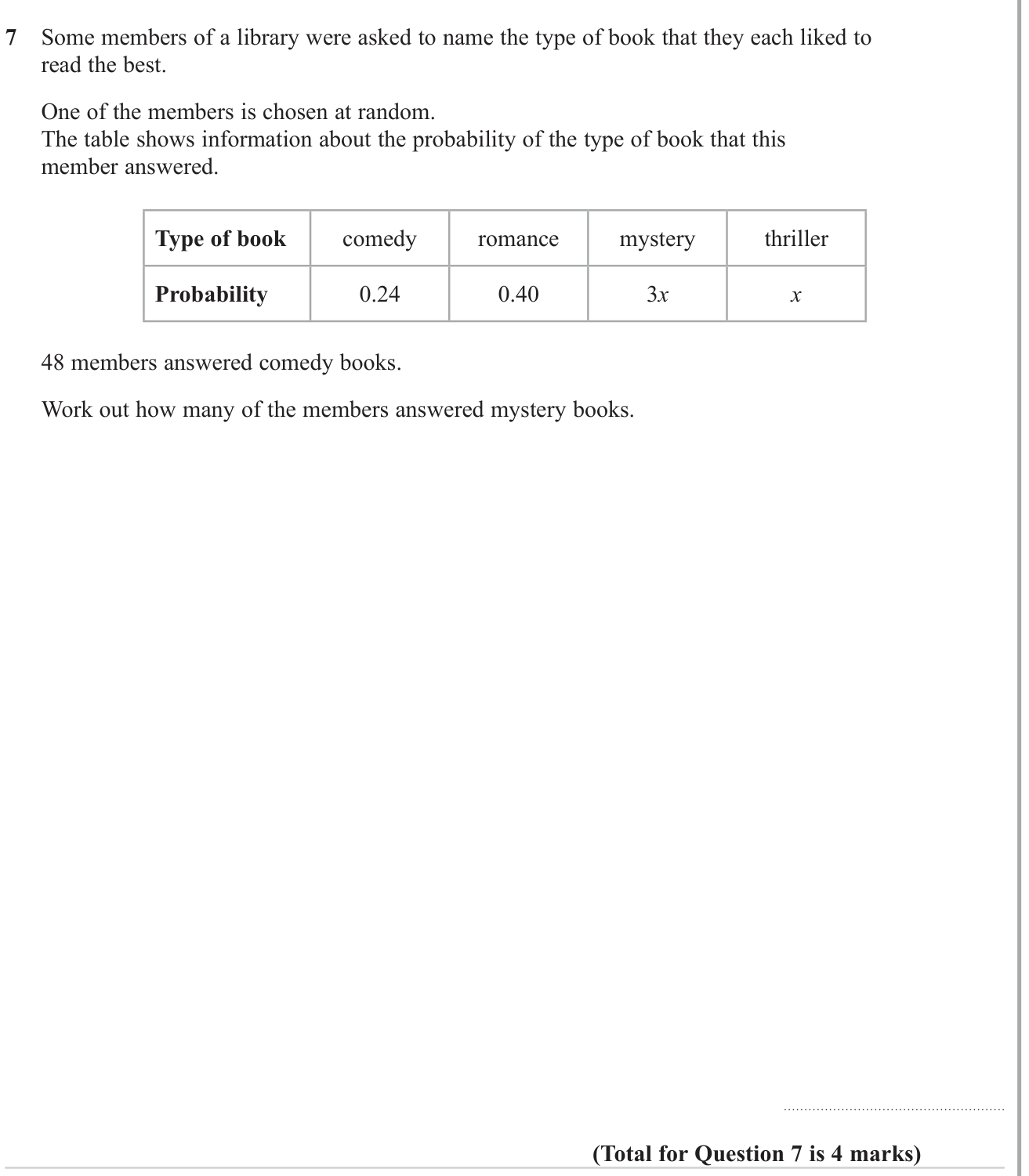
Show mark scheme

Question 6 of 9
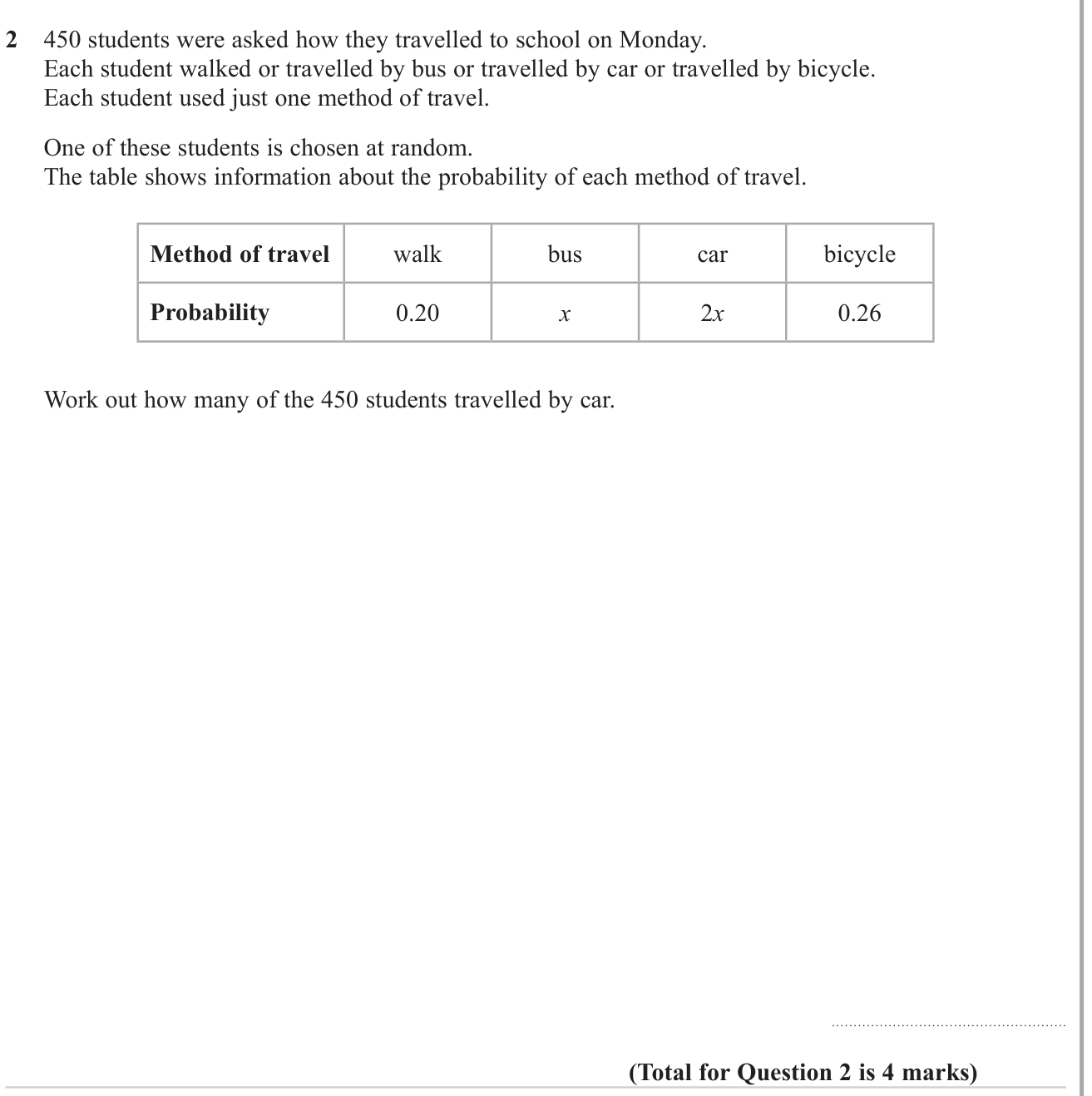
Show mark scheme

Question 7 of 9
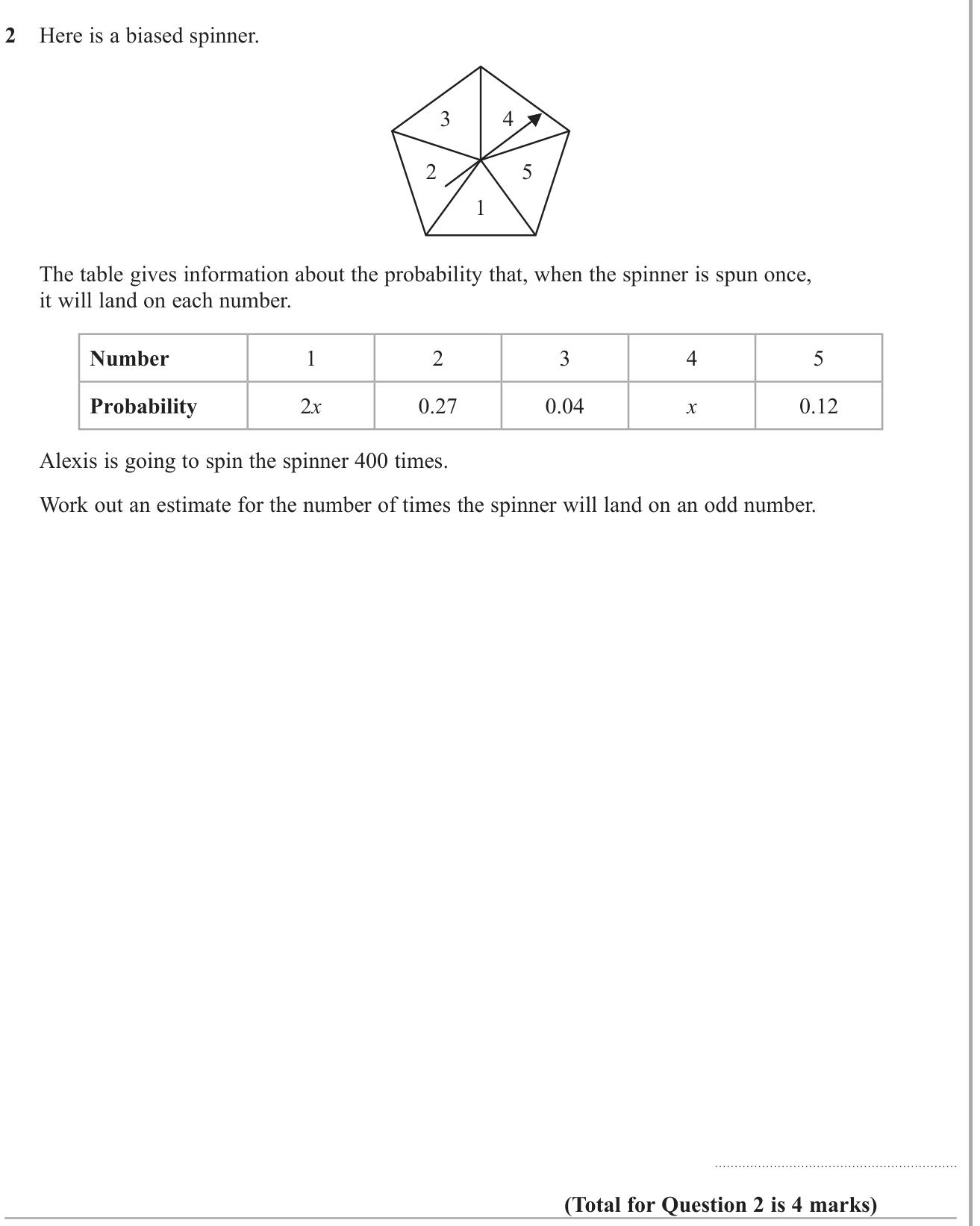
Show mark scheme

Question 8 of 9
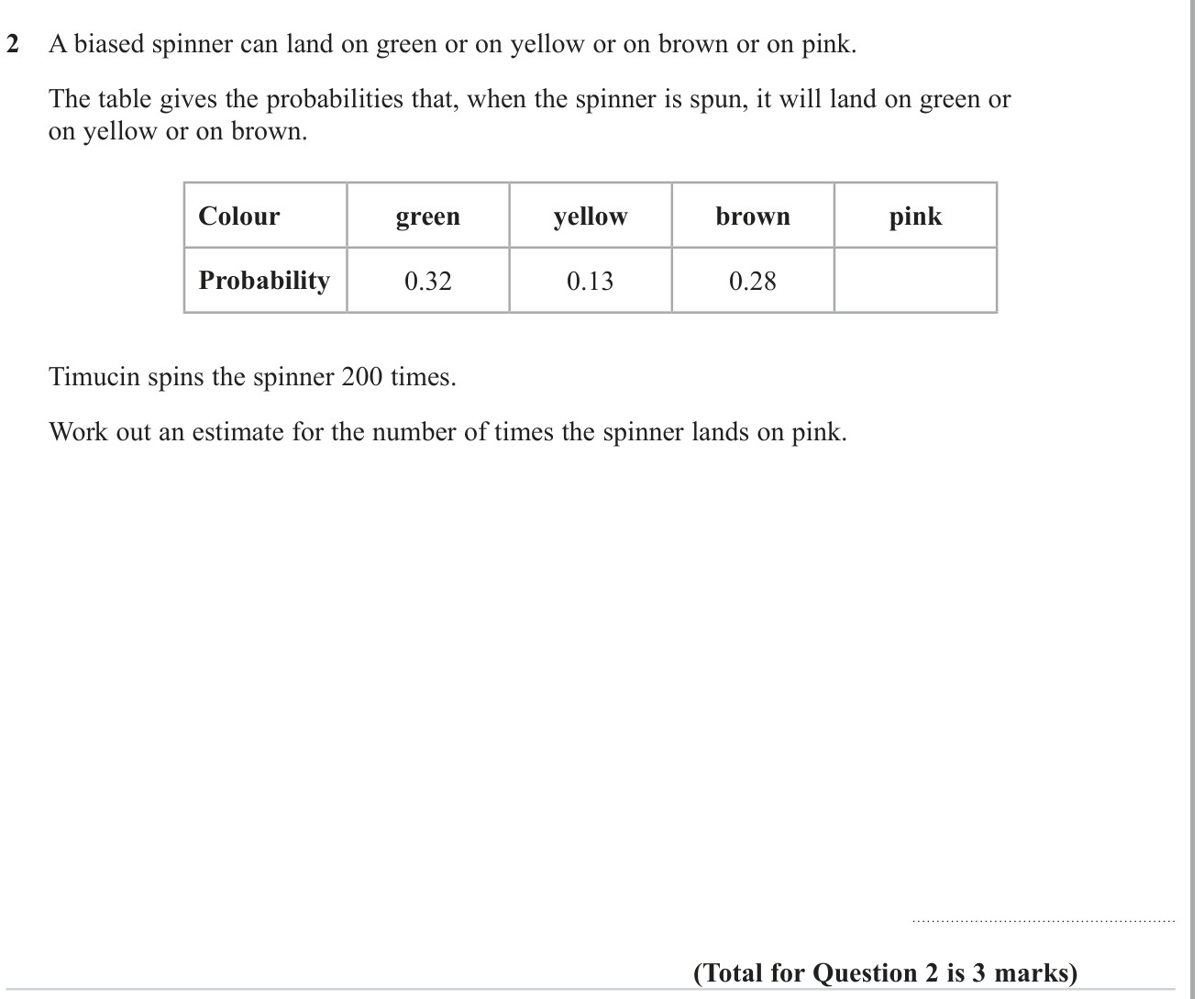
Show mark scheme

Question 9 of 9
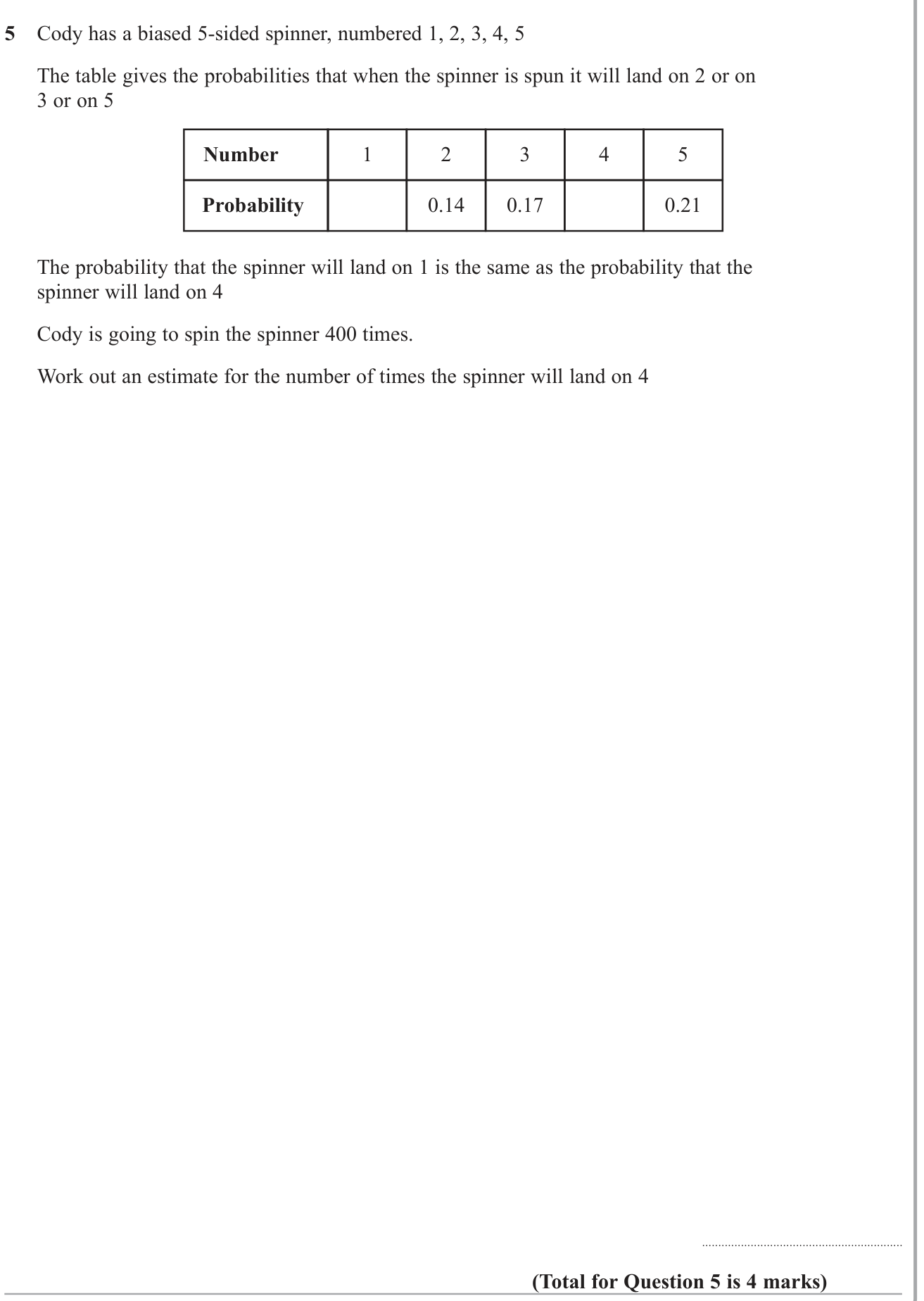
Show mark scheme
