Edexcel IGCSE·Mathematics 4MA1
Sets And Venn Diagram
Key knowledge — Numbers
Formulas & equations
Percentage change = (change ÷ original) × 100Simple interest = P × R × T ÷ 100Compound interest: A = P(1 + r/100)ⁿSpeed = Distance ÷ TimeDensity = Mass ÷ VolumeUpper bound = measured value + ½ × precisionLower bound = measured value − ½ × precision
Key facts & rules
- A prime number has exactly 2 factors: 1 and itself. 1 is NOT prime.
- HCF: highest common factor — use a Venn diagram of prime factors.
- LCM: lowest common multiple — product of all prime factors, using highest powers.
- Standard form: A × 10ⁿ where 1 ≤ A < 10.
- Rational numbers can be written as fractions p/q (q ≠ 0). Irrational numbers cannot (e.g. π, √2).
- To convert a recurring decimal to a fraction: multiply by 10ⁿ to eliminate the recurring part, then subtract.
- Index laws: aᵐ × aⁿ = aᵐ⁺ⁿ; aᵐ ÷ aⁿ = aᵐ⁻ⁿ; (aᵐ)ⁿ = aᵐⁿ; a⁰ = 1; a⁻ⁿ = 1/aⁿ; a^(1/n) = ⁿ√a.
Laws & theorems
- Order of operations: Brackets → Indices → Multiply/Divide → Add/Subtract (BIDMAS).
- Significant figures: count from the first non-zero digit.
Sets and Venn Diagram
20 Edexcel IGCSE 4MA1 past paper questions on sets and venn diagram — Foundation and Higher, with mark schemes.
Question 1 of 20
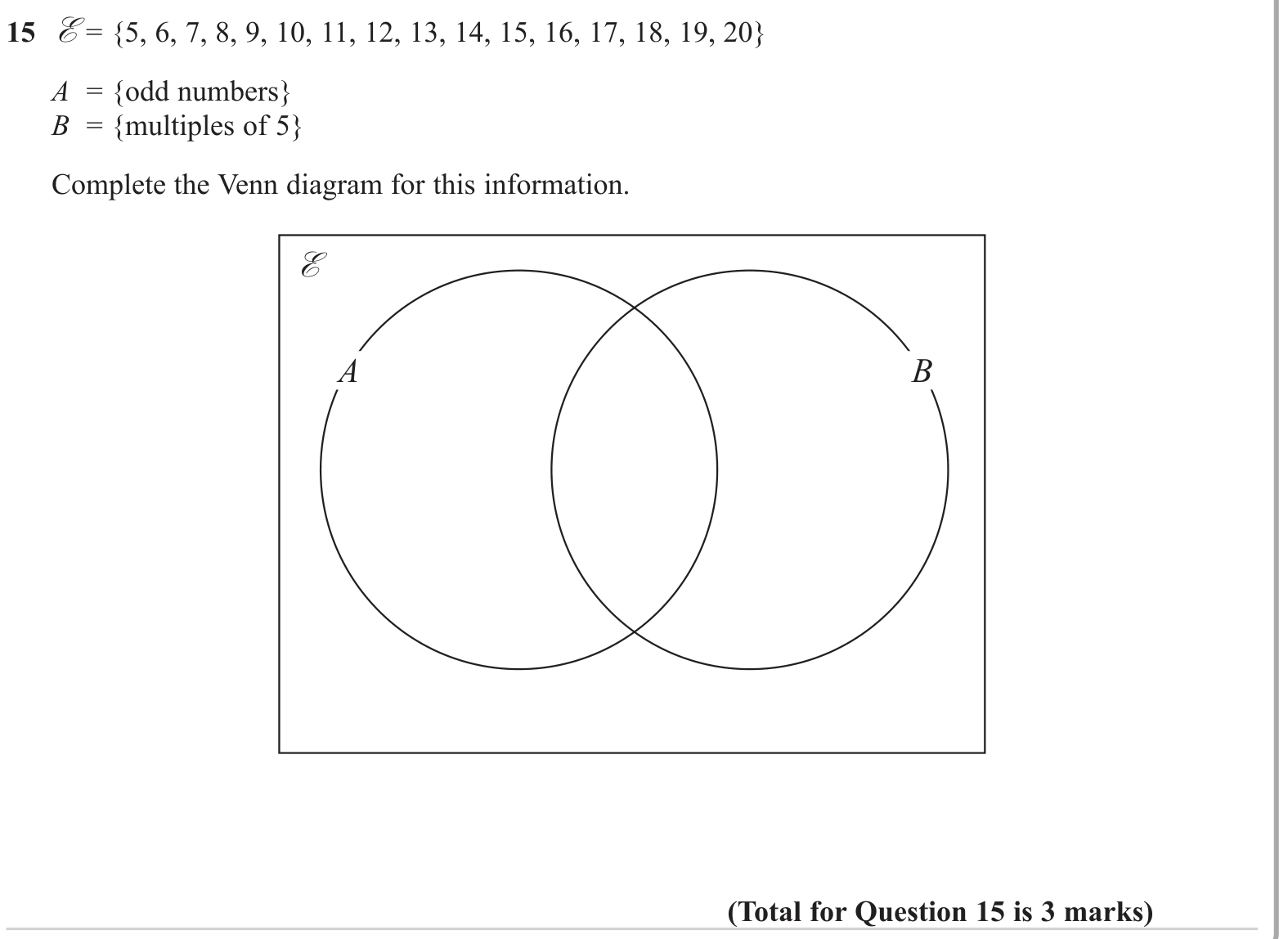
Show mark scheme

Question 2 of 20
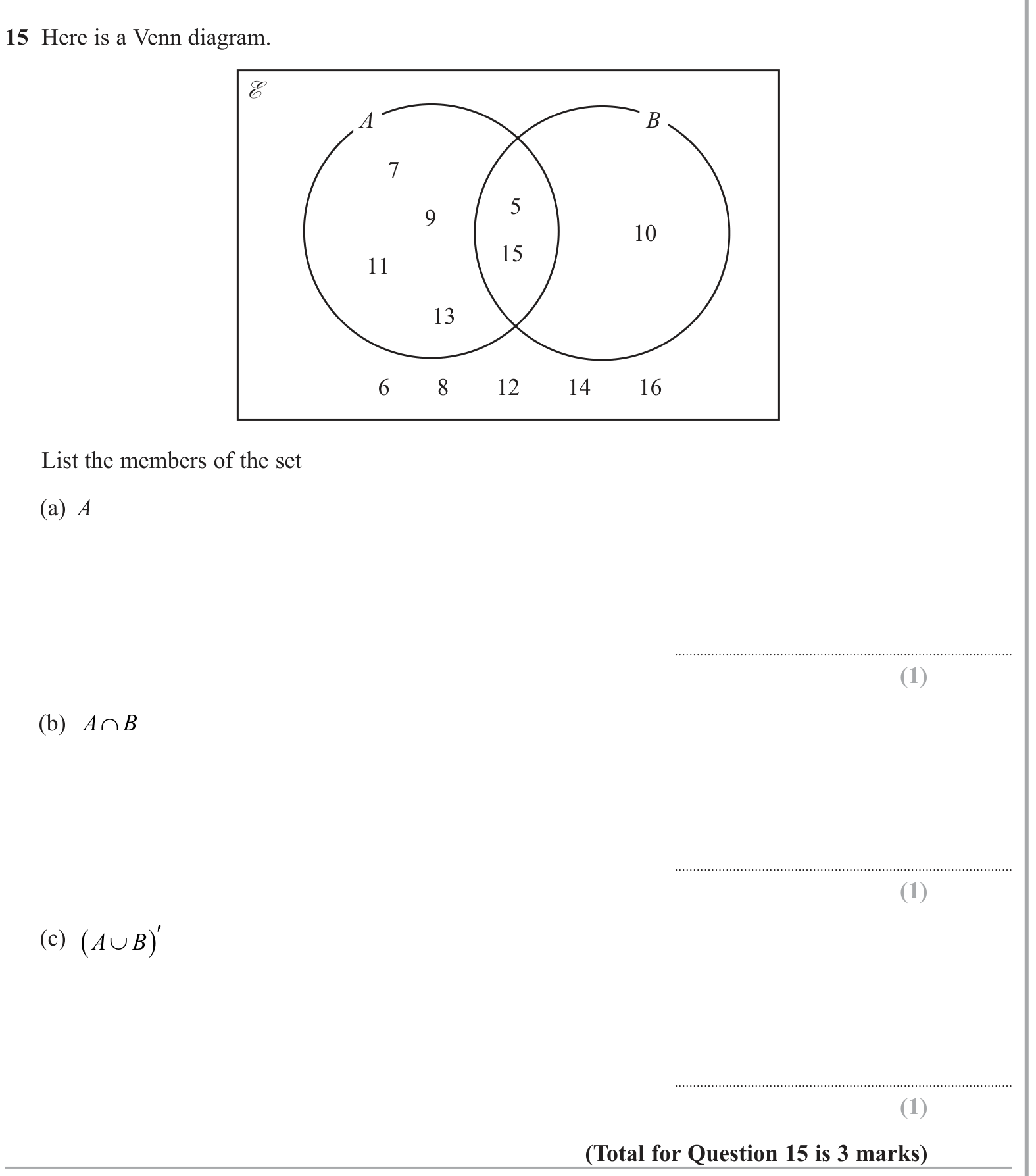
Show mark scheme

Question 3 of 20
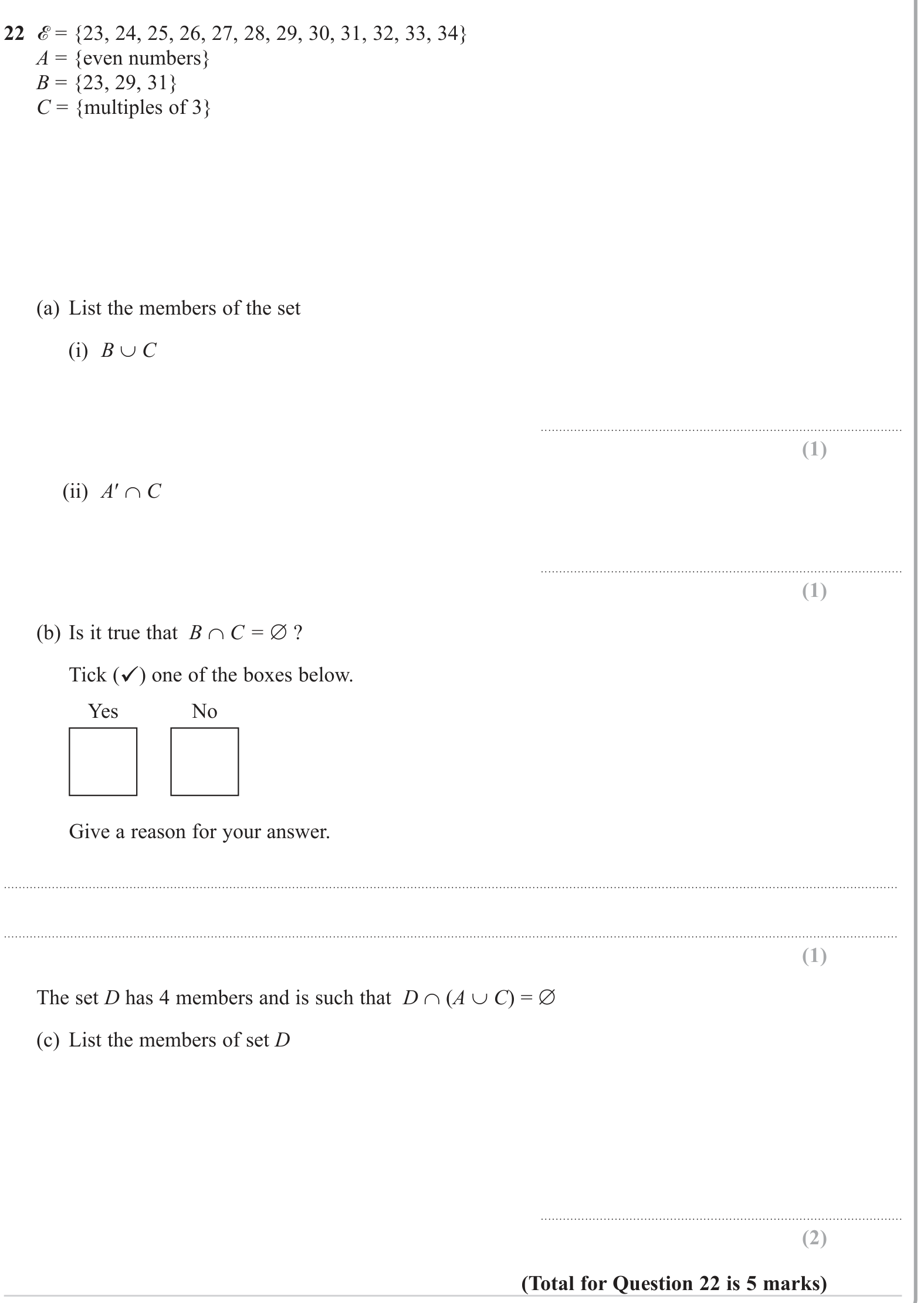
Show mark scheme

Question 4 of 20
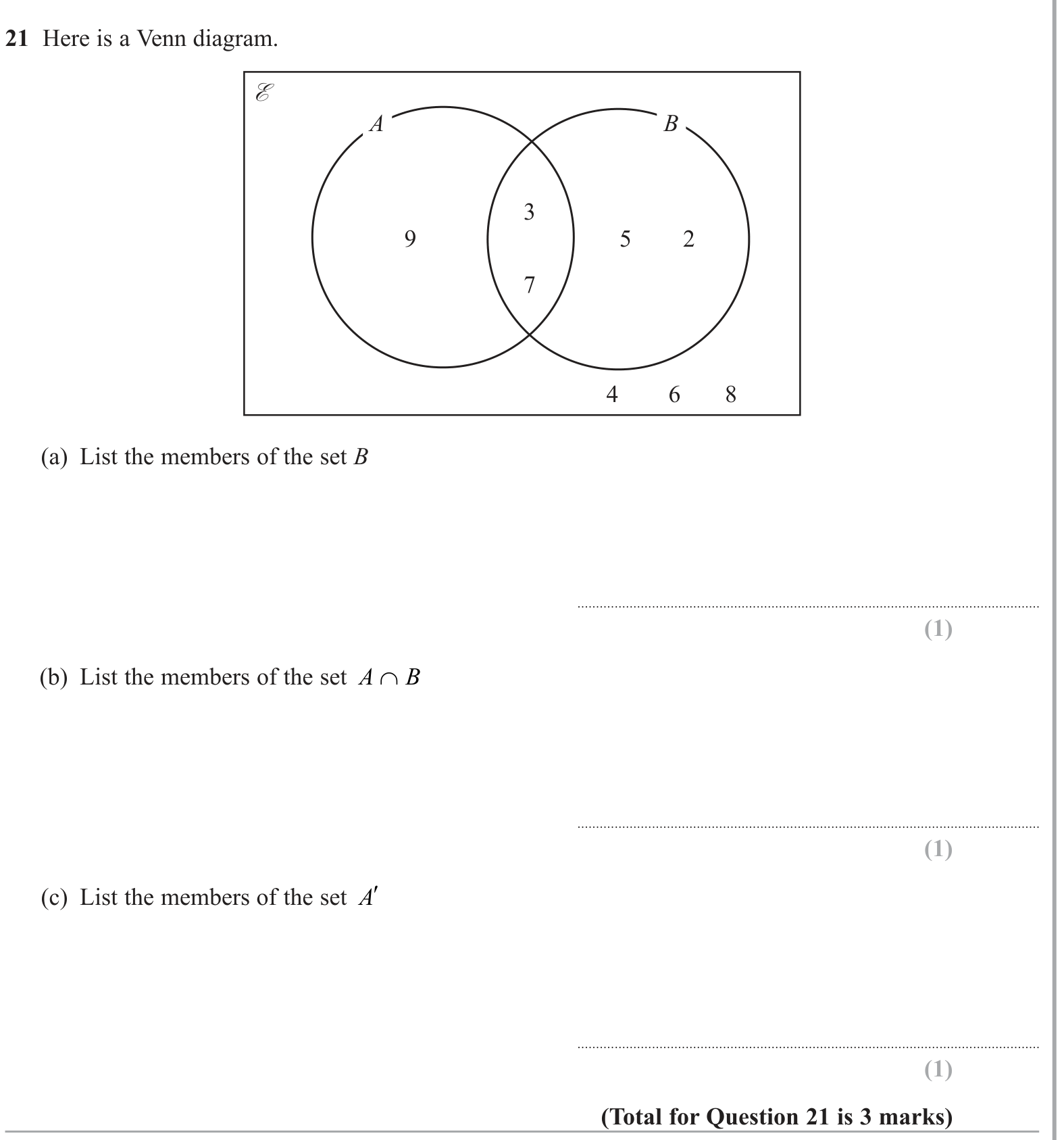
Show mark scheme

Question 5 of 20
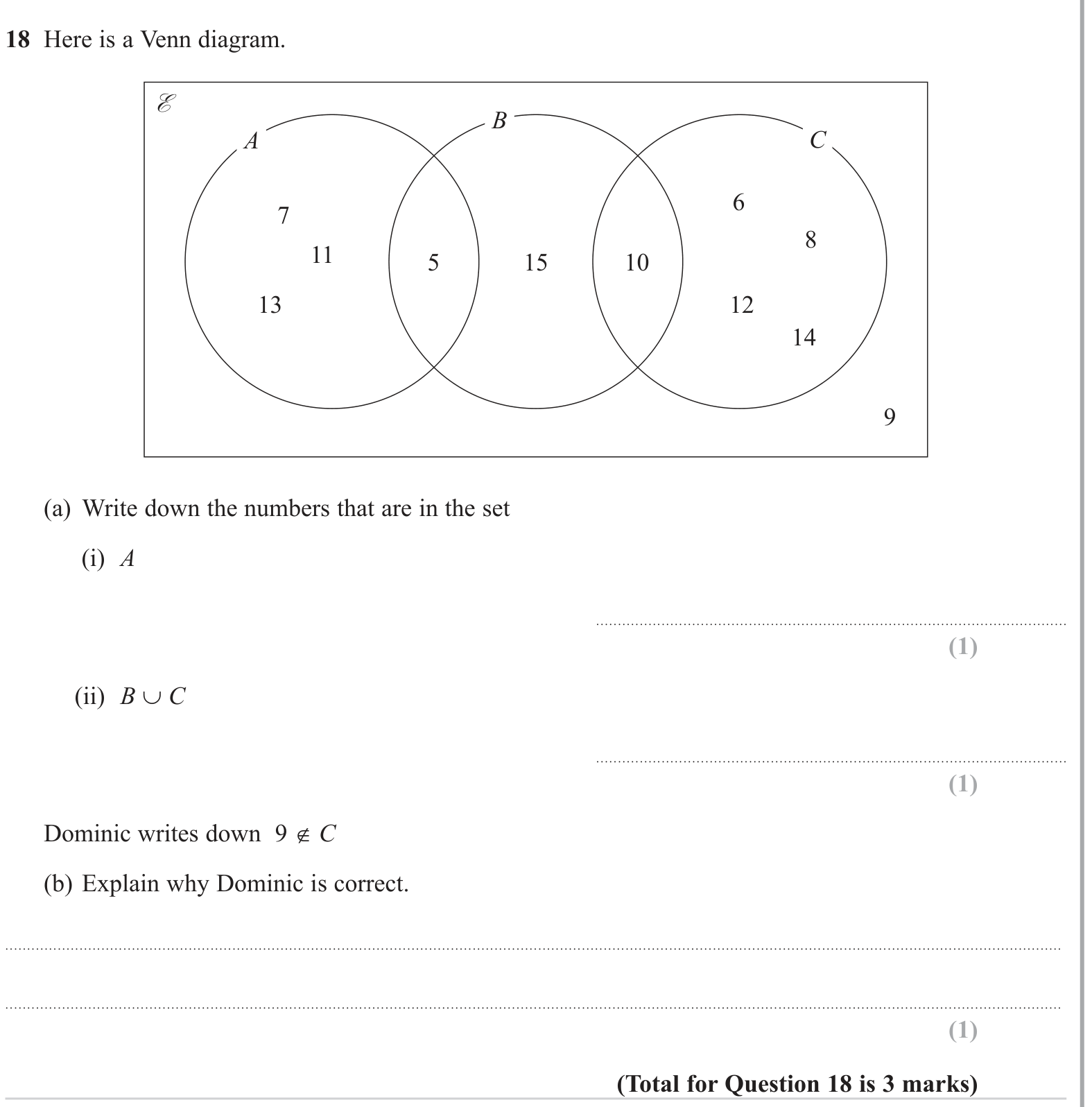
Show mark scheme

Question 6 of 20
Show mark scheme

Question 7 of 20
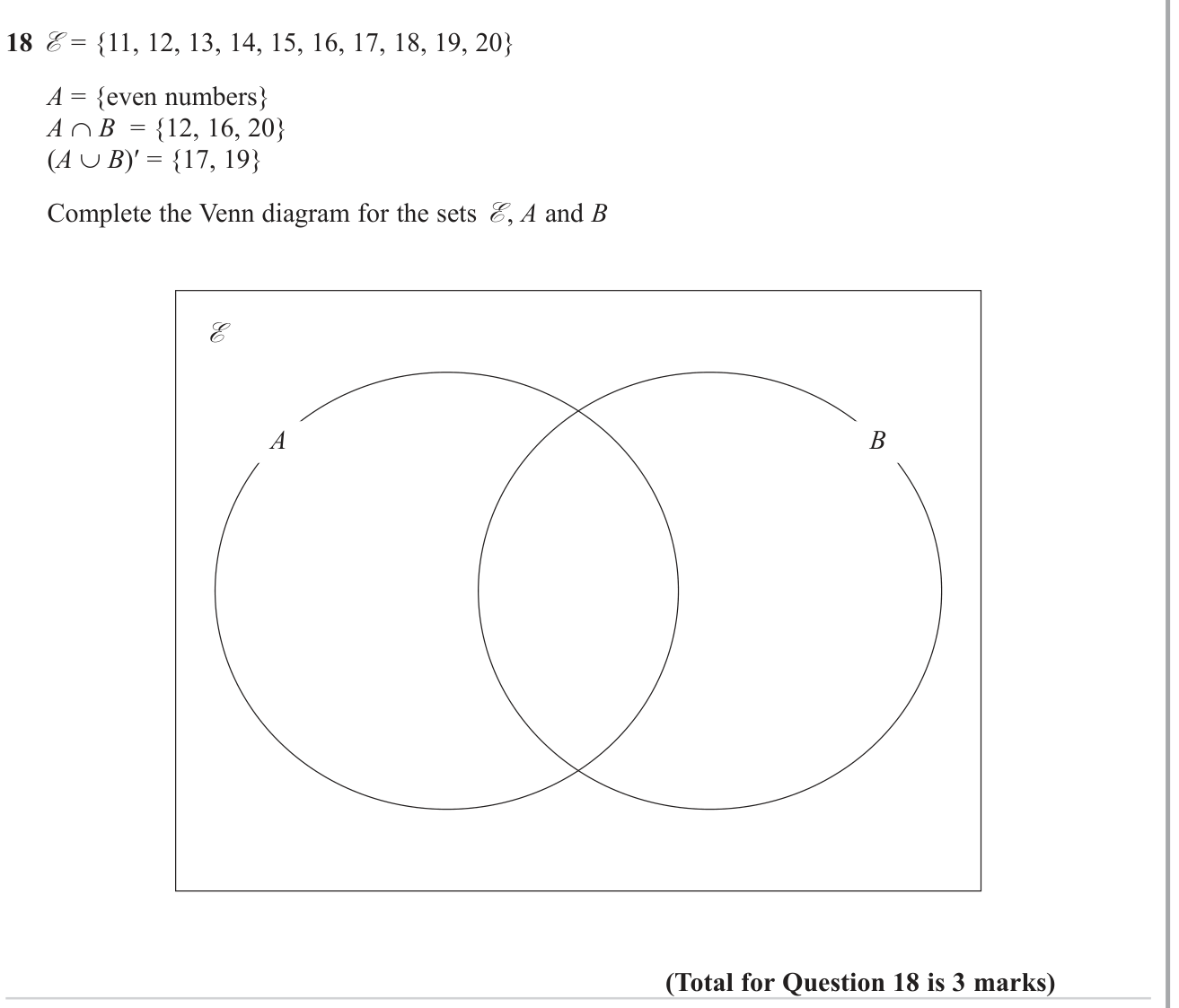
Show mark scheme

Question 8 of 20
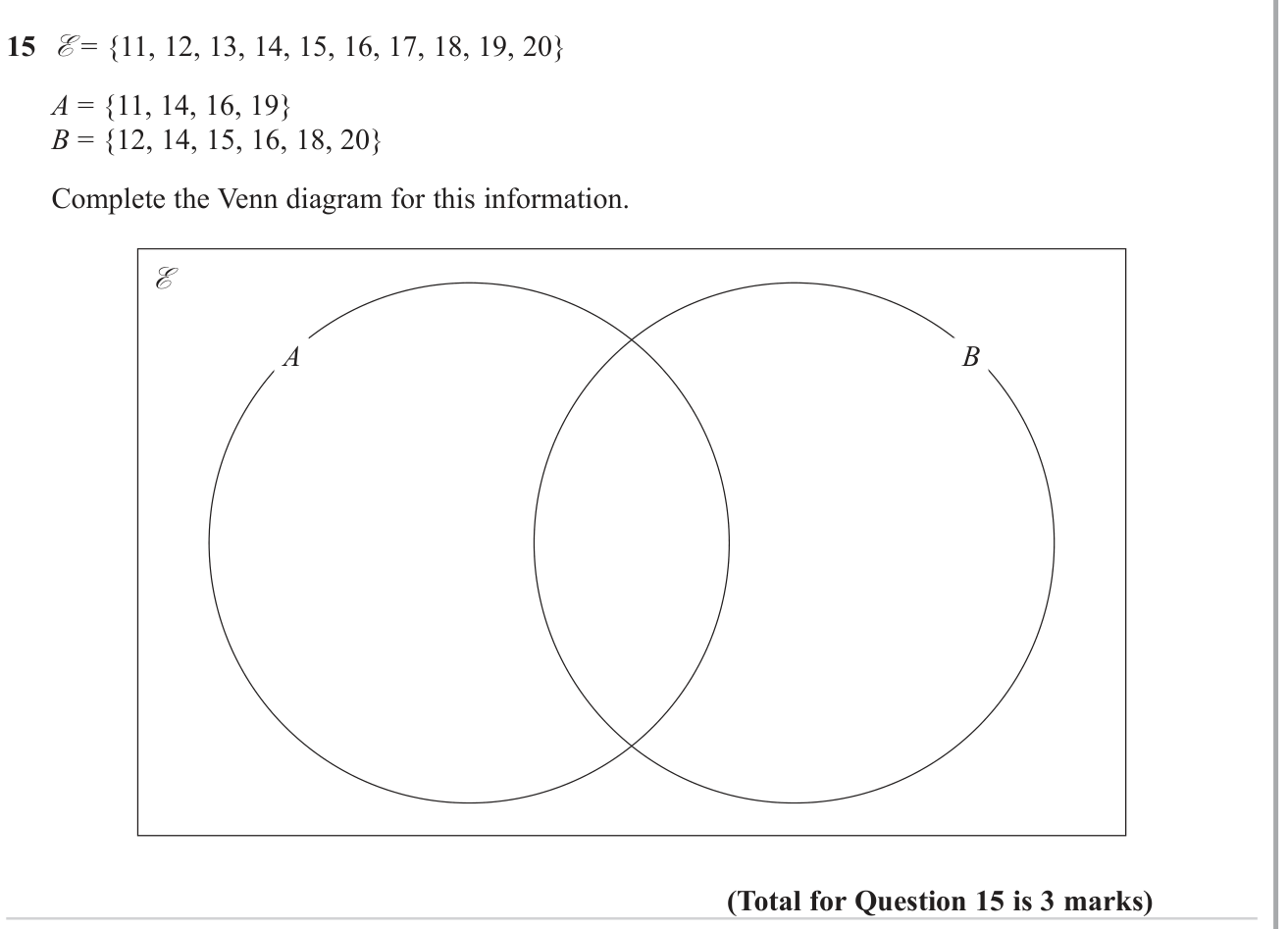
Show mark scheme

Question 9 of 20
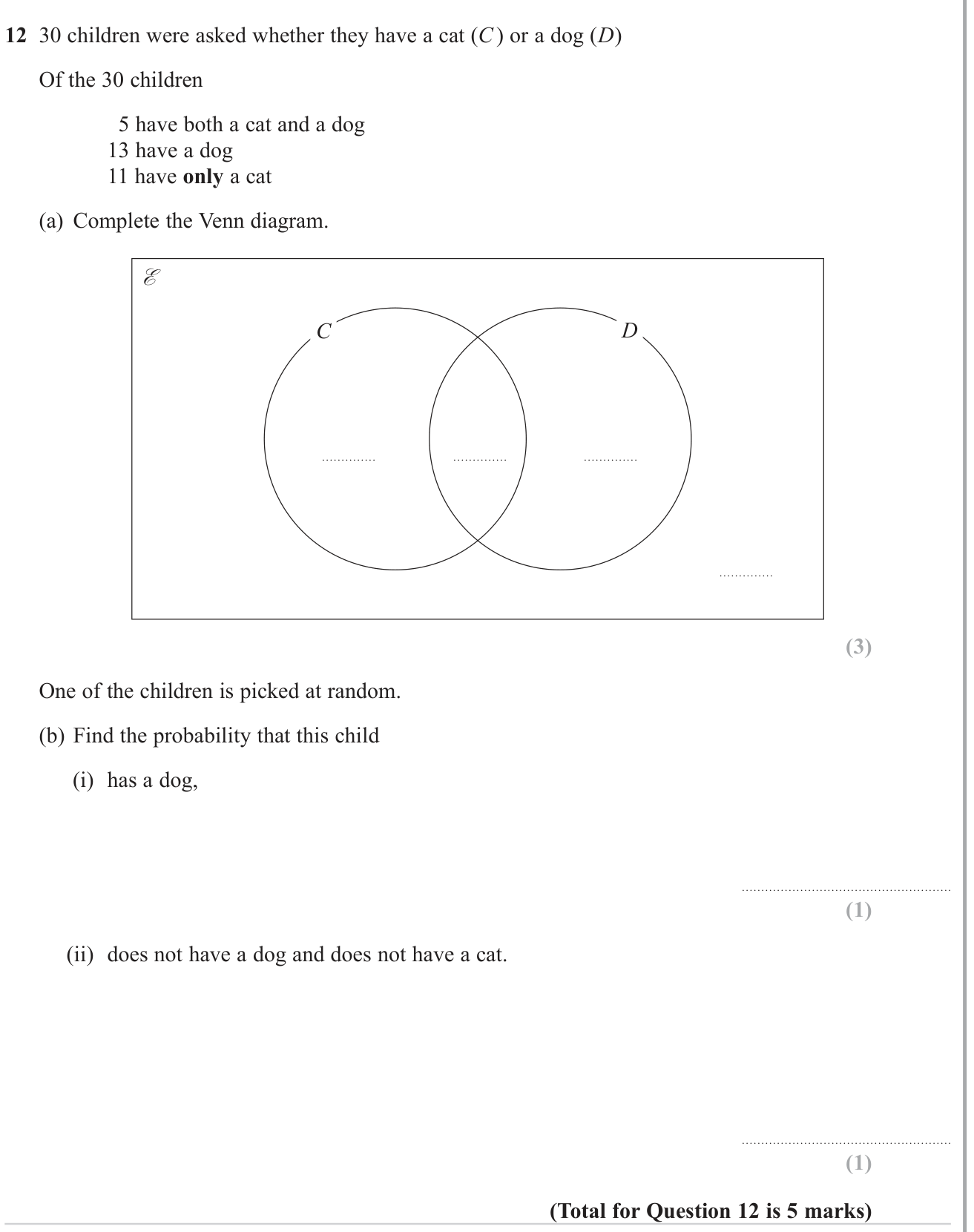
Show mark scheme

Question 10 of 20
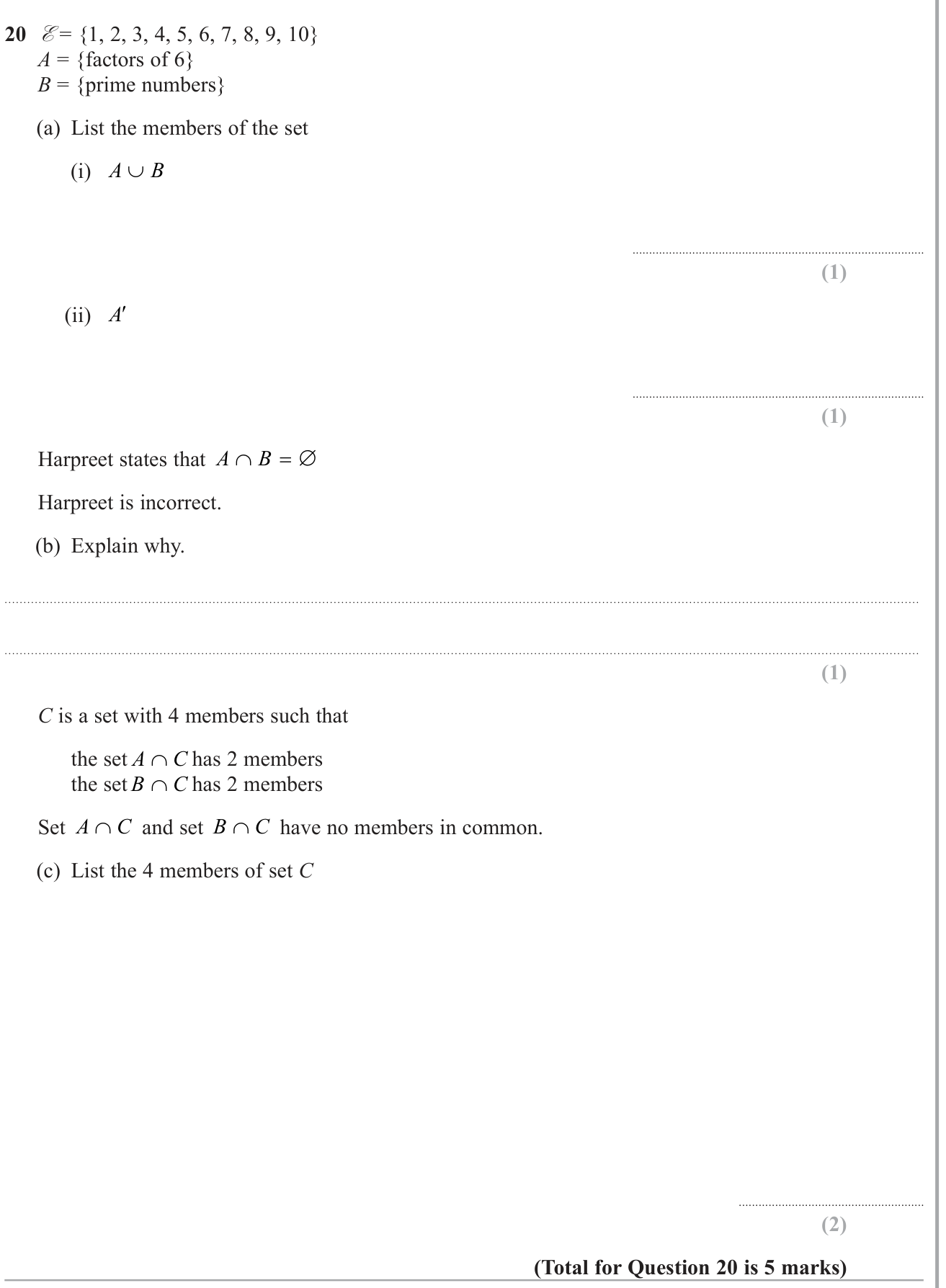
Show mark scheme

Question 11 of 20
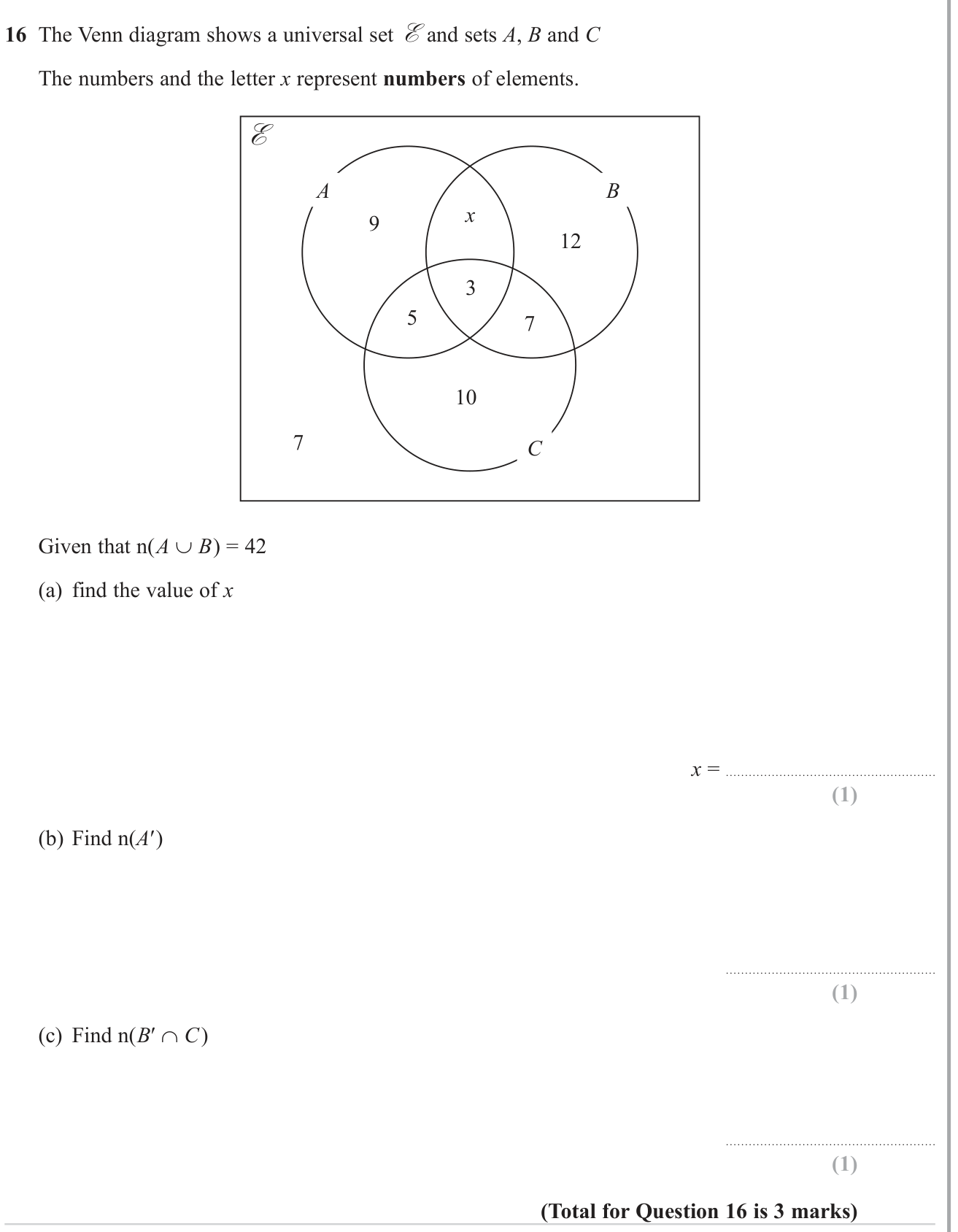
Show mark scheme

Question 12 of 20
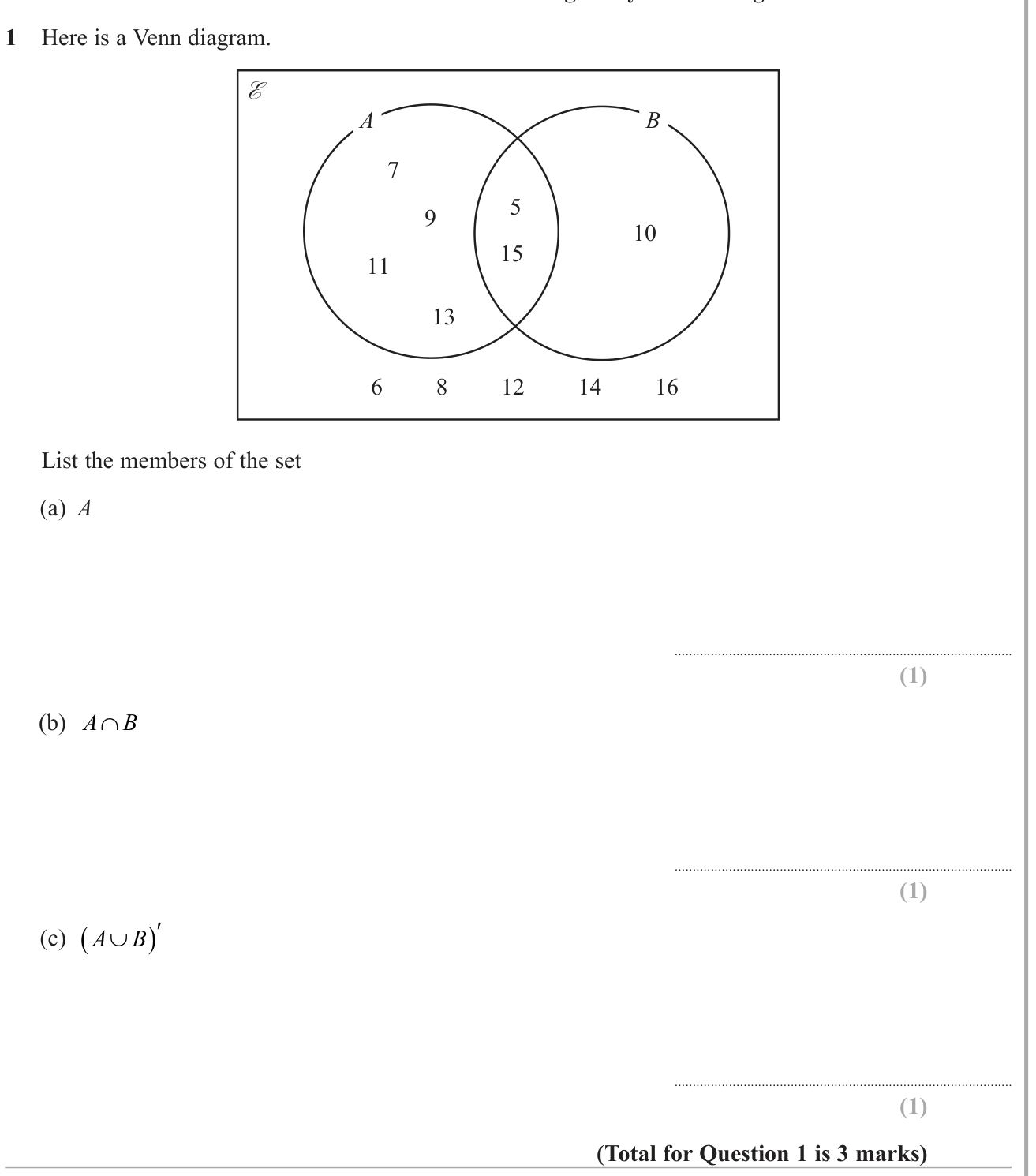
Show mark scheme

Question 13 of 20
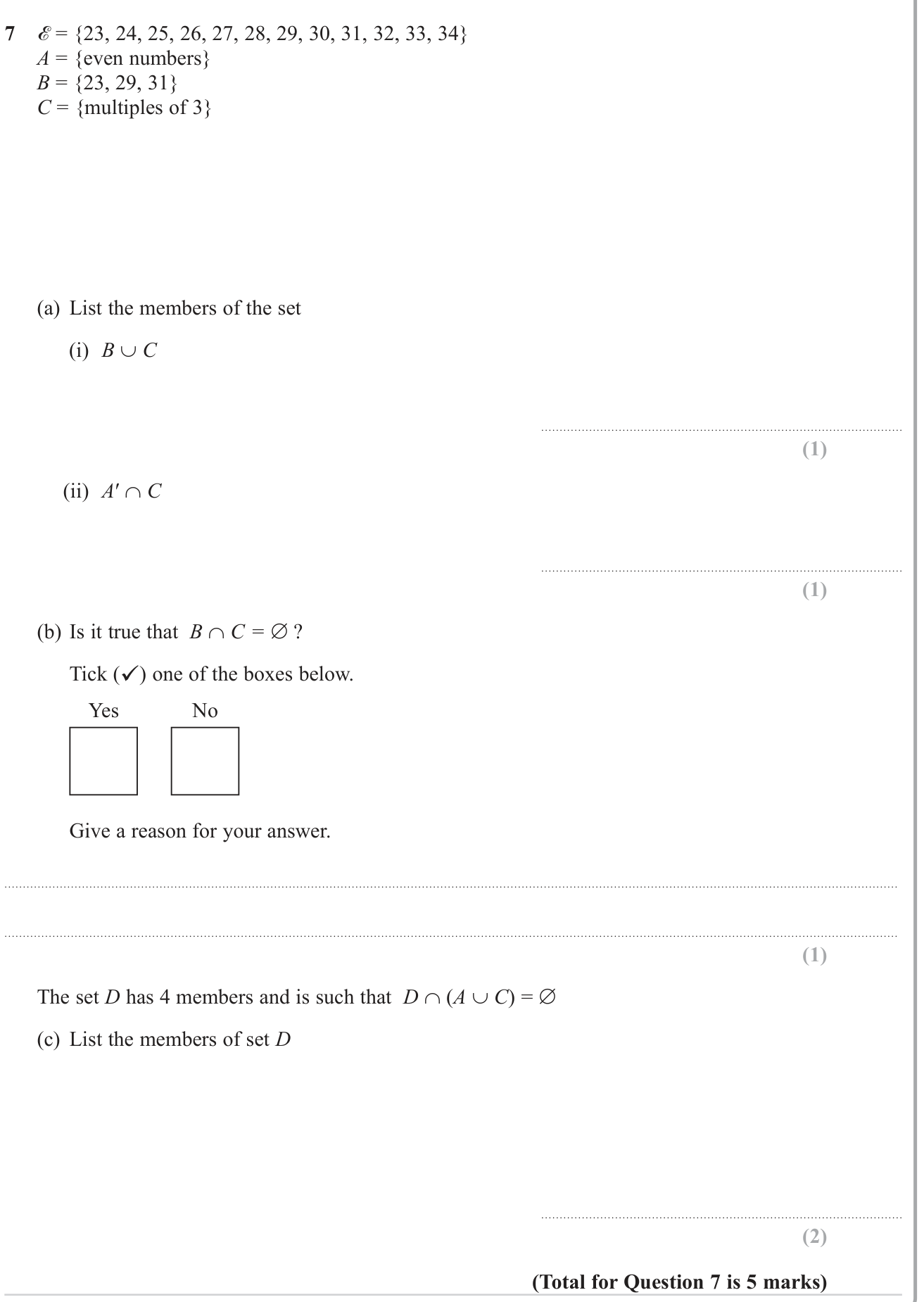
Show mark scheme

Question 14 of 20
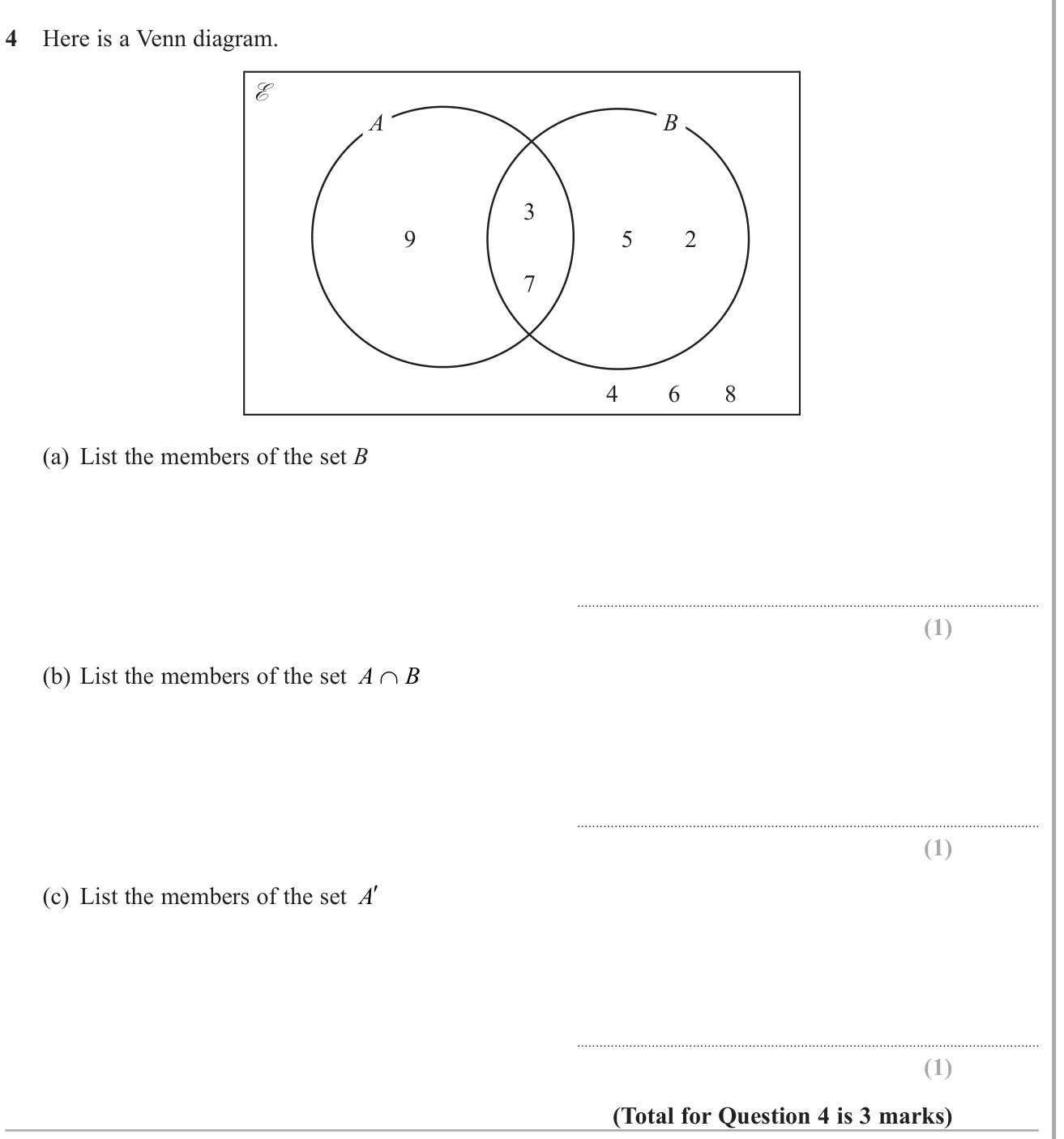
Show mark scheme

Question 15 of 20
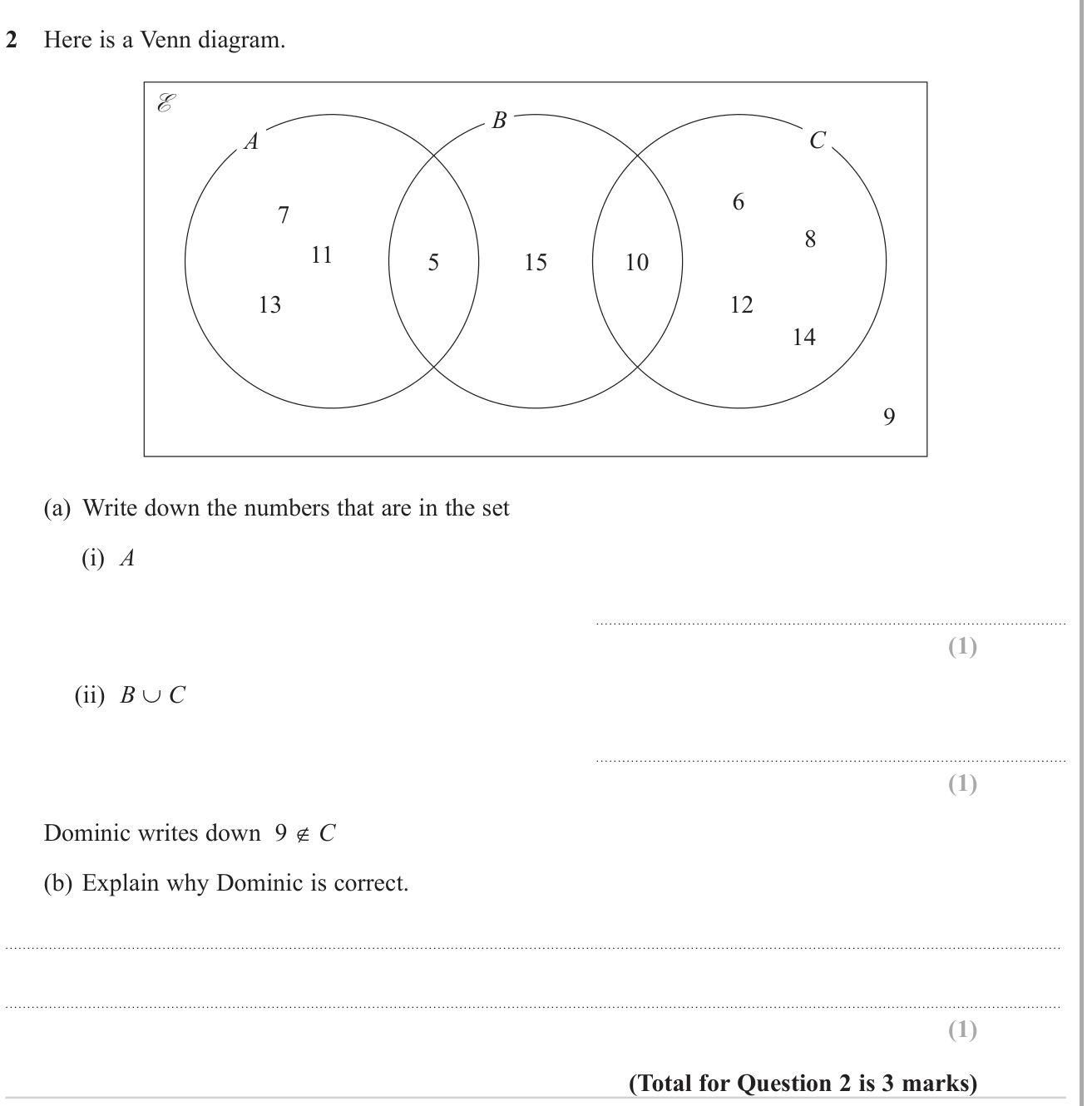
Show mark scheme

Question 16 of 20
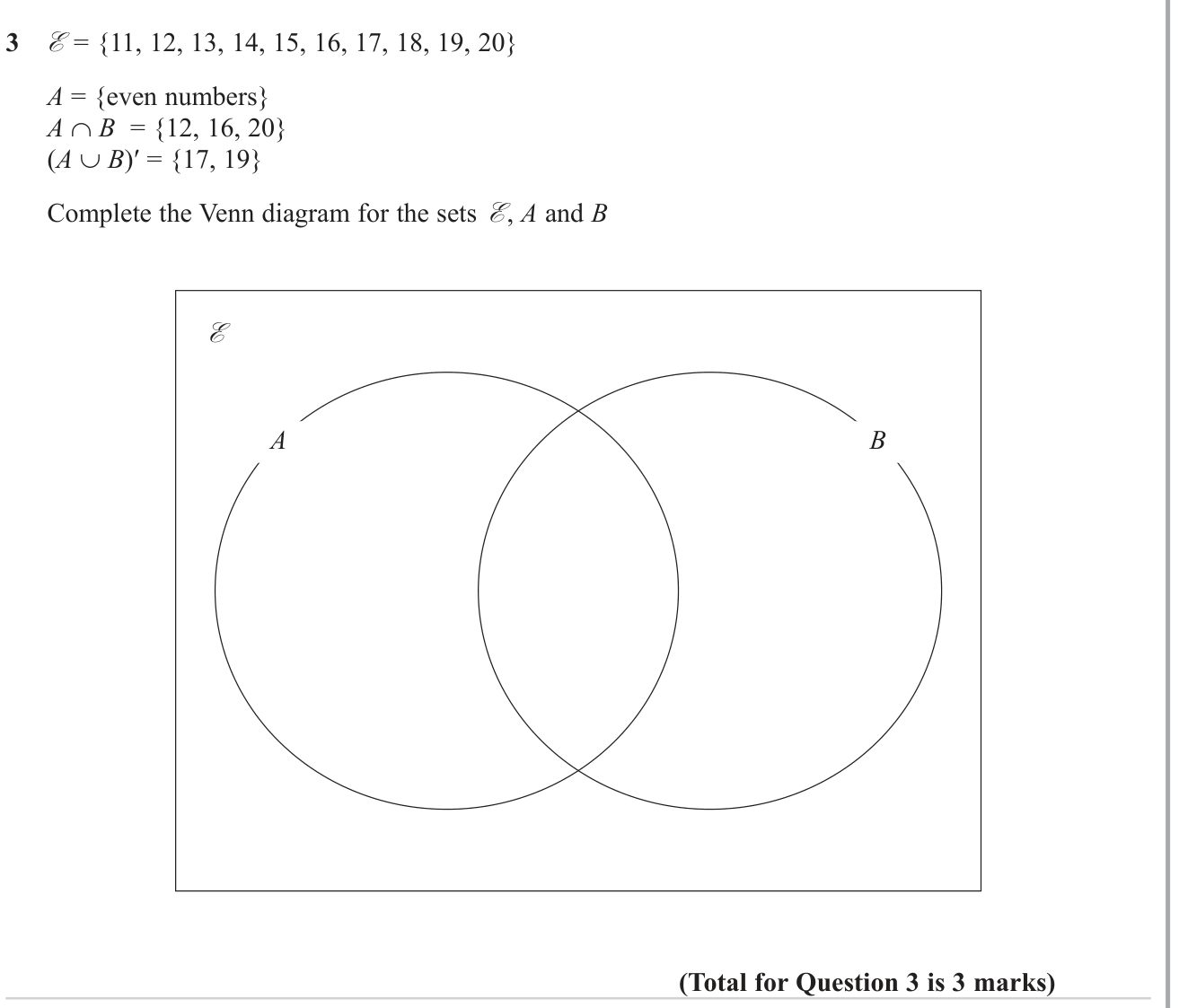
Show mark scheme

Question 17 of 20
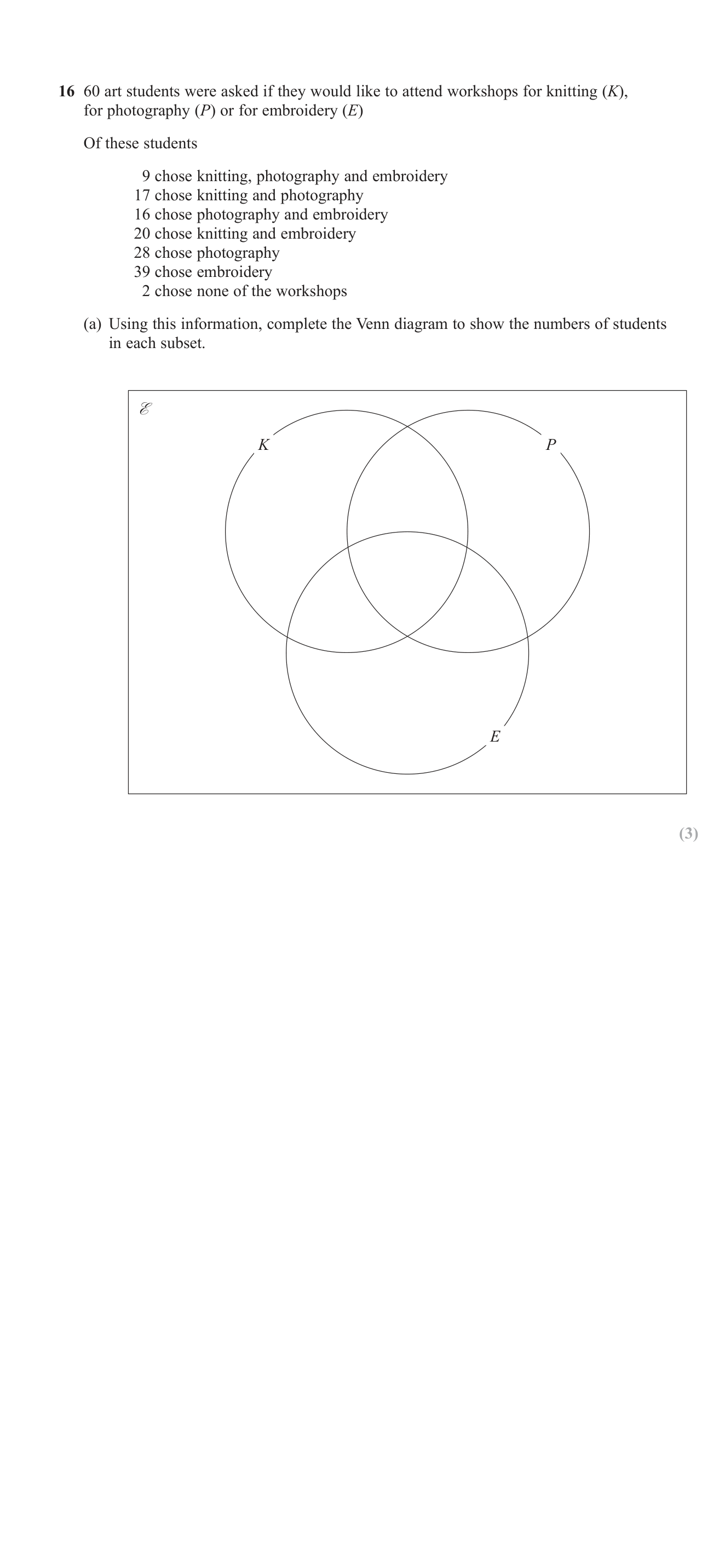
Show mark scheme

Question 18 of 20
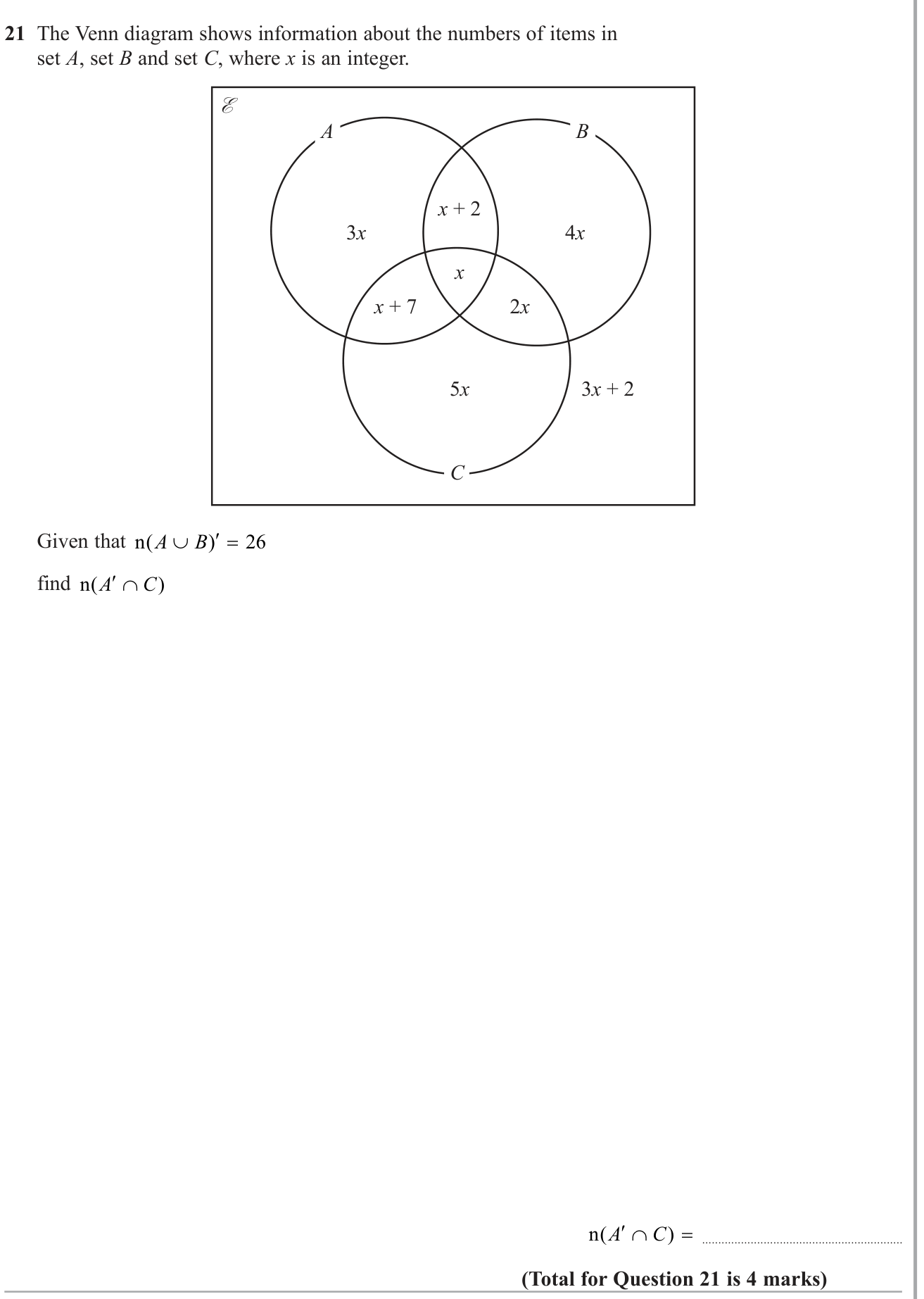
Show mark scheme

Question 19 of 20
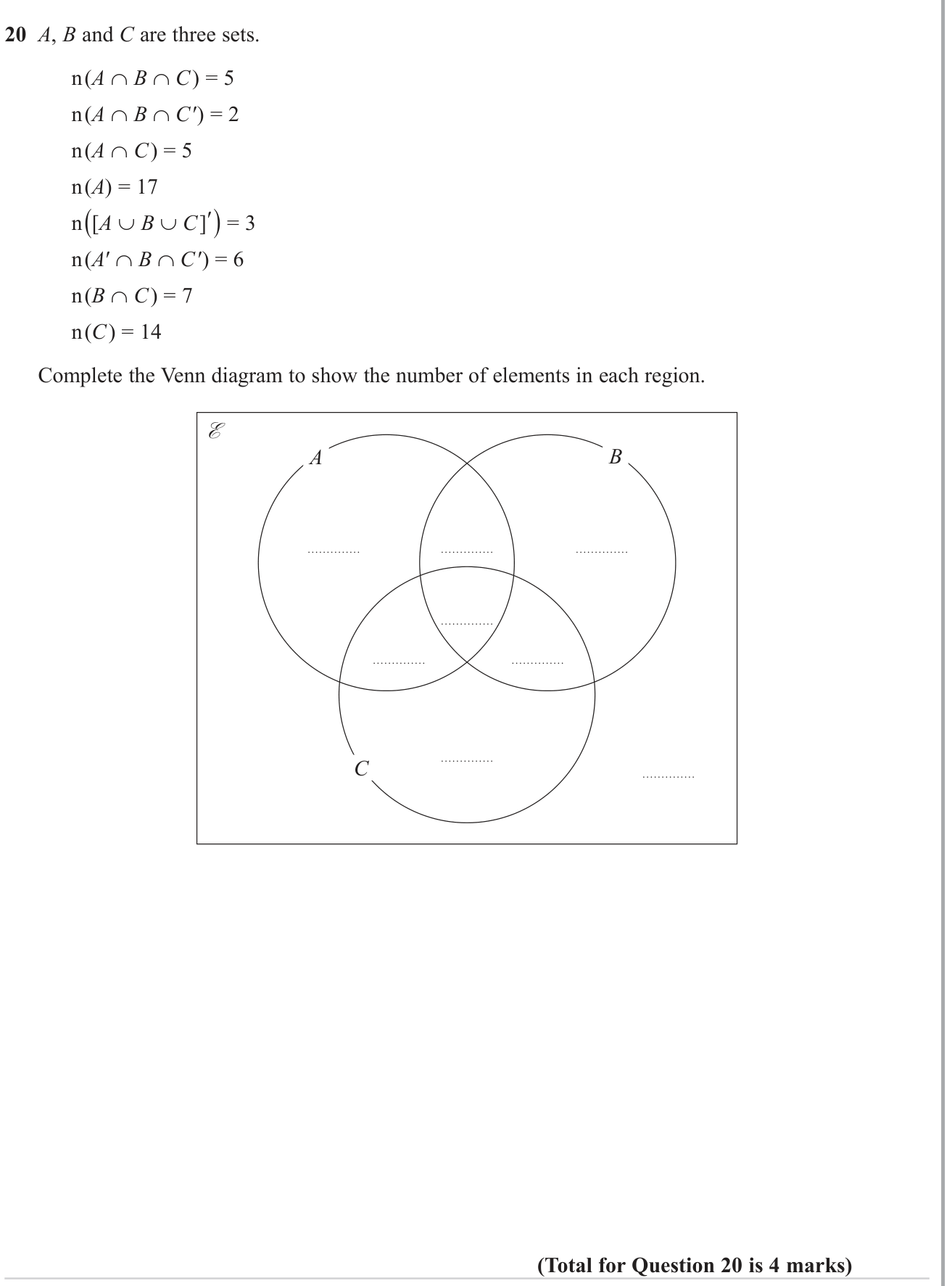
Show mark scheme

Question 20 of 20
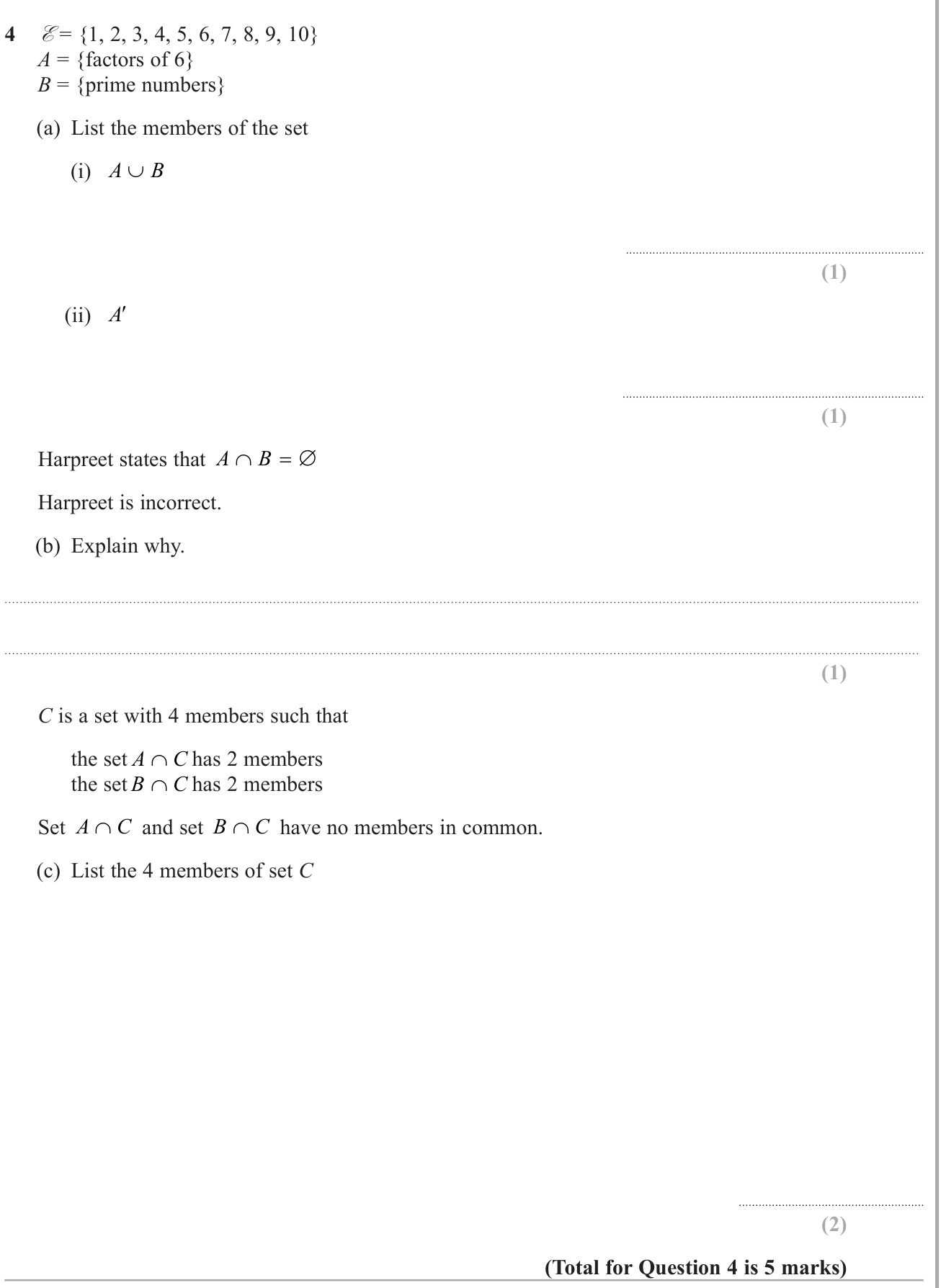
Show mark scheme
