Edexcel IGCSE·Mathematics 4MA1
Convert Recurring Decimal To Fraction
Key knowledge — Numbers
Formulas & equations
Percentage change = (change ÷ original) × 100Simple interest = P × R × T ÷ 100Compound interest: A = P(1 + r/100)ⁿSpeed = Distance ÷ TimeDensity = Mass ÷ VolumeUpper bound = measured value + ½ × precisionLower bound = measured value − ½ × precision
Key facts & rules
- A prime number has exactly 2 factors: 1 and itself. 1 is NOT prime.
- HCF: highest common factor — use a Venn diagram of prime factors.
- LCM: lowest common multiple — product of all prime factors, using highest powers.
- Standard form: A × 10ⁿ where 1 ≤ A < 10.
- Rational numbers can be written as fractions p/q (q ≠ 0). Irrational numbers cannot (e.g. π, √2).
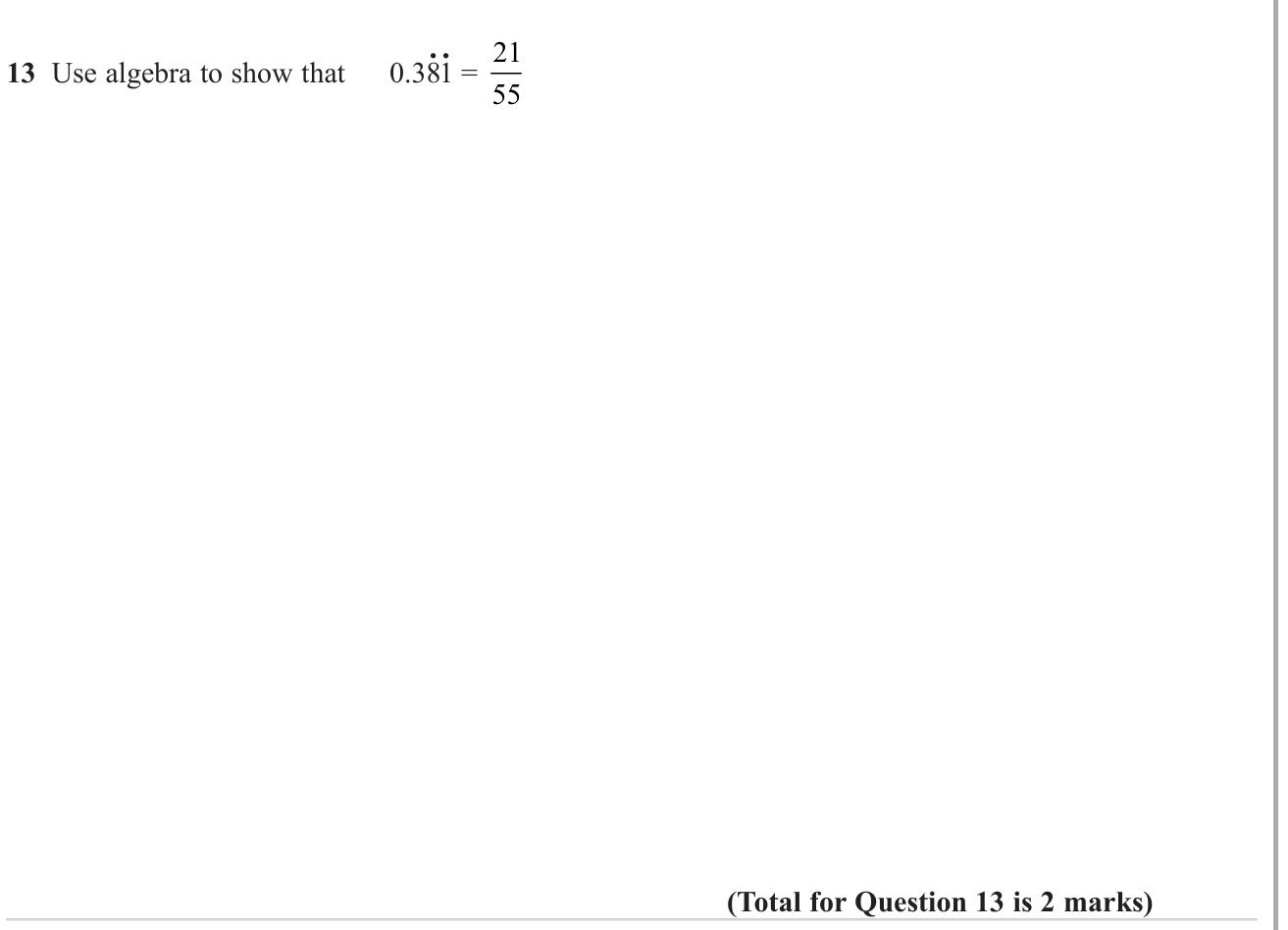
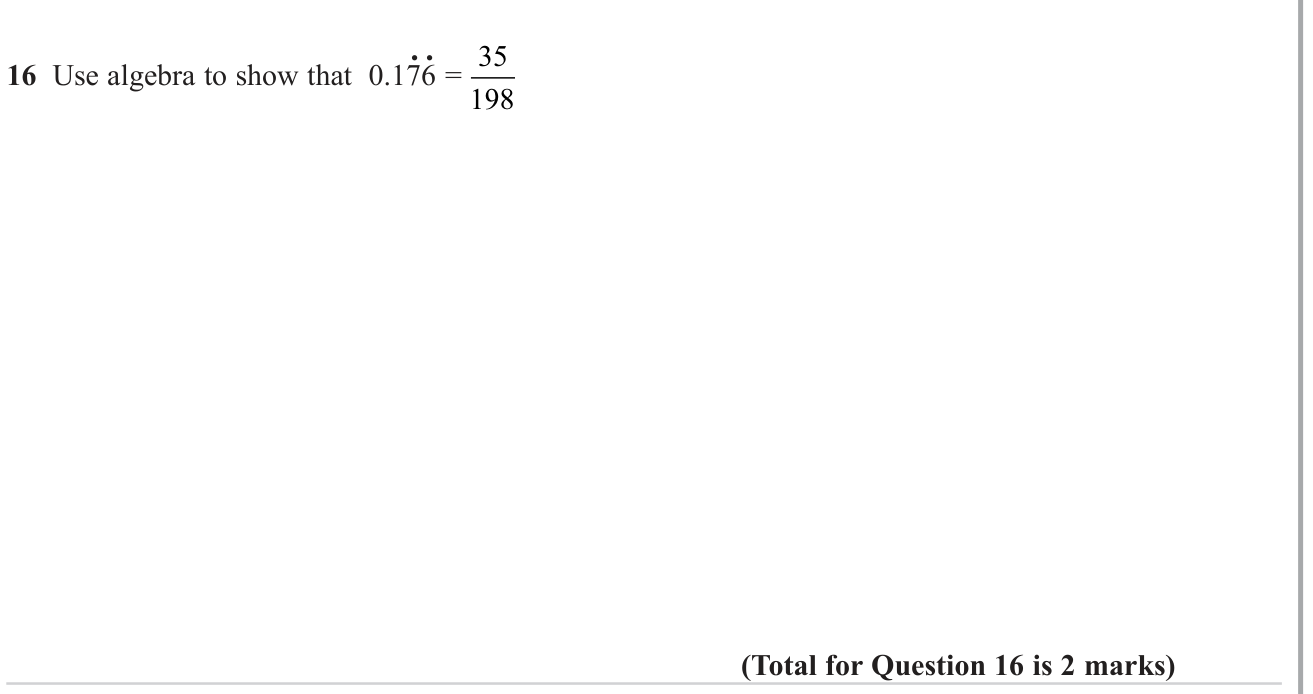
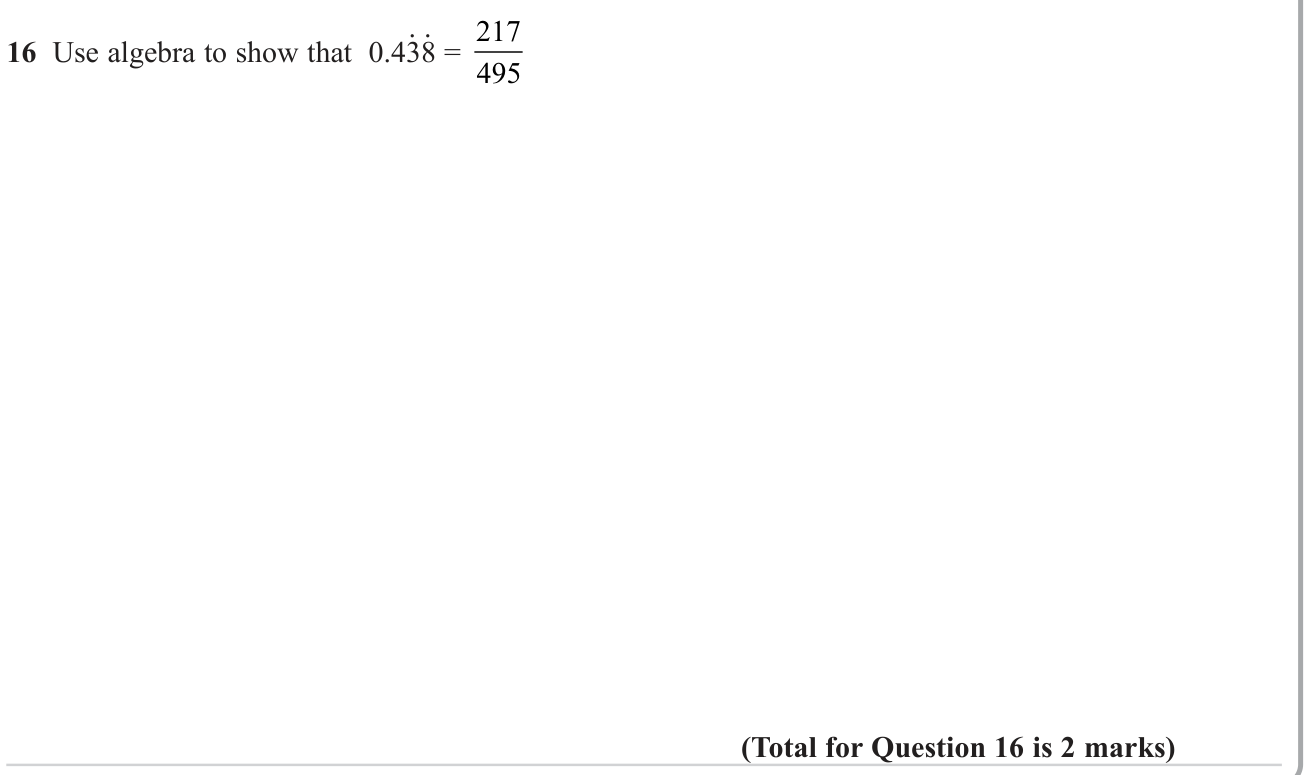
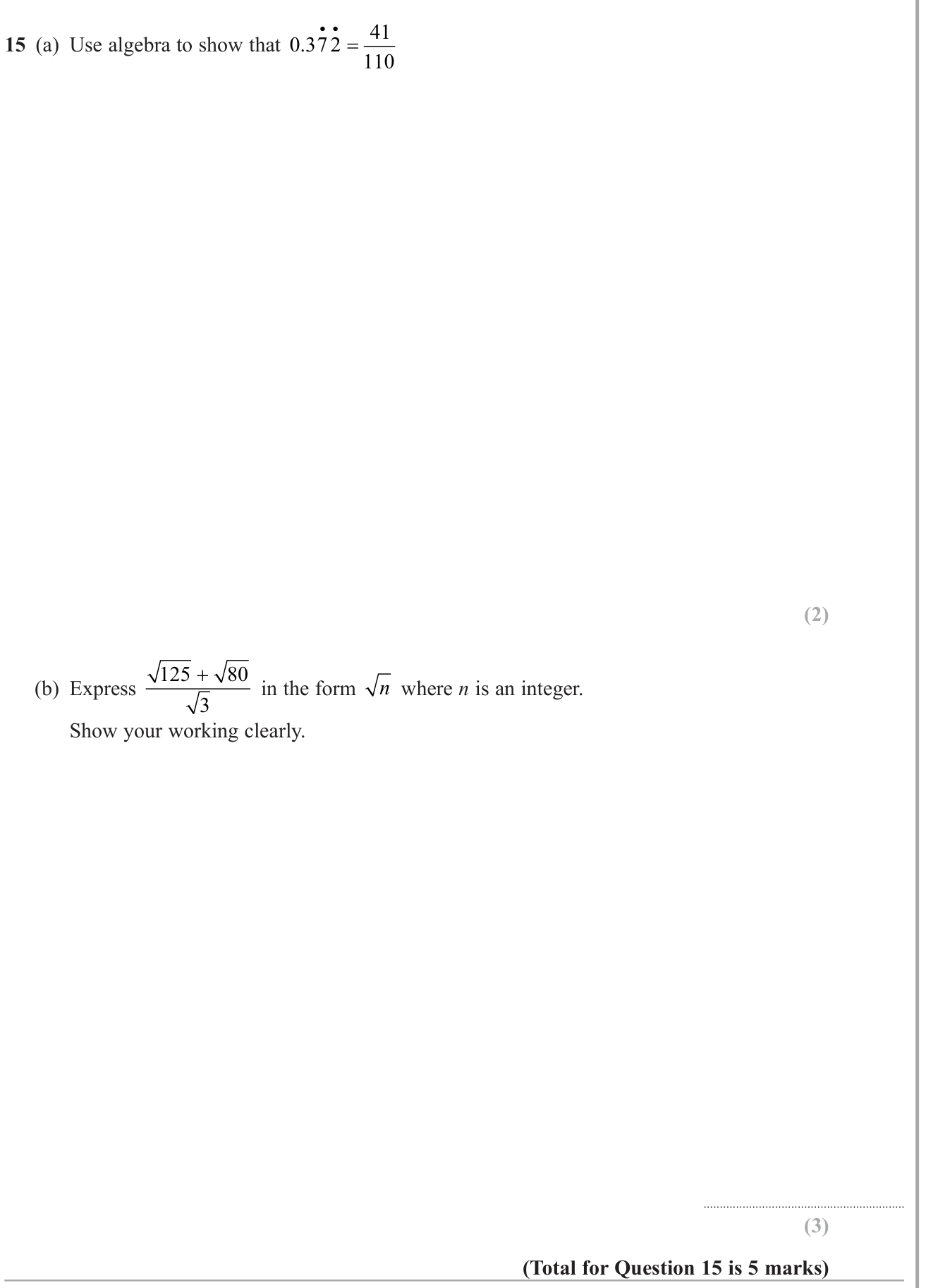
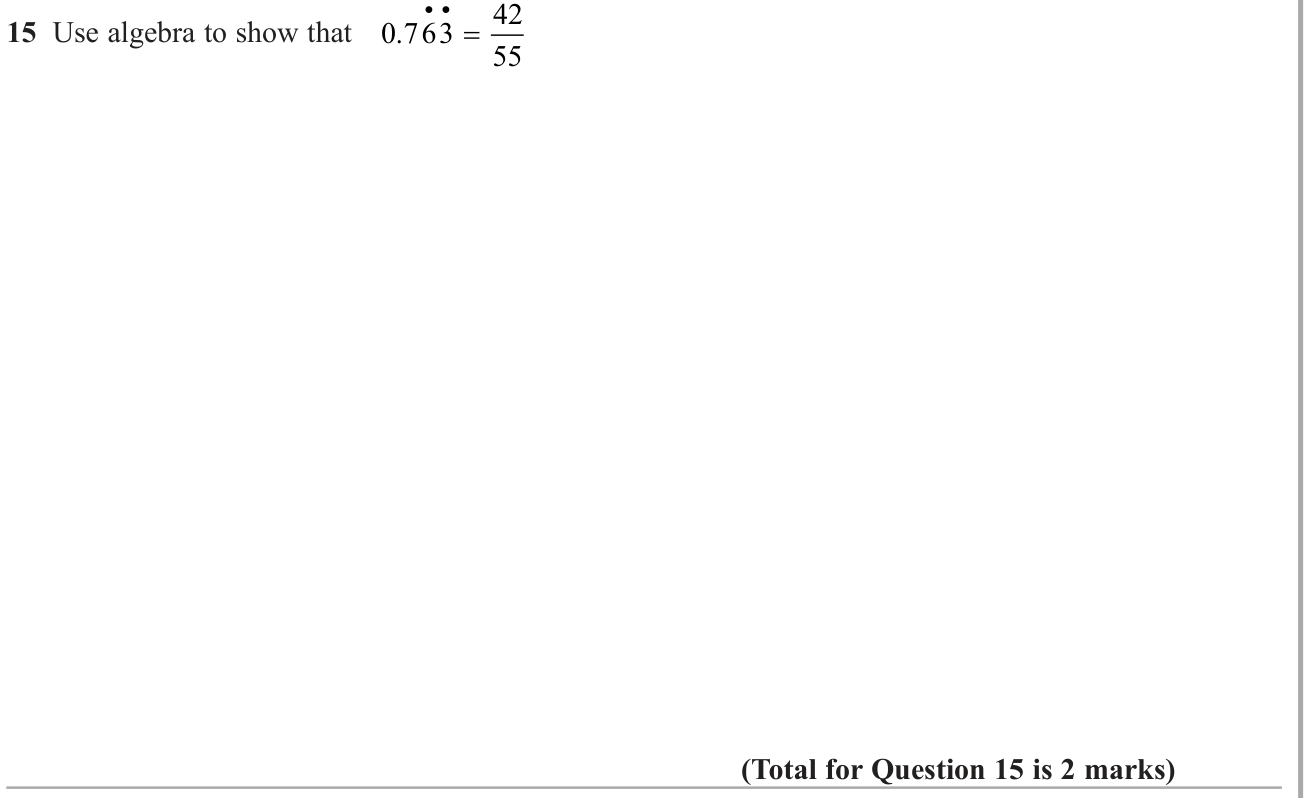
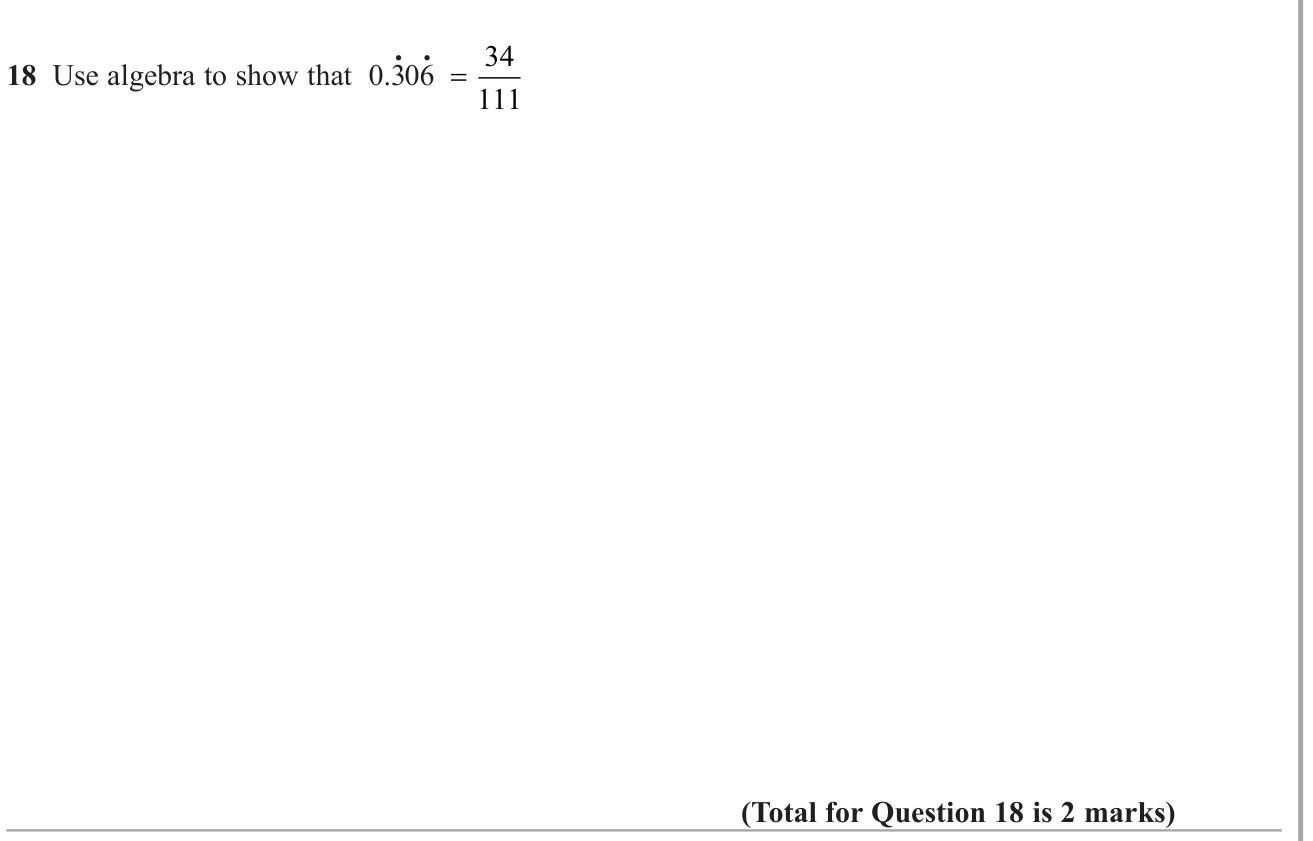
- To convert a recurring decimal to a fraction: multiply by 10ⁿ to eliminate the recurring part, then subtract.
- Index laws: aᵐ × aⁿ = aᵐ⁺ⁿ; aᵐ ÷ aⁿ = aᵐ⁻ⁿ; (aᵐ)ⁿ = aᵐⁿ; a⁰ = 1; a⁻ⁿ = 1/aⁿ; a^(1/n) = ⁿ√a.
Laws & theorems
- Order of operations: Brackets → Indices → Multiply/Divide → Add/Subtract (BIDMAS).
- Significant figures: count from the first non-zero digit.
Convert recurring decimal to fraction
6 Edexcel IGCSE past paper questions on convert recurring decimal to fraction. All from official 4MA1 papers.
Question 1 of 6
Show mark scheme

Question 2 of 6
Show mark scheme

Question 3 of 6
Show mark scheme

Question 4 of 6
Show mark scheme

Question 5 of 6
Show mark scheme

Question 6 of 6
Show mark scheme
