IGCSE Practice

Cambridge IGCSE·Co-ordinated Sciences 0654·Chemistry Transition Elements
📋Key knowledge — The Periodic Table

Key facts & rules

  • Periods: rows — number of electron shells increases across a period. Group: columns — same number of outer electrons.
  • Group 1 (alkali metals): react with water → metal hydroxide + hydrogen. Reactivity increases DOWN the group.
  • Group 7 (halogens): diatomic molecules (F₂, Cl₂, Br₂, I₂). Reactivity DECREASES down group. More reactive halogen displaces less reactive one.
  • Group 0 (noble gases): full outer shell → very unreactive, exist as single atoms.
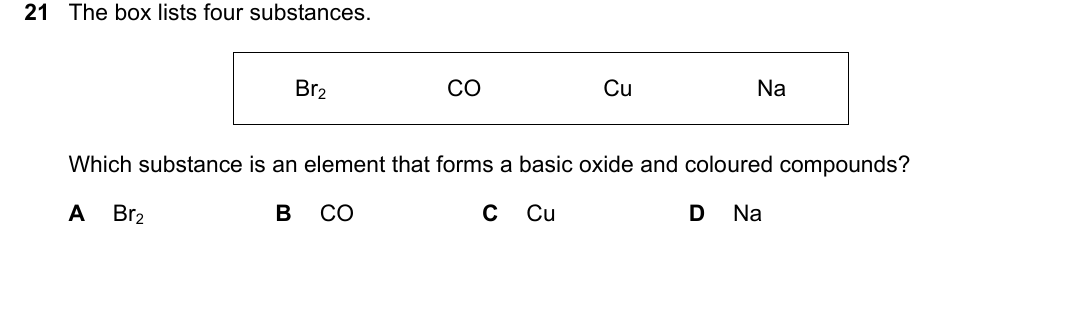
  • Transition metals: in the middle block. Variable oxidation states, form coloured compounds, good catalysts.
  • Metallic character increases down a group and decreases across a period (left to right).
  • Across period 3: Na, Mg, Al are metals; Si is metalloid; P, S, Cl, Ar are non-metals.

IGCSE Chemistry — Transition elements

24 Cambridge IGCSE 0654 questions on transition elements, across all three components.

About transition elements on IGCSE 0654

Every Cambridge IGCSE Co-ordinated Sciences 0654 question on transition elements (The Periodic Table, Chemistry), across all three exam components. Theory and alternative-to-practical come with full mark schemes; multiple choice is interactive — click an option to check it.

Theory

Papers 3 & 4 · 7 questions · Structured written questions, each with its full mark scheme.
Transition elements — Core theory questions7 total · Paper 3

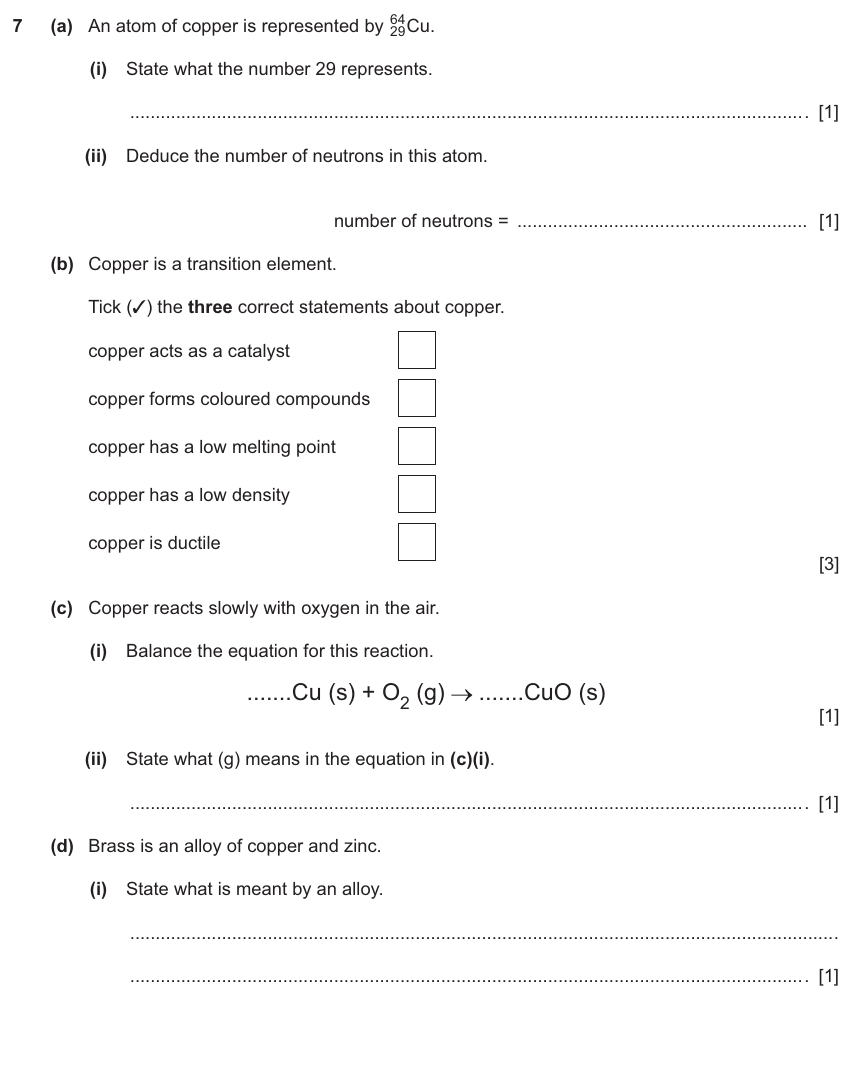
Exercise 1 — IGCSE 0654 Jun 2025 Paper 32 Q7
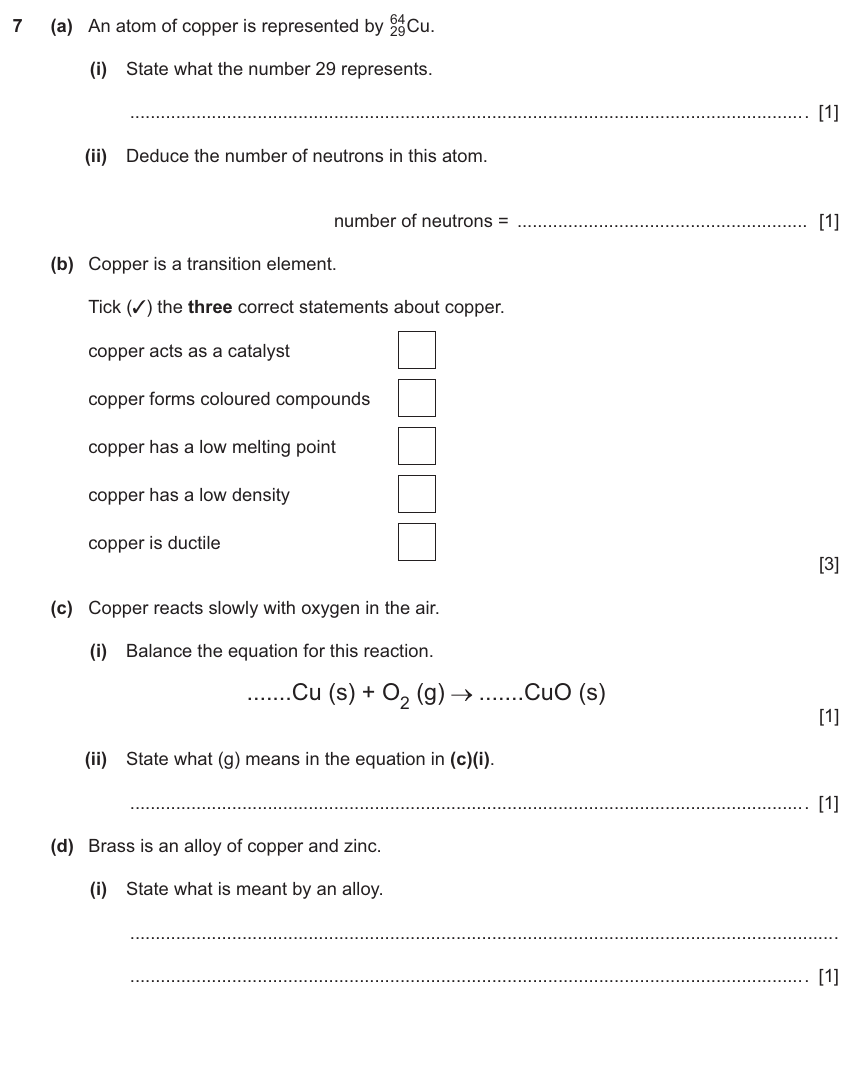
Cambridge past paperCore10 marks Paper 32Jun 2025
IGCSE 0654 Jun 2025 Paper 32 Question 7 — Transition elements
Show mark scheme
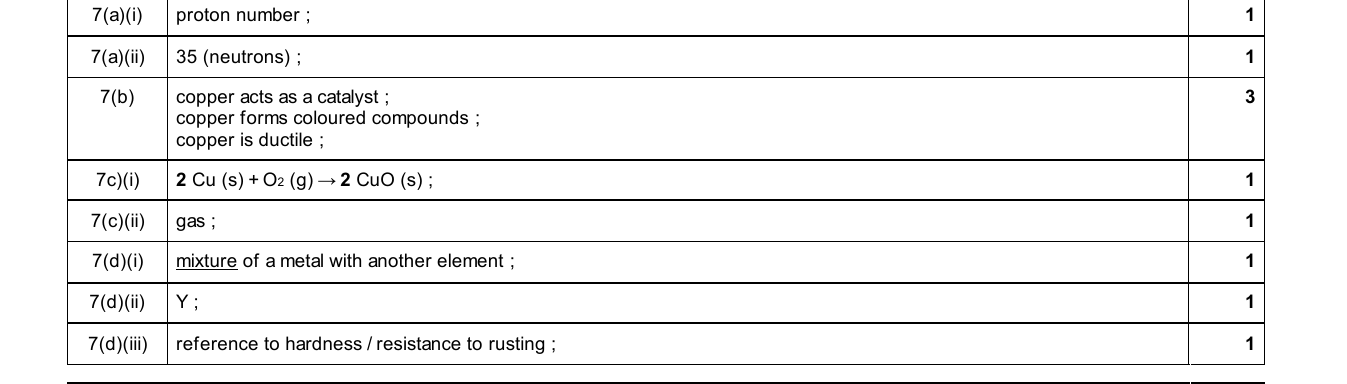
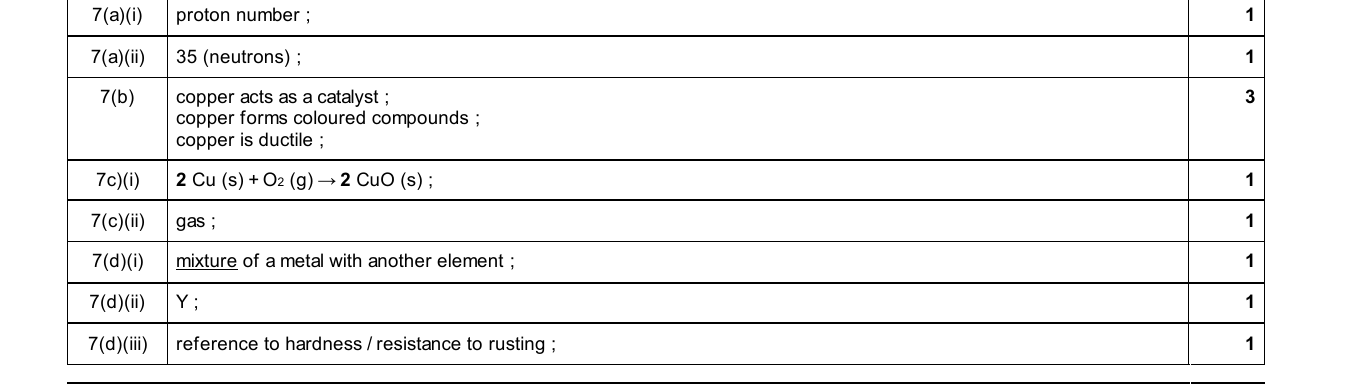
Mark scheme for IGCSE 0654 Jun 2025 Paper 32 Q7

Exercise 2 — IGCSE 0654 Jun 2025 Paper 33 Q7

Cambridge past paperCore10 marks Paper 33Jun 2025
IGCSE 0654 Jun 2025 Paper 33 Question 7 — Transition elements
Show mark scheme
Mark scheme for IGCSE 0654 Jun 2025 Paper 33 Q7

Exercise 3 — IGCSE 0654 Jun 2023 Paper 31 Q2

Cambridge past paperCore10 marks Paper 31Jun 2023
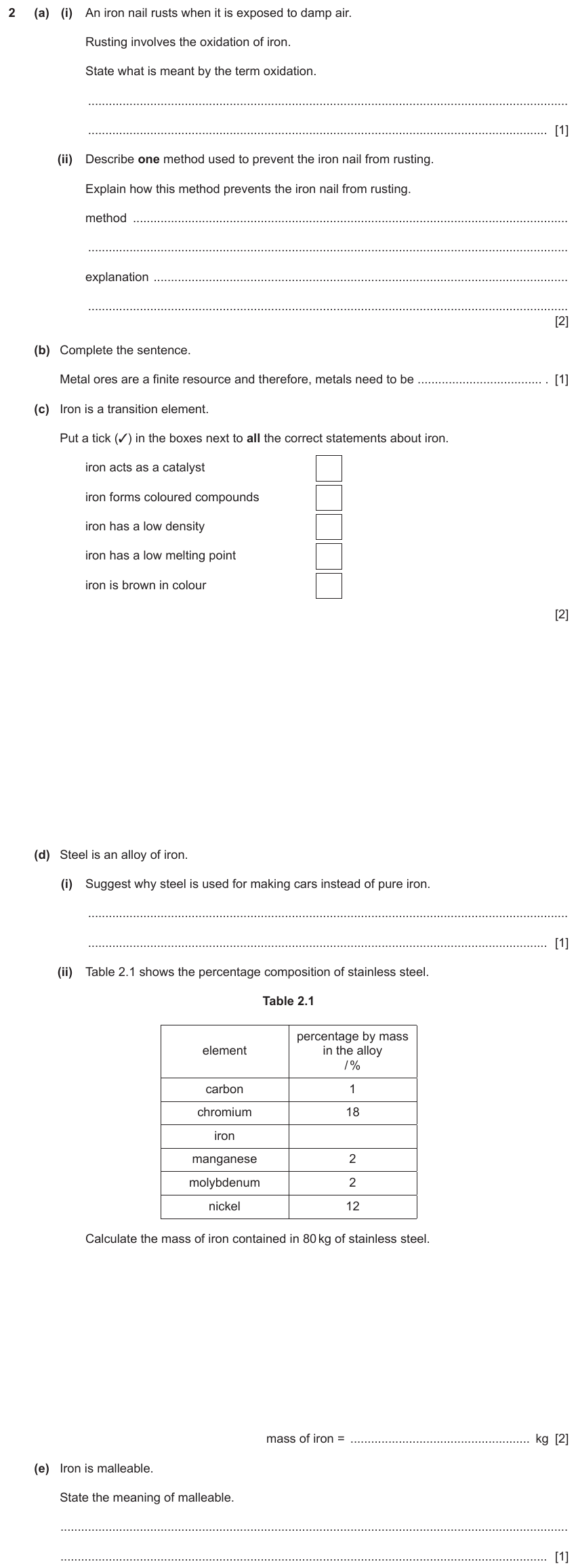
IGCSE 0654 Jun 2023 Paper 31 Question 2 — Transition elements
Show mark scheme
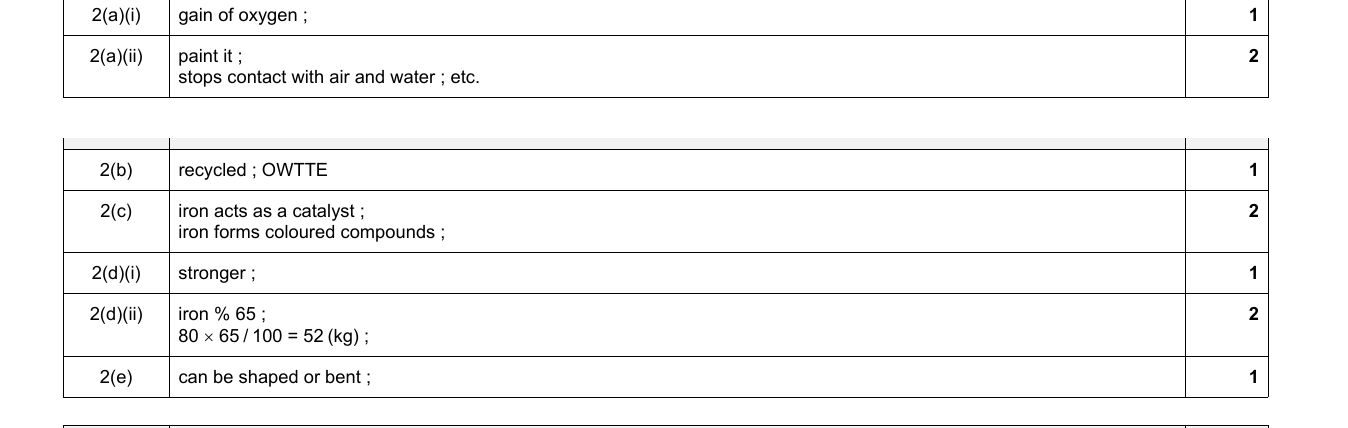
Mark scheme for IGCSE 0654 Jun 2023 Paper 31 Q2
↑ Back to top

Multiple choice

Papers 1 & 2 · 17 questions · Click an option (A–D) to check your answer instantly.
Transition elements — Core multiple choice questions11 total · Paper 1

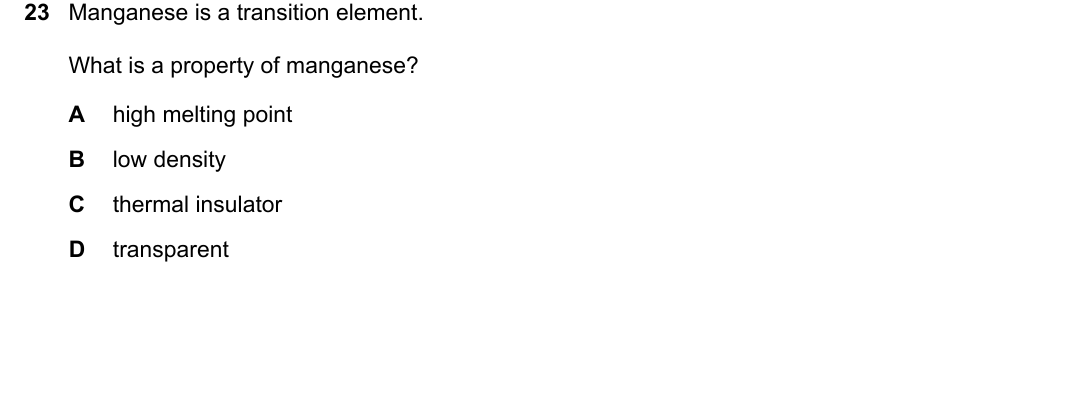
Exercise 1 — IGCSE 0654 May/June 2024 Paper 11 Q23

Cambridge past paperCore1 mark Paper 11May/June 2024
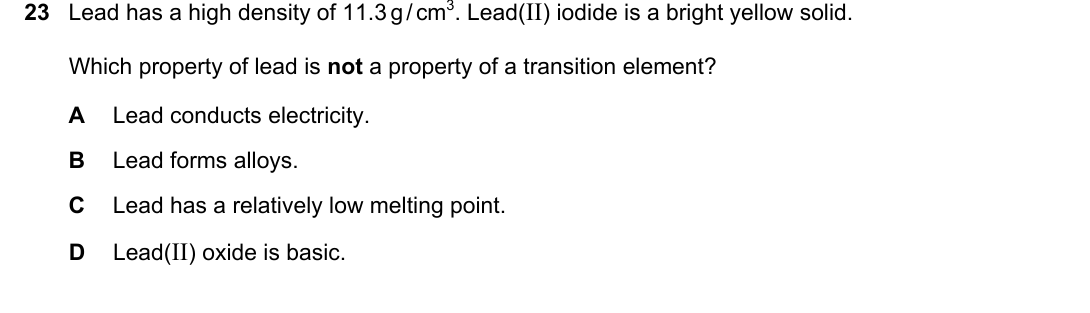
IGCSE 0654 May/June 2024 Paper 11 Question 23 — Transition elements
Show answer
Correct answer: C

Exercise 2 — IGCSE 0654 Oct/Nov 2024 Paper 11 Q24

Cambridge past paperCore1 mark Paper 11Oct/Nov 2024
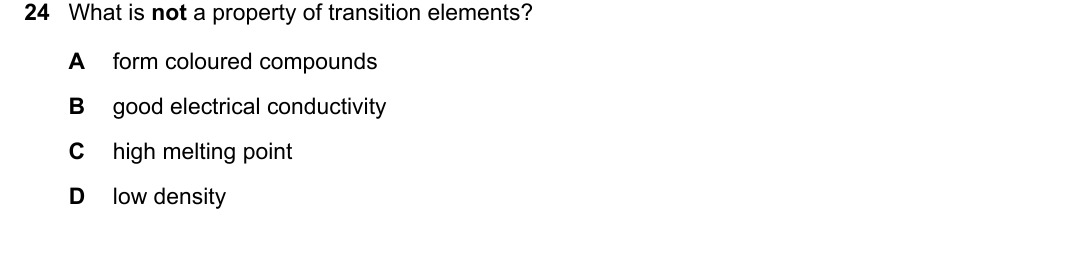
IGCSE 0654 Oct/Nov 2024 Paper 11 Question 24 — Transition elements
Show answer
Correct answer: D

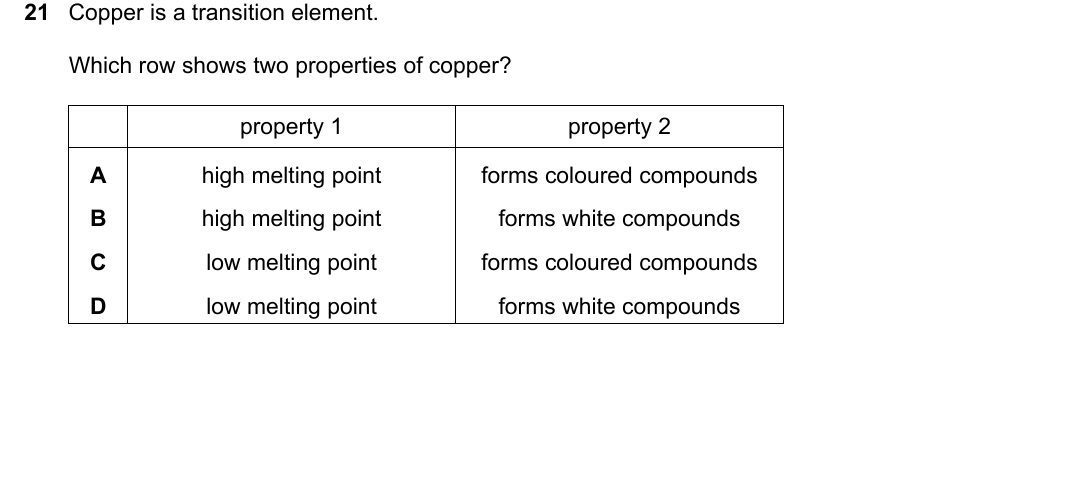
Exercise 3 — IGCSE 0654 March 2024 Paper 12 Q20

Cambridge past paperCore1 mark Paper 12March 2024
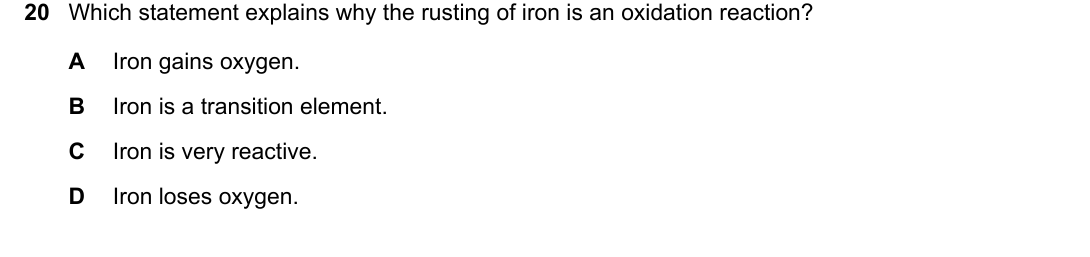
IGCSE 0654 March 2024 Paper 12 Question 20 — Transition elements
Show answer
Correct answer: A

Exercise 4 — IGCSE 0654 May/June 2024 Paper 12 Q23

Cambridge past paperCore1 mark Paper 12May/June 2024
IGCSE 0654 May/June 2024 Paper 12 Question 23 — Transition elements
Show answer
Correct answer: A
Transition elements — Extended multiple choice questions6 total · Paper 2

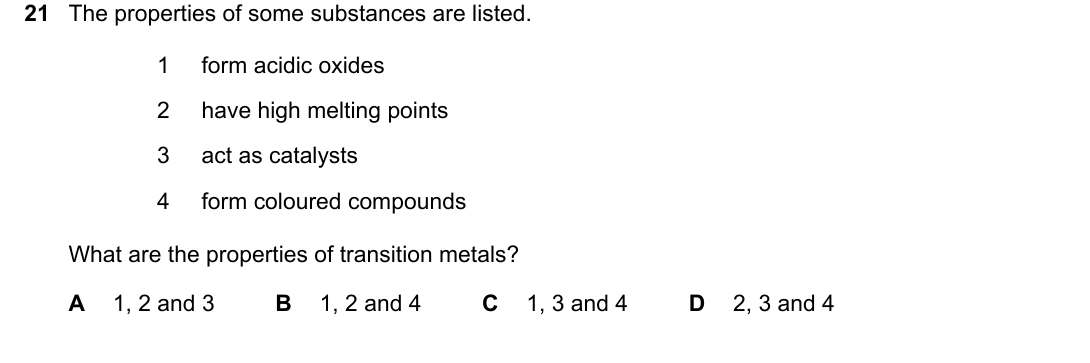
Exercise 5 — IGCSE 0654 May/June 2024 Paper 22 Q21

Cambridge past paperExtended1 mark Paper 22May/June 2024
IGCSE 0654 May/June 2024 Paper 22 Question 21 — Transition elements
Show answer
Correct answer: A

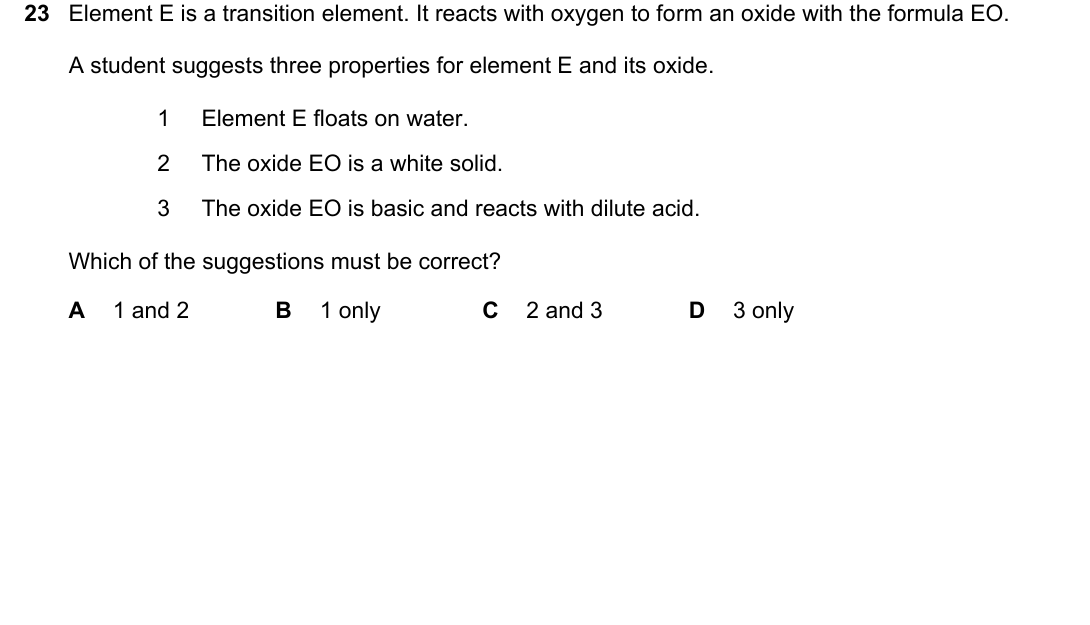
Exercise 6 — IGCSE 0654 March 2024 Paper 22 Q23

Cambridge past paperExtended1 mark Paper 22March 2024
IGCSE 0654 March 2024 Paper 22 Question 23 — Transition elements
Show answer
Correct answer: D

Exercise 7 — IGCSE 0654 May/June 2023 Paper 21 Q21

Cambridge past paperExtended1 mark Paper 21May/June 2023
IGCSE 0654 May/June 2023 Paper 21 Question 21 — Transition elements
Show answer
Correct answer: D

Exercise 8 — IGCSE 0654 May/June 2023 Paper 22 Q21

Cambridge past paperExtended1 mark Paper 22May/June 2023
IGCSE 0654 May/June 2023 Paper 22 Question 21 — Transition elements
Show answer
Correct answer: C
↑ Back to top

More The Periodic Table subtopics